






 Portuguese
  Spanish


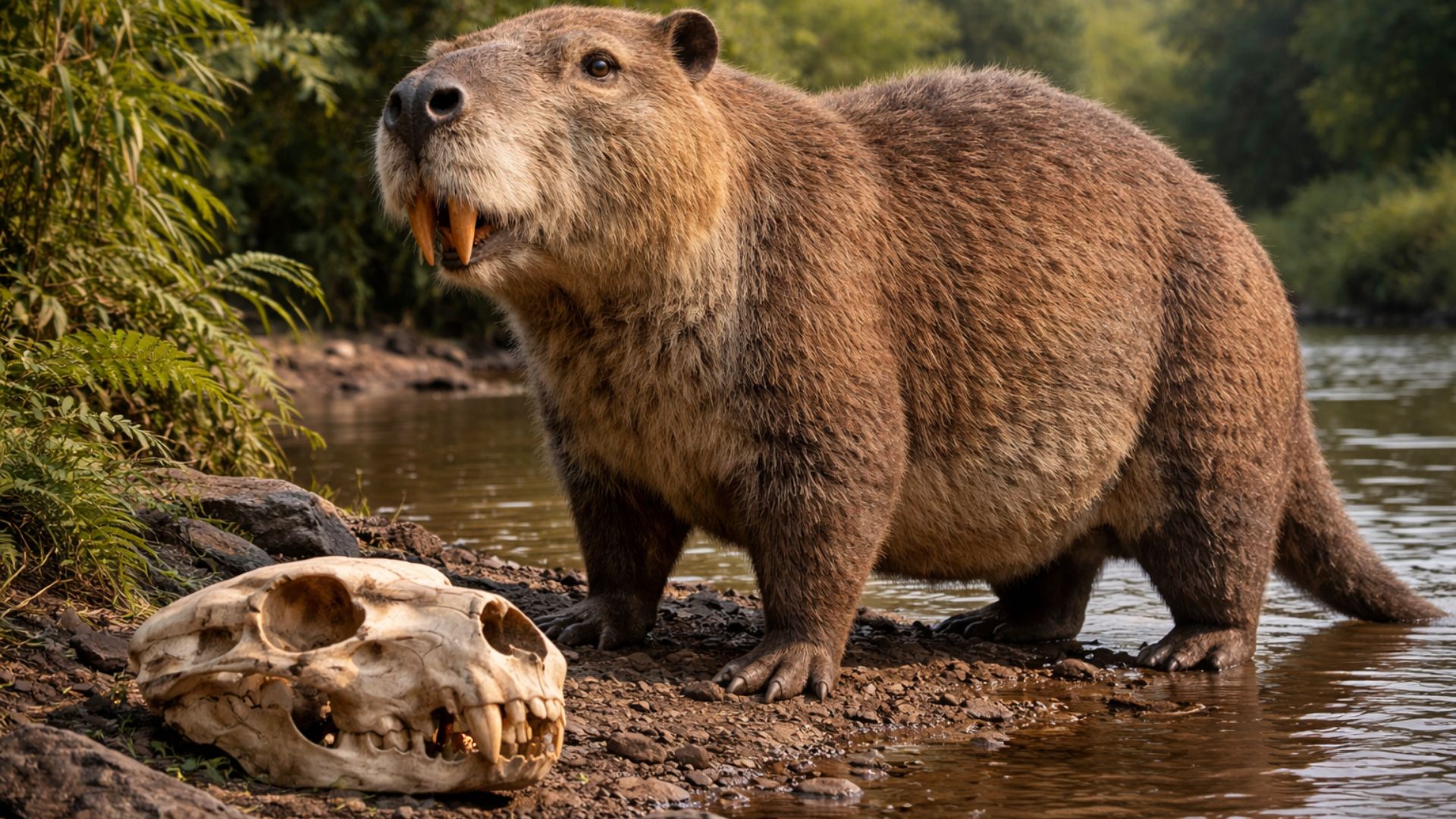


53-Centimeter Skull and Mass Estimates Around One Ton Place South American Prehistoric Rodent at the Center of a Scientific Record, with Description Based on Rare Fossil and Comparisons with Living and Extinct Rodents.
The largest rodent ever described by science does not resemble any living animal in scale.
The Josephoartigasia monesi, identified from an <strong exceptionally preserved skull measuring 53 centimeters in total length, has been presented as the largest recorded rodent species, with mass estimates around one ton based on skull measurements and comparisons with current rodents.
The find is South American and relies on rare material for the group: an almost complete skull, a piece that is often missing in the fossil record of giant rodents.
-
Brazilian Truck Driver in the U.S. Earns $11,200 Commission on Heavy Haul, Highlights High Income Potential and Demands of the Job

-
Teen without prom date invites pet cat to dance, goes viral with tuxedo and pink dress photoshoot

-
Boy Uses Mother’s Sewing Machine to Make Teddy Bears for Hospitalized Children in Tasmania Over 365 Days

-
Restaurants Combat Frying Odors Before Cooking Begins: Here’s Why This Routine Matters




Scientific Description and Where the Fossil Was Found
The formal description of Josephoartigasia monesi was made by Uruguayan researchers in a study published in the journal Proceedings of the Royal Society B.
The work characterizes the species as a caviomorph rodent of the family Dinomyidae and states that the skull found allowed, in addition to taxonomic identification, size estimates and anatomical observations that were not possible when the family was mainly known by isolated teeth and jaw fragments.
The article situates the fossil in the San José Formation in Uruguay, a unit generally attributed to the Pliocene–Pleistocene interval, around 4 to 2 million years ago.

San José Formation and the Environment of the Time
The geological formation itself helps frame the environment in which this animal lived.
In the study’s summary, the authors indicate that the proposed paleoenvironment for the occurrence of Josephoartigasia monesi was characterized as an estuarine or deltaic system, associated with forest communities.
In other words, the species is presented within a scenario of wetlands and river influence during a deep time in the continent’s recent history when large South American mammals still occupied niches that no longer exist in the same form.
53 cm Skull and Comparisons with Capybara and Paca
The most striking measure is objective and is recorded in the anatomical description: the skull has 53 centimeters in total length.
This, in itself, places the head of Josephoartigasia monesi in a scale that finds no parallel among current rodents.
To contextualize the size leap, the article itself mentions that the capybara, the largest living rodent, is cited with an approximate body mass of 60 kilograms, and also mentions the paca (Dinomys branickii), another large South American rodent, presented as the only living representative of the Dinomyidae family, with an approximate mass of 15 kilograms.
The comparison serves to dimension what it means to talk about a rodent with a skull over half a meter long.
How Science Estimated the Weight Around One Ton

The weight estimate “around one ton” comes from a common method in paleontology when the post-cranial skeleton is not available: the allometric relationship between skull measurements and body mass observed in current species.
The authors note that the size difference between the largest living rodent and the extinct giants makes the estimate less reliable than it would be in groups with larger modern equivalents, but still consider it relevant to obtain approximate numbers due to the ecological and biological implications of size.
Based on a new allometric relationship built from 13 specimens of eight genera of hystricognath rodents, identified as the closest living relatives for such comparison, the study reports that the estimated mass for Josephoartigasia was 1008 kilograms.
Additional Estimates and the Range of Results
Since the skull is almost complete, the work reports that the estimate could be verified using other standard cranial measurements.
With six additional measurements, the authors calculated different values and also an average.
In this set, the average of the seven results is presented as 1211 kilograms, with a standard deviation of 753 kilograms, reflecting the variation obtained when each measurement receives the same weight in the calculation.

The study itself exposes what the extremes found in that procedure were: the highest estimate, of 2586 kilograms, is associated with the width of the incisors; the lowest, of 468 kilograms, arises linked to the relatively small size of the zygomatic arches in the analyzed skull.
The range of these results is treated in the article as part of the methodological challenge of estimating body mass when there are no body bones to compare.
Why Josephoartigasia Surpassed Other Giant Rodents
The scientific text also relies on comparisons with other already described giant rodents to support that Josephoartigasia monesi occupies the top of the ranking.
The study cites Phoberomys, an extinct rodent that had previously been reported as the largest rodent that ever existed, with mass estimates based on post-cranial measurements.
As the authors state that there are no known post-cranial bones for Josephoartigasia, a direct comparison using the same method is not currently possible, but the article argues that the described skull is larger than the known skull of Phoberomys and notes the indication that cranial fragments available for the rival suggest a skull about 65% the size of Josephoartigasia.
With this, the study claims high confidence that the described specimen would have body mass approximately twice that of Phoberomys, maintaining the argument that Josephoartigasia monesi is the largest known rodent.
Anatomical Details Beyond the Size Record

Beyond size, the skull provides specific anatomical information.
The description points out that the preserved upper dentition includes incisors and the grinding series of teeth, noting that, as in other dinomyids, the grinding teeth are relatively small compared to the size of the skull.
The article highlights a rare detail among rodents: the position of the last molar being more anterior than the orbit, a feature described as unique in this group.
These elements are presented as part of the reason why the fossil has value beyond the “record” of size, offering anatomical data that helps understand how giant rodents of this lineage differed from current species.
Why an Almost Complete Skull Is So Important
The study also notes that this type of find is unusual because, for the Dinomyidae family, fossil material is usually limited to isolated teeth and incomplete jaws.
This means that an almost complete skull has the potential to reassess previous interpretations and broaden the comparative base with living and extinct rodents.
In the work itself, the authors mention that the type material was collected by S. Viera, evidence that the fossil’s story involves proper collection and preservation to allow a detailed scientific description years later.
If a single 53-centimeter skull was enough to place an extinct rodent at the top of the records and reopen discussions about anatomy and scale among South American mammals, what other discoveries held in collections and deposits might still change what is known about the giants that lived on the continent?


