





 Portuguese
  English
  Spanish
  5 min of reading
  0 comments


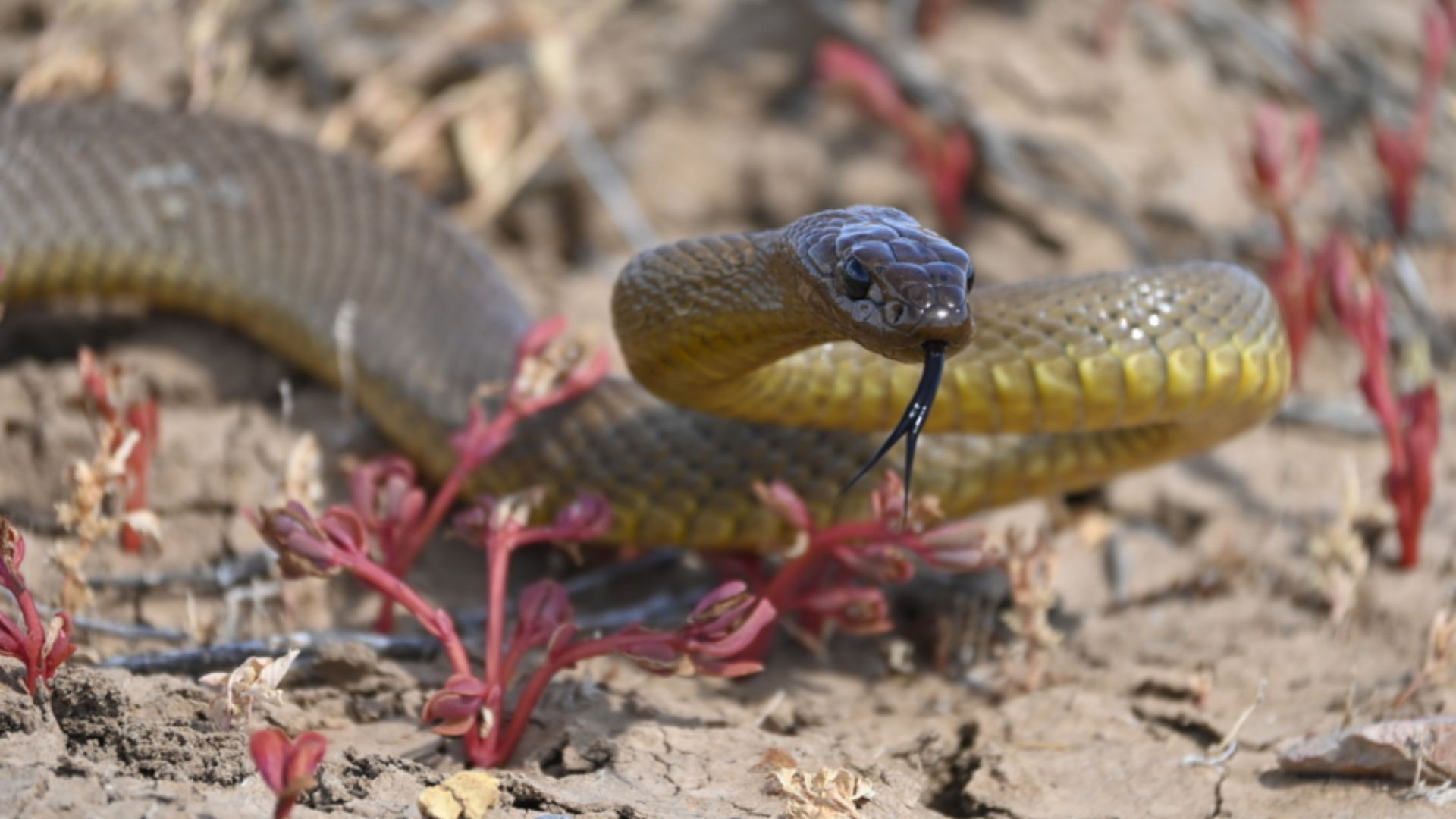
Record-Breaking Venom Measured in Laboratory, Inland Taipan, and Attack Behavior Described with Rapid Bite Sequences Place the Inland Taipan at the Top of Scientific Rankings and Feed Curious Comparisons.
The inland taipan, also known as the western taipan (Oxyuranus microlepidotus), is described by institutions and specialized publications as the land snake with the most toxic venom ever measured in standardized tests.
Native to remote areas of inland Australia, it combines three elements that sustain its fame: extremely high venom potency in laboratory measurements, body length often exceeding two meters, and a hunting strategy that may involve rapid bite sequences.
The central point of the “record” attributed to the species lies in the criterion used to compare venoms.
-
The same type of jet engine that powered the V-1 bombs of World War II now appears under a motorcycle made in a garage, with thrust of up to about 45 kilograms, which the owner claims exceeds 110 kilometers per hour.

-
A Brazilian tank almost became a star in the Middle East, surpassed tough tests against legendary armored vehicles, and disappeared from the market when Engesa most needed to win.

-
The best states to live in Brazil have just been revealed: Distrito Federal, São Paulo, and Santa Catarina dominate the national quality of life ranking in 2026.
-
Half a million liters of fresh water extracted from the sea per day, 300 tons of feed, and 84 fans that renew all the air every 60 seconds keep 16,000 animals alive and even fattening inside the Becrux on its way to Indonesia.



The most common reference is the metric known as LD50, developed to indicate the dose necessary to kill 50% of a test group of animals, often mice.
The smaller the number, the greater the measured toxicity.
In a scientific communication report, National Geographic Brazil states that the LD50 attributed to the venom of the inland taipan is 0.025 milligrams per kilogram, a value cited as the lowest among snake venoms tested in this manner, reinforcing why it appears at the top of rankings of “most venomous.”
Inland Taipan Size and What Records Say

The size of the animal helps transform this technical data into a concrete image for the reader.
The same report records that the species has an average length of about two meters and that the largest specimen recorded reached 2.5 meters, information attributed to the Australian Museum.
Although it is not a “giant” snake by the standards of pythons and anacondas, the combination of size, speed, and hunting effectiveness places it among the most impressive elapids on the planet.
Rapid Sequential Attacks and Hunting Pattern
The way the inland taipan hunts is also part of what fuels its reputation.
Instead of a single strike and retreat, there are descriptions of attacks involving more than one bite in succession, especially when the prey is cornered.
National Geographic Brazil reports that if the defensive warning is ignored, the animal can strike with a single bite or with multiple rapid bites.
Meanwhile, a text from Discover Wildlife, linked to BBC Wildlife Magazine, describes the hunting pattern in which the snake corners small mammals and bites them multiple times in rapid succession, injecting venom with each strike.
Interior of Australia, Remote Distribution, and Rare Encounters

Despite the label of “most venomous snake in the world,” the very literature of dissemination and materials from institutions highlight that toxicity measured in the laboratory does not, by itself, represent the real risk to people.
National Geographic Brazil points out that the relative danger of a venomous snake depends on factors such as the amount of venom injected, victim sensitivity, and, primarily, the likelihood of encountering a bite.
In this regard, the inland taipan distinguishes itself from species more commonly associated with accidents: it lives in sparsely populated regions, which reduces the number of encounters with humans.
The distribution cited for the species reinforces this characteristic.
The Queensland Museum describes the inland taipan as the most venomous land snake in the world and locates it in the southwest of Queensland and adjacent areas of New South Wales and South Australia, a stretch of inland that contrasts with more urbanized coastal environments.
The report from National Geographic Brazil also emphasizes that, because it almost always resides in a remote location, it is rarely encountered by average people in the wild.
“Most Venomous” and The Differences Between Rankings

There is also a second element that often generates confusion in comparisons: the difference between “most toxic venom” and “most dangerous bite”.
The Guinness World Records, when specifically addressing “the most venomous land snake”, states that the inland taipan is the most toxic terrestrial snake, but notes that related species may deliver, proportionally, more “lethal doses” per bite because they inject larger amounts of venom.
The comparison, in these cases, does not invalidate the “record” of the inland taipan’s venom toxicity.
It merely shows that rankings vary according to the criteria adopted.
Effects of Envenomation and What Medical Literature Describes
The effects of envenomation by taipans, when they occur, are treated in the clinical literature as a serious event requiring immediate attention.
In a review indexed in PubMed regarding envenomation by Australian taipans, the authors describe the condition as characterized by neurotoxicity, myotoxicity, coagulopathy, acute renal injury, and thrombocytopenia, and mention that early administration of antivenom has been associated with favorable outcomes in the analyzed group.

In another publication also indexed in PubMed, which discusses documented cases of envenomation by O. microlepidotus, the poisoned patients predominantly presented disseminated intravascular coagulopathy and neurotoxicity.
Registered Deaths, Accident Context, and Framing Without Sensationalism
Even with this potential for severity, dissemination sources and record-keeping converge in stating that deaths attributed to the inland taipan do not define its recent history.
National Geographic Brazil reports that there are no records of deaths caused by the bite of an inland taipan and attributes this information to the Australian Museum, emphasizing that most of the few cases involved handlers or people related to venom extraction, with survival associated with first aid and hospital treatment.
The Guinness World Records also states that there have been no confirmed deaths recorded for the species and links this, in part, to the remoteness of its native area and the fact that many accidents occur in captive settings, where care can be quicker.






-

2 people reacted to this.