Portuguese
  Spanish


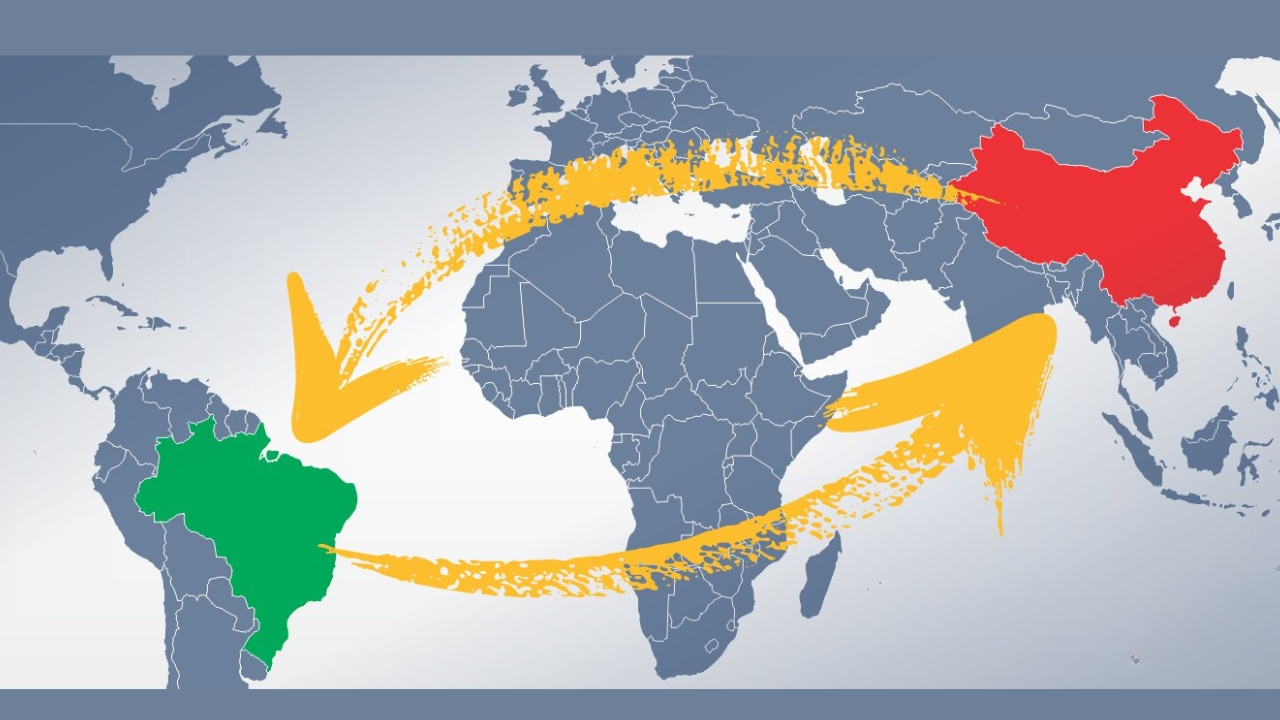


Beijing Tries to Convince Brazil to Join Its Payment System to Lower Export Costs, Speed Up Trade, and Create a Financial Route that Reduces U.S. Influence
China is speeding up the expansion of CIPS, its own international payment system, and Brazil is at the center of this strategy. The initiative challenges the dollar’s weight in global transactions and strengthens the dedollarization that Beijing has been trying to promote for more than a decade.
The movement gained momentum precisely when Washington expanded the use of economic sanctions and pressured trade partners. For Beijing, ensuring an alternative network has become both a financial and geopolitical project.
The Chinese Bet on CIPS and Brazil’s Decisive Role
CIPS was established in 2015 with a clear goal: to allow banks and companies to make payments in yuan without relying on intermediaries linked to the U.S. financial system. Since then, the project has grown rapidly.
-
Abandoned Building in Brazil to Become Biotechnology Unit with $10 Million Investment, Bridging Science, Industry, and Public Health

-
Company Offering “Stones to Diamonds” Scheme Sells Ruined Italian Homes to Brazilians for 1 Euro, Disappears with Promised Renovations, Leaving Buyers in Debt to Italian Tax Authorities Until 2028 Without Property

-
Plastic Packaging Drives Santa Catarina Industry to 230% Growth, Aiming for R$ 500 Million by 2030 Amid Sector Crisis, with New Gearless Line Expanding in Southern Brazil to Compete in South America

-
Flamengo Star Invests in Brazilian Coastal Luxury Real Estate as Itapema Surpasses Balneário Camboriú in High-End Market Growth


Today, more than 170 institutions participate directly in the platform and another 1,500 operate indirectly, spread across 119 countries. Just in 2024, the system processed US$ 24.5 trillion in transactions.
The central difference from SWIFT lies in its operation. While SWIFT operates only as a messaging service, CIPS combines messaging and settlement, creating a shorter, cheaper path that is less exposed to political risks.
For Brazil, China’s largest trading partner in Latin America, this opens important doors. Soy, oil, mineral, and protein exporters can receive payments directly in RMB, reducing currency exchange costs and decreasing dependence on the dollar.
Beijing views Brazil as a strategic point in this process. Integrating a large, exporting economy with strong commercial ties to China strengthens the internationalization of the yuan and creates real support for the system.
Geopolitics, Risks, and U.S. Discomfort
The expansion of CIPS is not merely a technical adjustment in the global financial system. It carries evident political weight.
Since 2022, several countries have begun seeking alternatives to the dollar after the U.S. intensified the use of sanctions as an instrument of pressure. This scenario has reignited discussions about parallel systems that allow for greater autonomy.
China, for its part, is already testing connections between CIPS and the SPFS, the Russian system. Together, the two networks can build a circuit capable of circumventing Washington’s reach in various international operations.
The primary concern for the U.S. is not a “BRICS currency,” which has not materialized, but rather the possibility of large exporters—such as Brazil, Russia, China, and Middle Eastern partners—settling transactions outside the dollar ecosystem.
Donald Trump has even signaled tariffs of up to 100% for countries that support alternatives to the dollar. The effect may be the opposite of what is expected: accelerating the rush for other systems precisely to reduce dependencies.
How Brazilian Banks and Companies May Feel the Impact
The practical change appears in the flow of money.
Today, a Brazilian company selling to China typically settles everything via SWIFT, converting real to dollar and dollar to yuan. Each step incurs costs, currency risk, and delays.
With CIPS, payment can arrive directly in RMB. The process becomes faster, cheaper, and more predictable.
For Brazilian banks, joining the system opens new opportunities. By integrating into the system, they can capture part of the global flows in yuan and offer new services to exporters and importers.
There are advanced discussions to expand the swap line between Brazil and China, as well as the establishment of new RMB clearing banks in Brazilian territory. This would help provide liquidity to the Chinese currency in the domestic market.
The Advance Has Limits — and Brazil Needs to Overcome Some
Despite the accelerated pace, CIPS still faces challenges. Many international participants remain connected to the U.S. financial system, creating concerns in the event of future sanctions.
In Brazil, integration depends on clearer regulations, the interest of private banks, and companies’ willingness to accept contracts directly in yuan.
The coming years will be decisive. Key points of observation include:
The evolution of Brazil–China trade using RMB;
The progress of establishing yuan clearing banks in the country;
The integration of CIPS with new digital platforms, such as mBridge, which tests instant settlement between central banks.
More than just undermining the dollar, China seeks to create maneuvering room. And if Brazil embarks on this movement, it could gain ground in a global financial reconfiguration that reduces U.S. centrality and redraws the map of economic power in the coming decades.