






 Portuguese
  Spanish


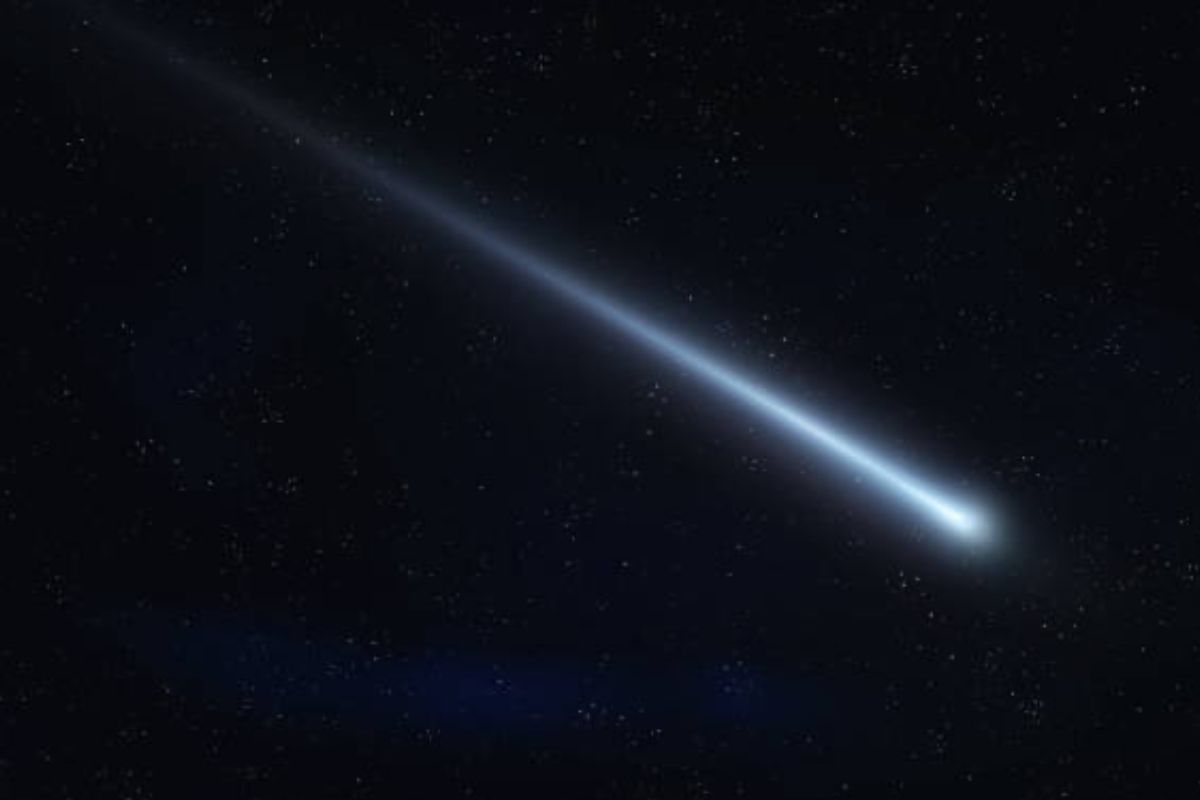


Comet 3I/ATLAS, Discovered in July 2025, Has Grabbed the Attention of Scientists and Curiosity Seekers for Its Unusual Chemical Composition and Estimated Age of Over Seven Billion Years, Which Would Make It Older Than the Solar System Itself.
The Comet 3I/ATLAS was detected on July 1, 2025, by the ATLAS (Asteroid Terrestrial-impact Last Alert System) telescope, located in Río Hurtado, Chile. It is the third identified extrasolar body passing through Earth’s vicinity, meaning it is a visitor that did not form with our Solar System. This unusual origin explains the significant scientific interest and the increase in searches for the term “comet” on digital platforms.
According to NASA, there is no risk of collision with Earth, as the maximum predicted approach is 1.8 astronomical units, equivalent to about 270 million kilometers. Nevertheless, the unexpected behavior and physical characteristics of 3I/ATLAS are intriguing researchers and generating significant public buzz.
Unusual Behavior and Impressive Speed
What surprised astronomers the most was the atypical chemical behavior of 3I/ATLAS. Normally, comets have a coma – the cloud of gas and dust surrounding the nucleus – dominated by water vapor and carbon monoxide.
-
Farewell to Toilet Paper? New Technology Sparks Debate on Bathroom Habits

-
Young Entrepreneur Who Started Recycling Bottles at Age 3 Becomes Environmental Icon in the U.S.

-
Nivea Blue Tin Cream: Popular Post-Beach and Pool, But Pharmacist Warns About Missing Ingredients and Common Summer Mistakes Regarding UVA and UVB Protection.
-
Archaeologists Recover Colossal Structure Lost for Over 1,600 Years Under the Sea, Including 22 Monumental Blocks Weighing Up to 80 Tons, Intriguing Experts.



However, in this case, carbon dioxide (CO₂) predominates in unprecedented concentrations, being up to eight times more abundant than water.
In addition to its composition, the speed of travel is also impressive. The comet travels at over 210,000 km/h, making it a technical challenge for telescopes and tracking equipment.
Scientists around the world are racing against time to record spectroscopic data before the object moves away again into interstellar space.
What the James Webb Telescope Discovered
Observations made by the James Webb Space Telescope (JWST) revealed unprecedented details about 3I/ATLAS.
The solid nucleus was estimated to be between 320 meters and 5.6 kilometers in diameter, a range that shows how much uncertainty remains about its internal structure.
The telescope also detected emission activity of water (OH) at distances greater than three astronomical units from the Sun, indicating the release of volatile material even in very cold regions.
These results confirm that Comet 3I/ATLAS has a composition distinct from known comets and reinforce the hypothesis of origin from another stellar system, formed under chemical conditions different from our own.
The abundance of CO₂ may reveal planetary formation processes before the Sun was born, making the object a true cosmic time capsule.
An Older Visitor Than the Solar System
Based on computational simulations and orbital evolution models, the team responsible for the discovery estimates that 3I/ATLAS is over seven billion years old, making it older than the Solar System itself, which is estimated to be 4.6 billion years old.
This temporal difference indicates that the comet may contain material preserved from an earlier stellar generation, formed before the gas and dust cloud that gave rise to the Sun and planets.
The possibility of analyzing such an ancient body sparks enormous interest in the scientific community, as it allows for investigation of the original composition of interstellar matter and the chemical conditions that preceded the emergence of planetary systems.
The analysis of the spectra collected by JWST and ground-based observatories is expected to help identify which elements repeat or diverge from solar chemistry, enhancing our understanding of the formation of Earth-like worlds.
Curiosity and Impact on Social Media
The unprecedented behavior of the Comet 3I/ATLAS has sparked a surge of online searches and social media activity.
According to Google Trends, searches for the term “comet” have significantly increased over the past three months, coinciding with the release of JWST data and hypotheses about the object’s age.
The combination of science and mystery has reignited public interest in astronomy and also opened the door to speculative theories about the comet’s origin and purpose.
Although specialists reject any interpretation outside the scientific field, this phenomenon demonstrates the power of collective curiosity in the face of rare cosmic events, especially when they involve bodies from other stellar systems.
The Comet 3I/ATLAS represents one of the most significant astronomical discoveries of the decade, providing data on extrasolar origin, unusual composition, and age exceeding that of the Solar System.
Its close passage to Earth offers a unique opportunity to study the early forming materials of the universe and understand how planetary systems structure over time.
Do you believe that discoveries like that of Comet 3I/ATLAS can change the way we understand the origin of our own Solar System?





Não se trata de fé, de acreditar, mas sim de ciência astronômica para indicar as possibilidades.