





 Portuguese
  English
  Spanish
  3 min of reading


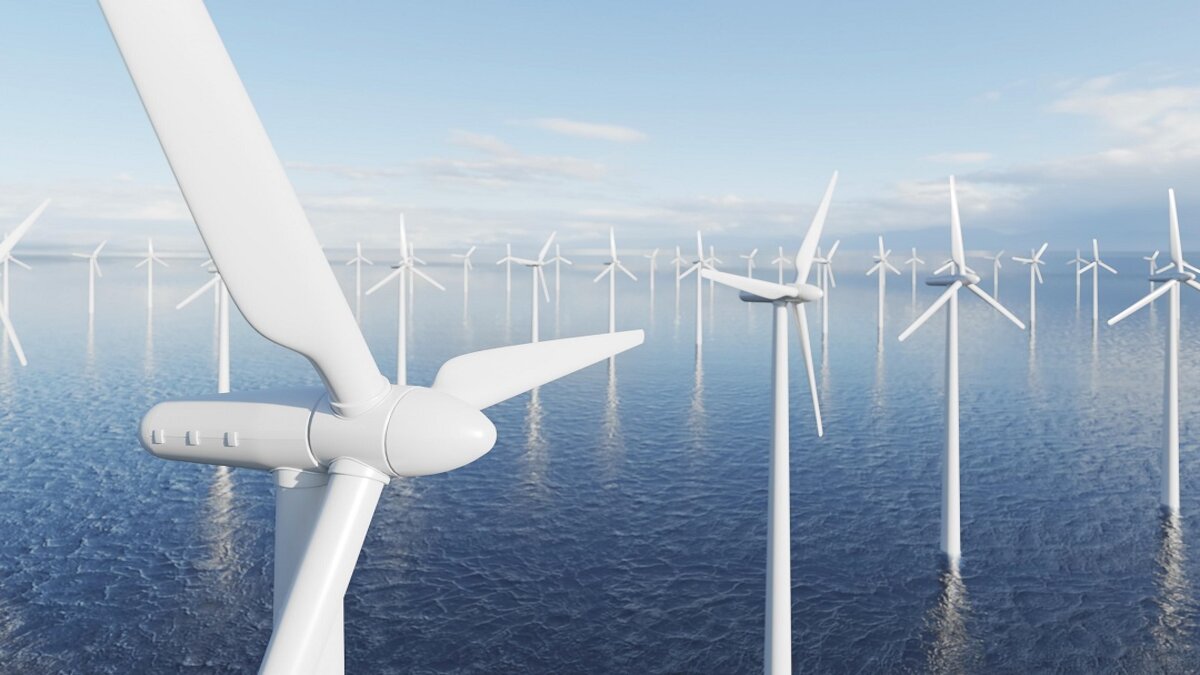
Aiming to Ensure Greater Attractiveness to the Energy Sector in the National Market, the Senate Federal Commission Has Just Approved the New Legal Framework for the Regulation of Offshore Wind Energy Exploration in National Territory.
During last Wednesday, (08/17), the Infrastructure Services Commission (CI) of the Senate approved the project for the regulation of the legal framework for offshore wind energy exploration in national territory for the coming years. The main objective of the Federal Government now is to attract new projects and investments to the renewable energy sector, focusing on solar and wind energy, the main sources of clean and sustainable production in the Brazilian market.
Legal Framework with Defined Regulation for Offshore Wind Energy Exploration in Brazil Approved by the Senate CI and Goes to the Chamber of Deputies
The current scenario of the renewable energy market in Brazil is increasingly favorable for the development of new projects, and the Federal Government seeks to take advantage of the moment to encourage the exploration and production of this resource from clean sources in national territory.
Thus, the Senate Federal Commission approved the project for the legal framework for offshore wind energy exploration in Brazil and is now seeking the continuity of the document.
-
Europe wants to hold onto the black powder from used batteries because this dark residue contains valuable metals, can supply up to 1 million electric cars per year, and has become an industrial dispute.

-
Brazil filled the Northeast with wind turbines but now faces the side effect of 705 giant blades reaching the end of their lifespan by 2032 just in Rio Grande do Norte, while the world projects 43 million tons of waste by 2050.

-
Brazil has filled the Northeast with wind turbines, but now it faces the side effect of 705 giant blades reaching the end of their useful life by 2032 just in Rio Grande do Norte, while the world projects 43 million tons of waste by 2050.
-
Study by Global Project Tracker reveals: While major economies compete for climate leadership, Brazil gathers a potential of US$ 306 billion in sustainable industrial projects and advances in the production of SAF and green aluminum, attracting international capital and strengthening its global strategic position.




The text of the bill still includes the production of solar energy, but the main focus of the Federal Government and the Brazilian Senate currently is to enable the development of offshore wind energy exploration projects.
In addition, the new text approved by the Senate CI is authored by Senator Jean Paul Prates, in the form of the substitute proposed by Senator Carlos Portinho in a definitive manner, now following for a vote by the Chamber of Deputies.
Currently, there are 37 offshore wind projects under environmental analysis, with a total installed capacity exceeding 80 GW, and the national market in this field may become even larger.
“I usually say that this bill is ready for anything that might still be invented using the force of the sea, the waves, the wind at sea. But, obviously, today it stands out in the sense of allowing this new immediate horizon of investments, which is that of offshore wind energy, that is, the generation of energy from wind within the sea, in Brazilian waters. And for that we needed a legal framework, because it involves a whole set of public goods in which there is a need for total legal security so that investors can make their vast investments,” stated the rapporteur Paul Prates.
Check Out the Main Changes and Updates to the Legal Framework Approved by the Senate CI This Week
The former rapporteur of the legal framework proposal for offshore wind energy exploration in Brazil, Carlos Portinho, determined that the government participation charges would start at 1.5% (instead of 5% from the original proposal).
This is one of the main measures and regulations of the legal framework, as well as the granting of the right to use these goods for the generation of energy or the granting through authorization as defined in the project.
Furthermore, this rule will also be applied in territorial sea areas, the continental shelf, and the Exclusive Economic Zone (EEZ). Finally, two types of grant for offshore wind energy exploration projects in Brazil were defined: the Permanent Offering and the Planned Offering.
The first will be held at any time by interested investors in the sector’s projects, while the second refers to the procedure carried out by the granting authority for offering pre-delimited prism areas, but both aim to expand perspectives on the national offshore market.


Be the first to react!