Portuguese
  Spanish


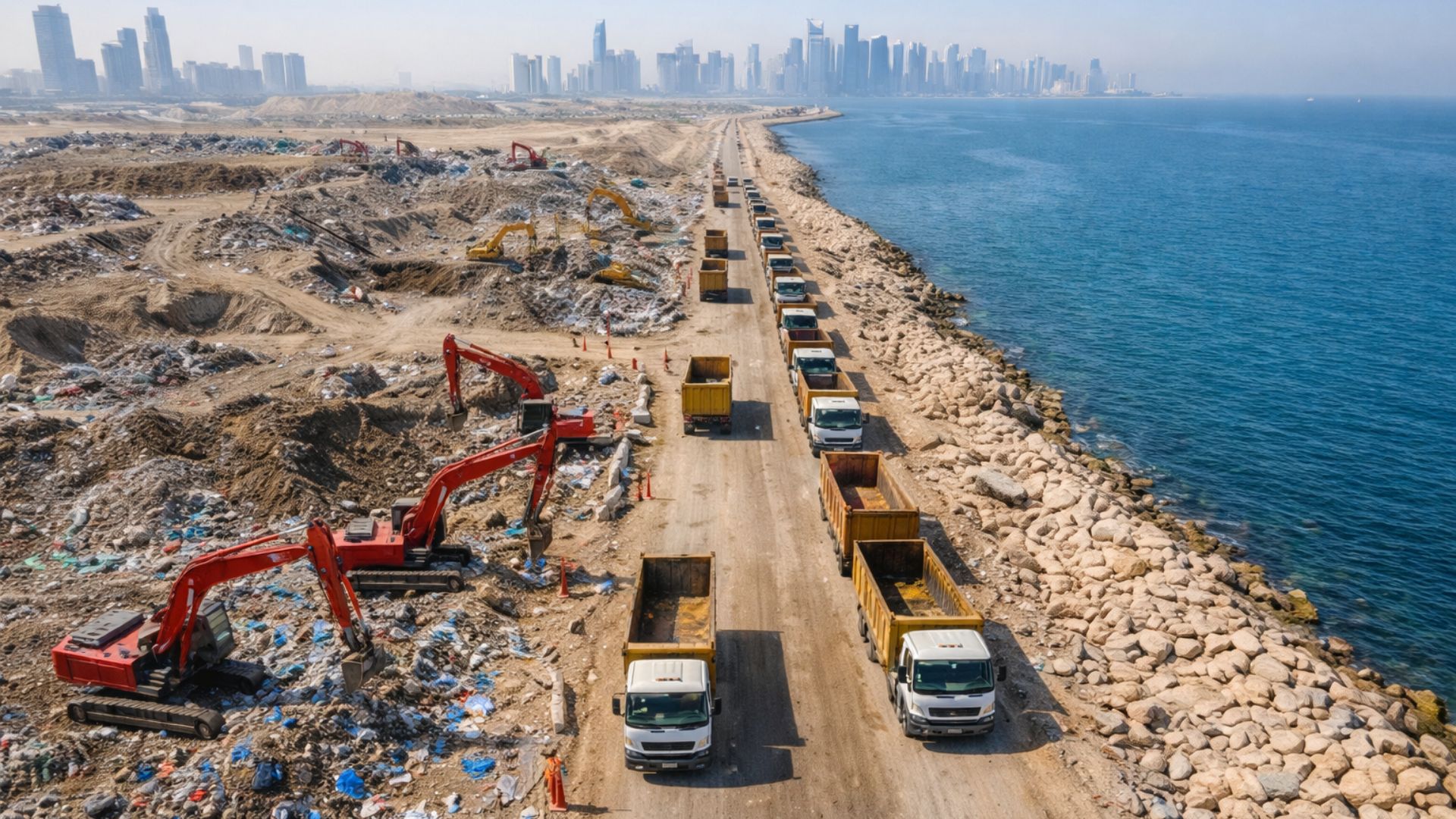


Engineering Transforms Urban And Agricultural Waste Into Fertilizer, Recycled Water And High-Value Inputs, Reducing Landfills And Creating New Economic Chains In The Field. Sorting, Composting, Reuse Of Effluents And Biomass Conversion Reposition Waste As A Strategic Asset For Modern Agriculture.
Every year, mountains of organic leftovers come from homes, industries, and farms, and when well treated, they turn into inputs that return to the field as fertilizer, recycled water, and high-density carbon materials.
In practice, what seemed like “waste” becomes raw material when agricultural and sanitary engineering applies sorting, grinding, controlled composting, reuse of effluents, and thermal conversion of plant fibers, reducing dependence on landfills and imported inputs.
Global Dimension Of Waste And Agricultural Potential
The global account of urban waste already exceeds 2 billion tons per year, according to international organizations, which is equivalent to around 5.8 million tons per day when distributing the annual volume throughout the calendar.
-
U.S. Dumped Tanks, Jeeps, and Coca-Cola into the Pacific in 1945 After British and French Lowball Offer, Creating “Million Dollar Point”

-
WHO Warns of Unnecessary Interventions in Natural Births Worldwide, Advocates for More Human-Centered Care, Reigniting Debate on Medicalization

-
World War II American Bombs Discovered in German City Prompt Evacuation of 20,500 Residents

-
World’s Largest Ice Cave Extends 42 km Beneath Austrian Alps, Revealing a Vast Frozen Realm Preserved by Natural Air Currents


Still, the world of waste related to agriculture can be much larger than what enters municipal waste statistics, because it includes straw, peels, pomace, and co-products that are not always measured the same way or with the same metrics.
Review studies indicate that agricultural waste production, in the form of crop residues, reached around 5 billion tons, a level that underscores the potential for reuse when biomass is treated as a resource.
At the same time, there are surveys that use a broader definition of “waste, co-products, and agricultural discards,” adding categories and production chains, which reached estimates of 18.4 billion tons for the EU28 in a specific accounting exercise.
The discrepancy between numbers is not a detail: it shows that “18 billion” may appear in reports depending on the perspective, but it does not mean, by itself, that this volume is being effectively recycled, nor that it is a standardized global total.
Industrial Composting And Contamination Control
At the beginning of the process, the gain does not come from a miraculous piece of equipment, but rather from the rigorous separation between what decomposes and what contaminates, because metal, glass, and misplaced plastics ruin the agronomic value of the compost.
After sorting, grinding enters as a standardization step, reducing volume and uniformizing particle size to accelerate decomposition, as microorganisms work better when the contact surface increases and the mixture becomes homogeneous.
In open yards or closed tunnels, composting advances with monitoring of oxygen and moisture, while the temperature rises to the typical range of 55°C to 65°C, which helps to reduce pathogens and unwanted seeds in the final material.

Next, the compost goes through a stabilization phase, gets screened to separate coarse fractions, and proceeds to quality control, with parameters that vary by local regulations, but aim for a safe product to return to farms.
The expected result is twofold: less material sent to landfills and more fertility returned to the soil, in a logic where the city stops being just a consumer and starts to feed rural chains with processed organic matter.
Reuse Of Water And Wastewater Treatment In Agriculture
While the solid fraction becomes compost, the liquid challenge enters another track, because agriculture accounts for about 70% of global freshwater withdrawals, a burden that puts pressure on rivers and aquifers in regions already marked by drought.
In a treatment station, the initial barrier retains coarse waste and protects pumps and pipes, and the sequence usually combines sand removal, sedimentation, and biological stages, where microorganisms degrade the organic load in an aerated environment.
When the goal is reuse, disinfection and stricter control stages are introduced, because sanitary safety becomes a condition for taking this water to crops, reducing the demand for clean sources and enhancing resilience during periods of scarcity.
The global picture, however, still reflects significant gaps, as the UN estimates that a relevant portion of domestic sewage does not receive safe treatment before disposal, which highlights the space for improvement in infrastructure and governance.

Biochar, Algae And Biomass As Strategic Inputs
Another front of valorization targets fibrous agricultural waste, such as sugarcane bagasse and coconut husk, which can be dried, ground, and converted into biochar through pyrolysis, a thermal process with little oxygen that avoids conventional burning.
By transforming biomass into a porous, carbon-rich material, the chain creates an input used to improve soil characteristics, while also discussing its climatic role, as the permanence of carbon depends on context and application.
The use of algae as a biostimulant fits into this same logic of “input from waste or biomass,” especially in arid coastal regions, where industrial projects attempt to connect marine production to productivity gains and water retention in the soil.
There are also industrial routes outside of fertilizer and reuse, where biomass and plant fibers become higher value-added materials, such as bamboo in durable products, reducing pressure on wood and plastic.
Even initiatives for cleaning plastic waste in rivers and the sea face challenges in agriculture when discussing the destination of collected material, and the operation only sustains itself when sorting separates what can become a product from what requires controlled disposal.
The common point among all these fronts is the change in logic: separating, standardizing, and treating determines whether waste becomes an environmental liability or an economic asset, and the bottleneck often lies less in the “machine” and more in the quality of collection.
When the machinery works, the field receives compost, recycled water, and carbon inputs, the city reduces costs with landfilling and transportation, and the industry begins to operate with a supply chain that starts precisely where it used to end.