





 Portuguese
  English
  Spanish
  2 min of reading
  0 comments


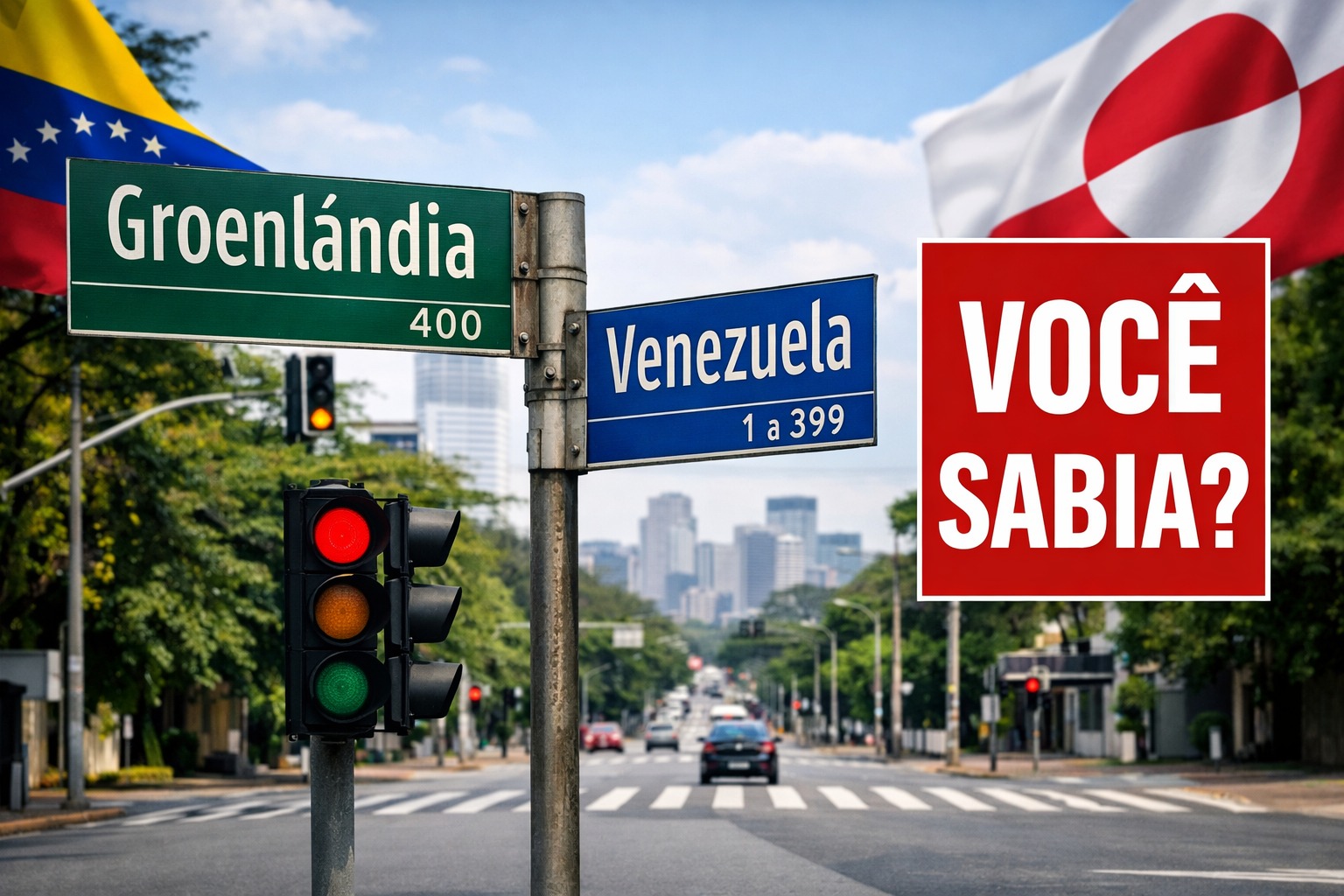
Strange Meeting of Historical Streets in Jardim América Reveals How Ancient Urban Choices Gain New Meanings in Light of Current Global Tensions
In Jardim América, São Paulo, a specific intersection has been drawing curiosity far beyond its immediate surroundings. The intersection of Groenlândia and Venezuela streets, named in the early 20th century, has returned to the center of conversations for an unusual reason: the symbolic coincidence with contemporary debates on geopolitics.
Without any deliberate intention when they were named, these streets have come to carry, in the eyes of residents and visitors, an almost metaphorical meaning.
The location has transformed into a point of informal reflection on global tensions, even though its origin is solely linked to the urban planning of the neighborhood.
-
What many people consider a weed has become a bicycle in the hands of a Chilean. José Tomás transforms coligüe, a native bamboo that grows up to five times faster than pine, into bikes, canes, and cutlery.

-
Reports about the possible arrest of Diogo Defante in the USA during the 2026 World Cup are making waves on social media and raising questions about what really happened.
-
The 71-year-old Korean pastor who built a box in the wall to save abandoned babies and has already taken in more than 2,000 children without asking for the name of any mother.
-
Mother of four faces financial difficulties in São Paulo, swaps jobs outside the home for sweet and savory pies, and turns the kitchen into a source of income to support the family while studying nursing to change her children’s future.




A Meeting of Names and Interpretations
The intersection has gained fame on social media and in everyday conversations as a space laden with symbolism.
Many wonder why these two countries were chosen to name the streets. The answer lies less in politics and more in the historical context of the neighborhood’s formation.
The nickname “the most dangerous spot in SP” arises as irony, with no relation to crime rates or police occurrences.
The expression serves as a lighthearted critique of the international scenario, rather than a real alert.


A Neighborhood Designed to Be Cosmopolitan
Planned in 1913, Jardim América was born with the proposal of reflecting a cosmopolitan and organized spirit.
The choice of country names for the streets was part of this open and connected worldview.
Designed by Companhia City of S. Paulo Improvements and Freehold Land Co. Ltda., the neighborhood was conceived to be a pioneer garden city in South America, inspired by the English garden city concept.
Over time, it attracted illustrious residents, such as João Doria and Paulo Maluf, reinforcing its status of sophistication.
Groenlândia and Venezuela: Between Past and Present
Today, the names Groenlândia and Venezuela resonate in discussions that their creators never anticipated.
The contemporary reading transforms an urban planning decision into a casual symbol of changes in global geopolitics.
Even with the city’s accelerated growth, Jardim América has managed to preserve a significant part of its identity.
Its tree-lined streets, characteristic architecture, and original planning remain as marks of a neighborhood that, more than a century later, continues to attract interest for details that connect history, urbanism, and current interpretations.
With information from TNH1.






-

1 person reacted to this.