Portuguese
  Spanish


Discover How Oil And Gas Certifications Can Boost Your Career And Open Doors In The Energy Market With Recognized And Updated Qualifications.
The oil and gas sector has supported the global economy for over a century. From the first commercial wells in the 19th century to modern offshore platforms, the industry has undergone significant transformations.
With these changes, companies have come to demand qualified and certified professionals.
Therefore, today mastering oil and gas certifications represents more than a differentiator — it is a requirement for those who want to operate or grow in this competitive market.
-
OPEC+ Boosts Oil Supply by 188,000 Barrels per Day in July 2026, Leading to Price Drop from $112 to $89 per Barrel in Under Two Months

-
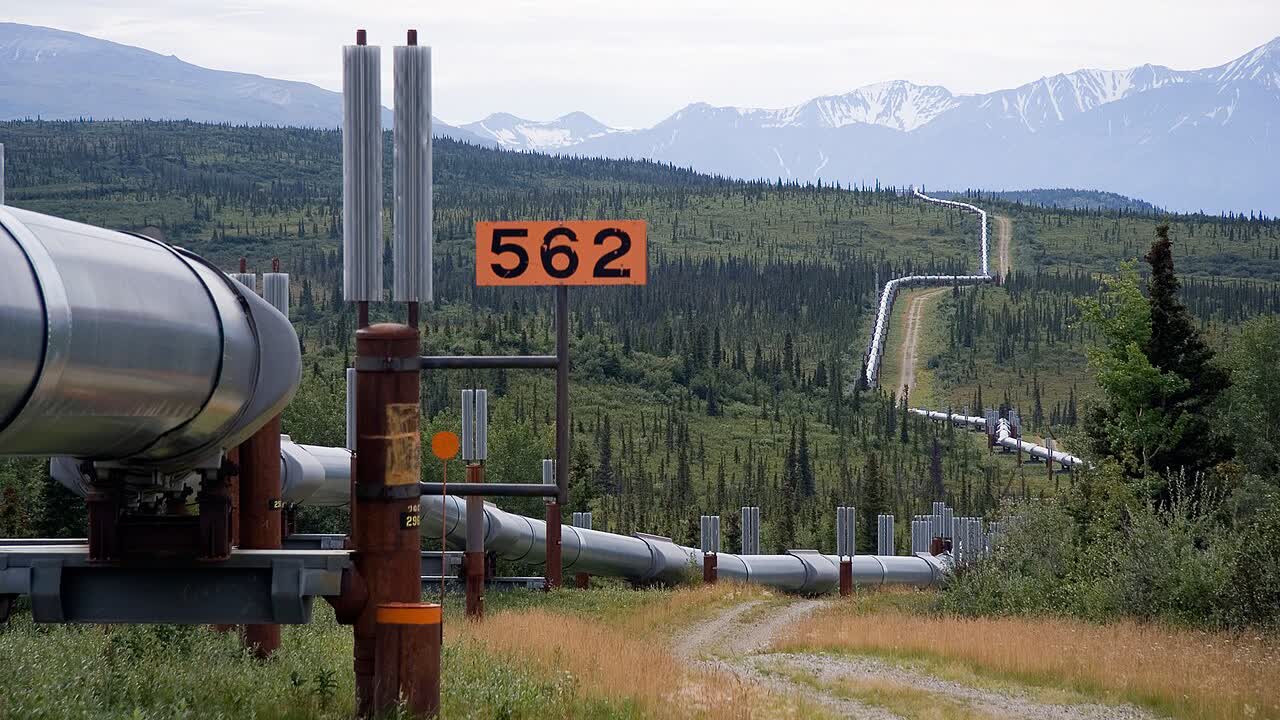
TotalEnergies Signs 20-Year Deal to Purchase 2 Million Tons of LNG from Alaska, Boosting Project Viability
-
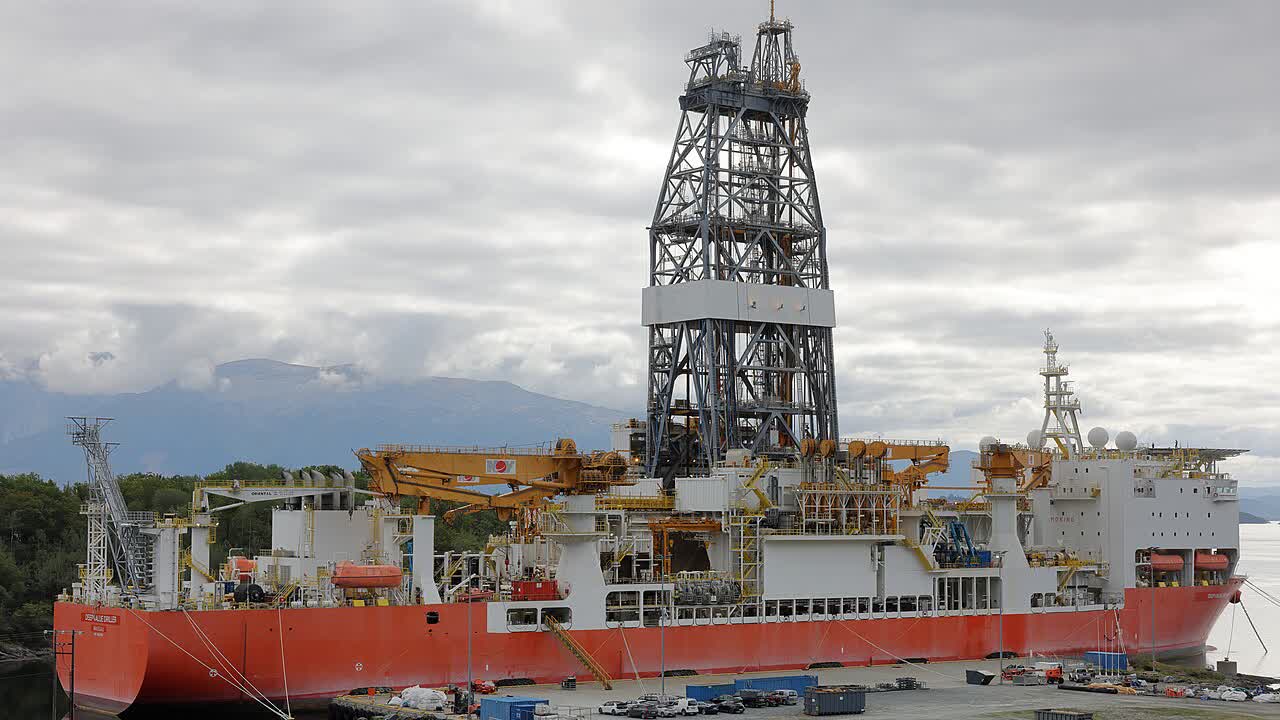
Turkey Deploys Çağrı Bey Drilling Ship to Explore New Oil Frontier Off Somalia’s Coast
-
Golden Pass LNG Ships First Liquefied Gas Cargo from the U.S., Completing $10 Billion QatarEnergy and ExxonMobil Investment

Moreover, certifications standardize technical knowledge, ensure operational safety, and guarantee that professionals are capable of dealing with the complexities of the sector.
More than diplomas, these certifications serve as formal recognitions that open doors in national and multinational companies.
Although the topic may seem technical or bureaucratic at first glance, understanding this universe is simpler than it seems.
Furthermore, certification demonstrates the professional’s commitment to continuous improvement and adherence to international standards. This enhances the resume and strengthens the sector’s image in society.
After all, working in oil and gas requires great environmental, social, and economic responsibility.
The Origin of Certifications in the Sector
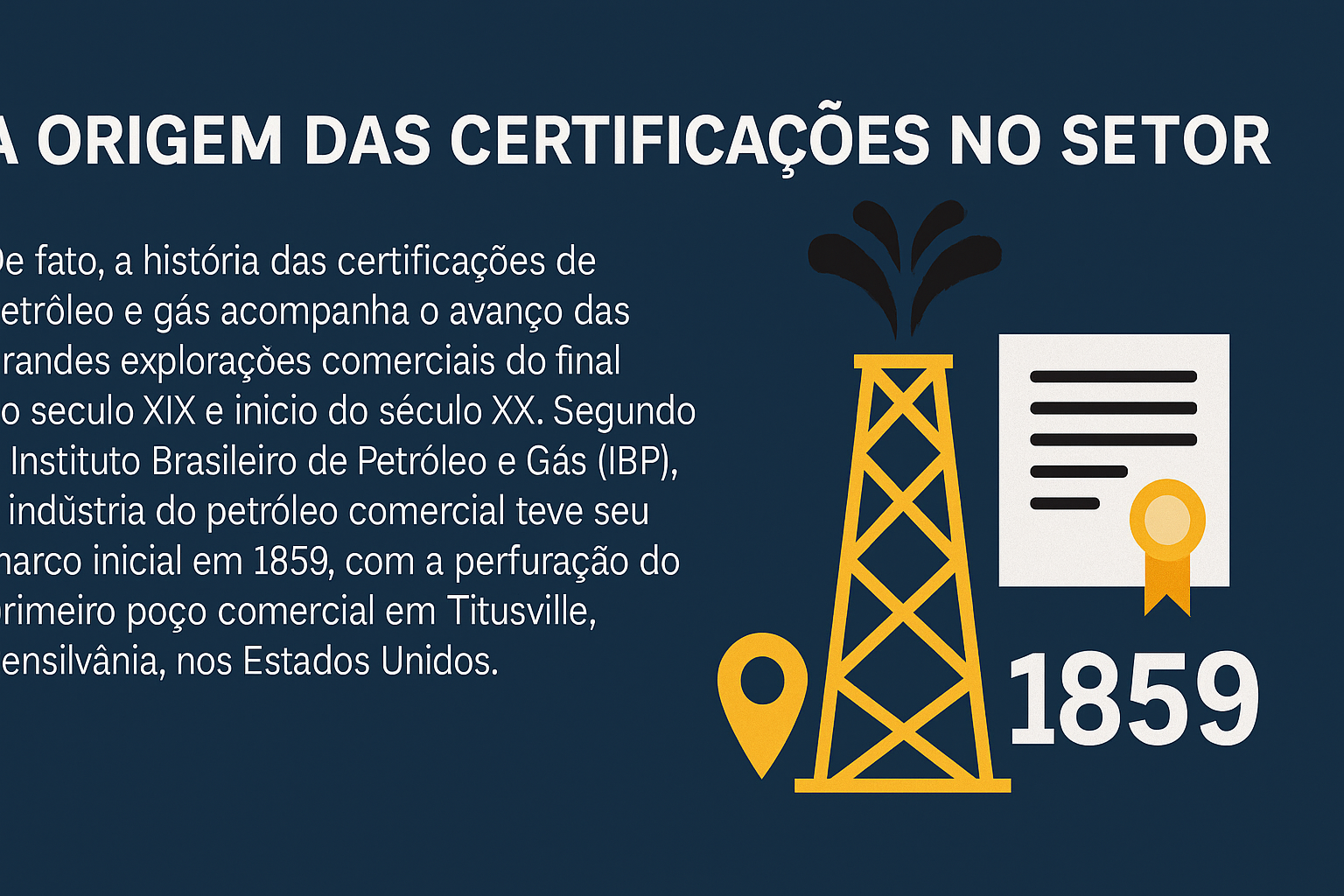
In fact, the history of oil and gas certifications follows the advancement of major commercial explorations in the late 19th and early 20th centuries.
According to the Brazilian Institute of Oil and Gas (IBP), the commercial oil industry had its starting point in 1859, with the drilling of the first commercial well in Titusville, Pennsylvania, USA.
This event is recognized as the starting point for the modern oil industry.
As operations became more dangerous and complex, the need to standardize the work of engineers, technicians, and operators grew considerably.
The IBP emphasizes that, especially after the First World War, there was a significant increase in the demand for technical standards and safety.
In the United States, the American Petroleum Institute (API), founded in 1919, established the first safety and industrial training standards for the sector.
The API continues to be one of the largest references in technical certifications for the global oil and gas market.
Over time, international organizations began to create globally recognized certifications.
The American Petroleum Institute played a key role in this process, developing technical standards and certification processes that are now adopted worldwide.
Furthermore, the expansion of offshore exploration, especially in the North Sea and the Gulf of Mexico, starting in the 1960s, further accelerated the need for these certifications, as reported by the National Agency of Petroleum, Natural Gas, and Biofuels (ANP).
Tragic events, such as the Deepwater Horizon disaster in 2010, reinforced the importance of certifications to ensure rigorous safety standards, preventing errors and protecting lives and the environment.
The ANP highlights that this accident marked a turning point in the regulation of the global industry.
Since then, sector regulation and the demand for certified professionals have gained even greater relevance.
The Importance of Certifications for Safety and Career
Working with oil and gas means operating in environments that require responsibility, technical precision, and, above all, attention to safety.
An operational error can cause significant financial losses, environmental impacts, and even human tragedies.
For this reason, certifications ensure that everyone involved is properly qualified to face these challenges.
Moreover, the market highly values certified professionals. Many companies require specific certifications for hiring, while others use them as criteria for promotions and salary increases.
In a globalized sector, being certified by an internationally recognized entity qualifies the professional to operate in various parts of the world.
Another important benefit is that certifications facilitate professional mobility. A certified professional can operate in different segments of the industry, such as drilling, production, logistics, and maintenance, expanding their opportunities and diversifying their experience — a key factor for a long and solid career.
According to data from the National Agency of Petroleum, Natural Gas, and Biofuels (ANP), the Brazilian oil and gas sector employs over 1 million people directly and indirectly.
The demand for qualified and certified professionals grows every year to keep up with technological advancements.
How to Obtain Oil and Gas Certifications
There are various certifications focused on specific areas, such as drilling, safety, equipment maintenance, risk management, and production.
Some are technical and aimed at operational professionals. Others require higher education and proven experience, being suitable for engineers, supervisors, and managers.
The first step to mastering certifications is to identify the career you wish to pursue.
For example, those in drilling may seek certifications such as Well Control, offered by the International Well Control Forum (IWCF), founded in 1989, which is an international reference in this area.
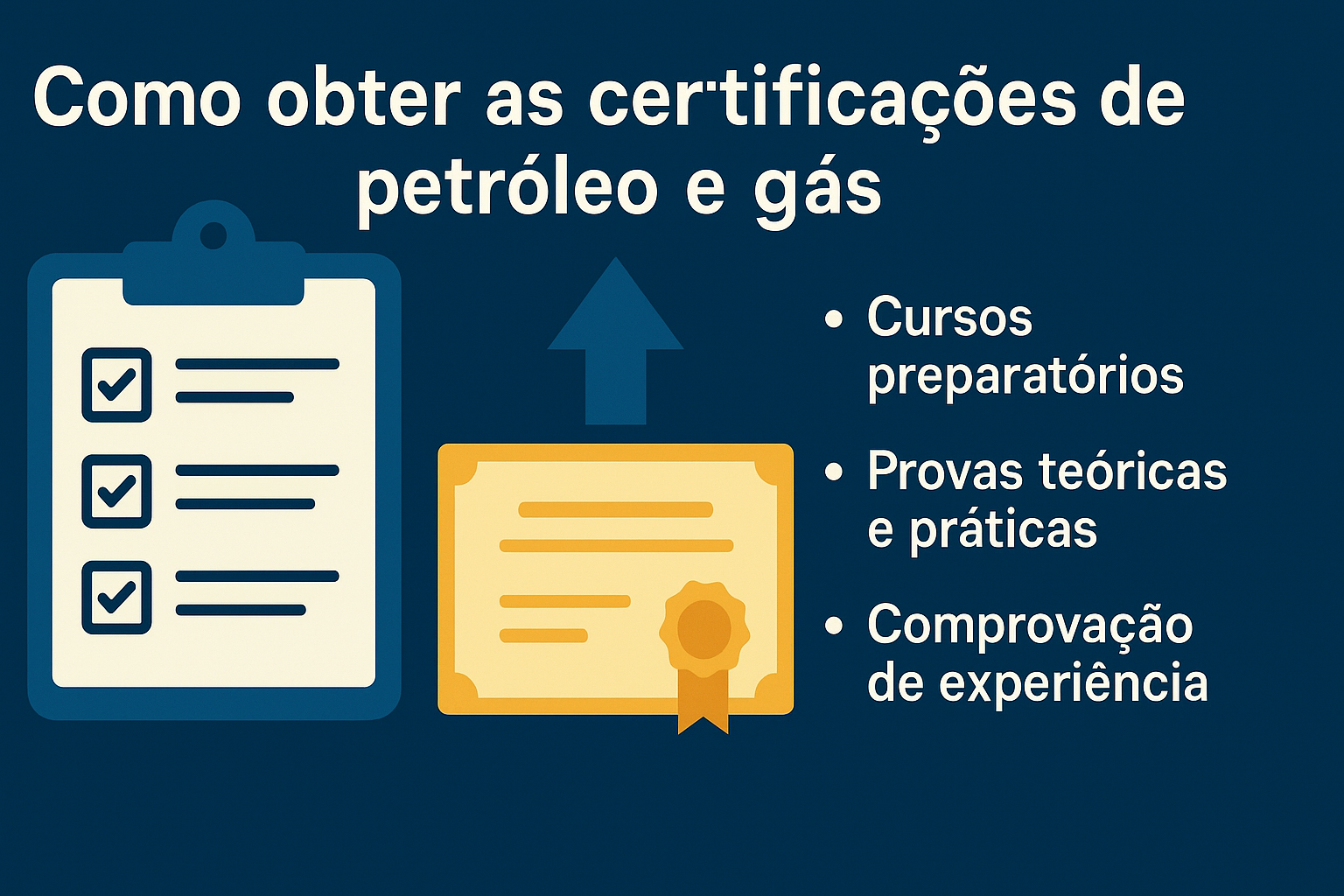
Typically, the process involves preparatory courses, theoretical and practical exams, and often proof of experience in the sector.
Institutions usually require periodic updates, ensuring that professionals keep up with new technologies and safety standards.
It is also possible to combine different certifications to become a more well-rounded professional, prepared for various challenges.
This type of investment can lead to higher responsibility roles and better compensation.
In some cases, companies provide financial support and internal training to encourage their employees.
Certifications Recognized in the National and International Market
Among the most valued oil and gas certifications are those issued by the American Petroleum Institute (API), which cover areas such as equipment inspection, welding, and operations management.
The International Well Control Forum (IWCF), as mentioned, is another important entity offering certifications in well control — essential for those working directly in exploration.
In addition, there are certifications focused on workplace safety, such as those from the Offshore Petroleum Industry Training Organization (OPITO), which are especially sought after in offshore operations.
These certifications cover topics such as platform abandonment, firefighting, and first aid in maritime environments.
In Brazil, institutions such as the National Service for Industrial Learning (SENAI), the National Agency of Petroleum, Natural Gas, and Biofuels (ANP), and the Brazilian Institute of Oil and Gas (IBP) offer recognized courses and certifications, often in partnership with international entities.
The choice of certification should consider the region where one wishes to operate, as certain areas emphasize certain specific certifications more.
Therefore, researching local demands and consulting experts helps to make the best decision.
The Importance of Continuous Learning
To master oil and gas certifications, it is essential to understand that education never ends.
The sector is in constant evolution. New technologies, regulatory changes, and scientific discoveries require professionals to adopt a continuous learning stance.
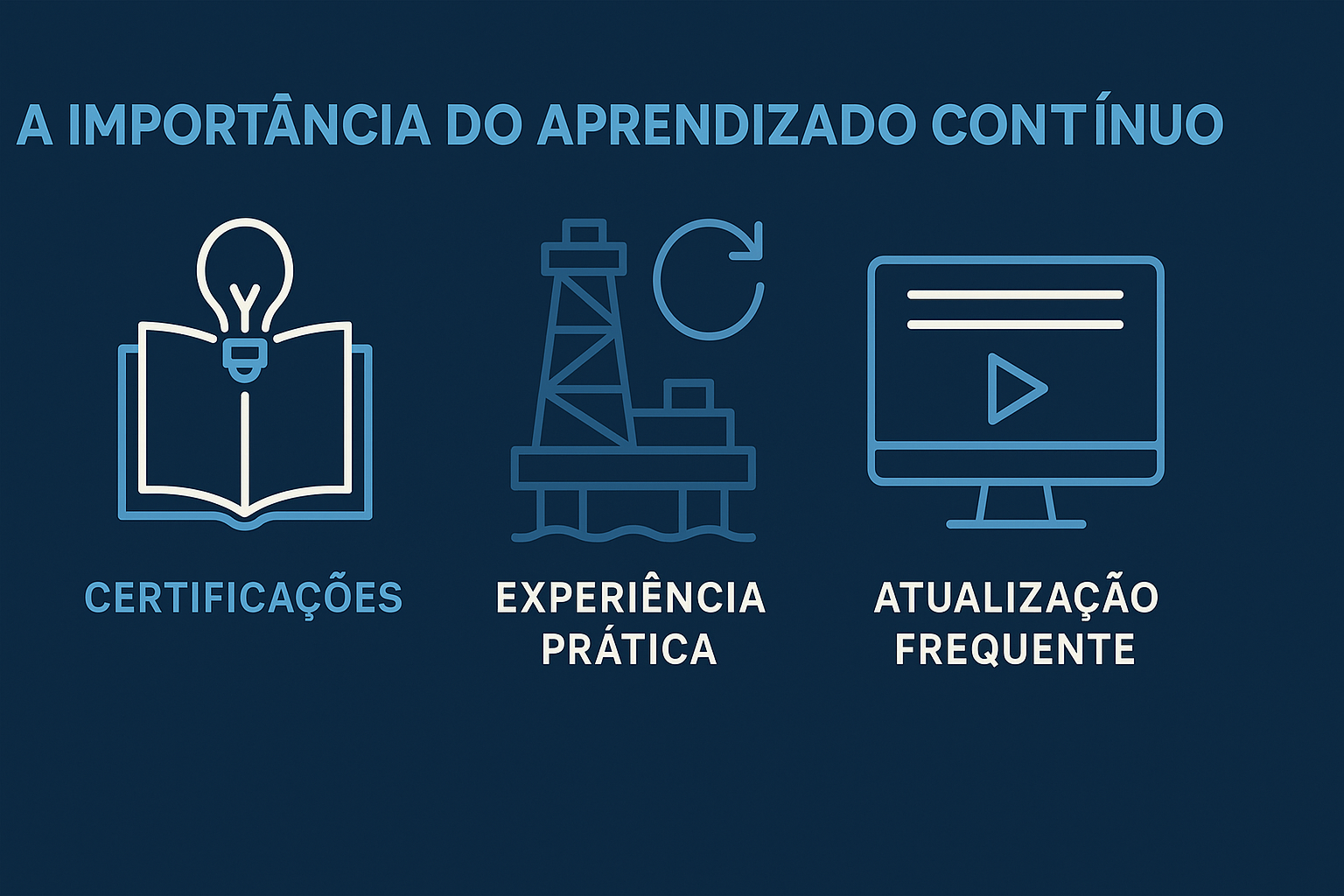
In addition to obtaining certifications, practical experience and frequent updates are essential.
Many professionals start with a basic certification and, throughout their careers, seek more specific or advanced ones.
Mastering certifications involves developing a mindset focused on excellence, safety, and environmental responsibility — values that are indispensable for the sustainability of the sector.
Today, knowledge in renewable energies, emission reduction, and digital technologies in the oil and gas sector are part of the curriculum of certified professionals.
This highlights the industry’s adaptation to the new demands of the market and the planet.
According to the 2023 report from the International Energy Agency (IEA), the energy transition is directly impacting the production processes of the sector, reinforcing the constant need for updates and certifications for professionals.
Impacts of Oil And Gas Certifications On Professional Trajectory
Certified professionals have better chances of obtaining good jobs, greater mobility between companies and projects, as well as more competitive salaries.
In times of crisis or economic downturn, they tend to stay employed or reposition themselves faster.
Certifications also serve as recognition and credibility, showing the employer that the professional takes their role seriously, commits to best practices, and performs well in complex and challenging work environments.
For those just starting out, the path may seem long and even daunting.
However, with dedication, planning, and persistence, achieving the necessary certifications and building a solid career in the oil and gas industry is entirely possible.
Furthermore, certifications promote the building of a network of contacts with other professionals in the sector, opening doors for opportunities and partnerships.
Participating in training, forums, and related events expands knowledge and connects the professional to market trends.
Therefore, whether you are a beginner or experienced, it is never too late to invest in education and tread a safe path towards professional growth.
The market continuously evolves, and qualification through certifications is the safest way to stand out.
Being updated, certified, and prepared ensures a long, safe, and promising career in the oil and gas industry.