






 Portuguese
  Spanish


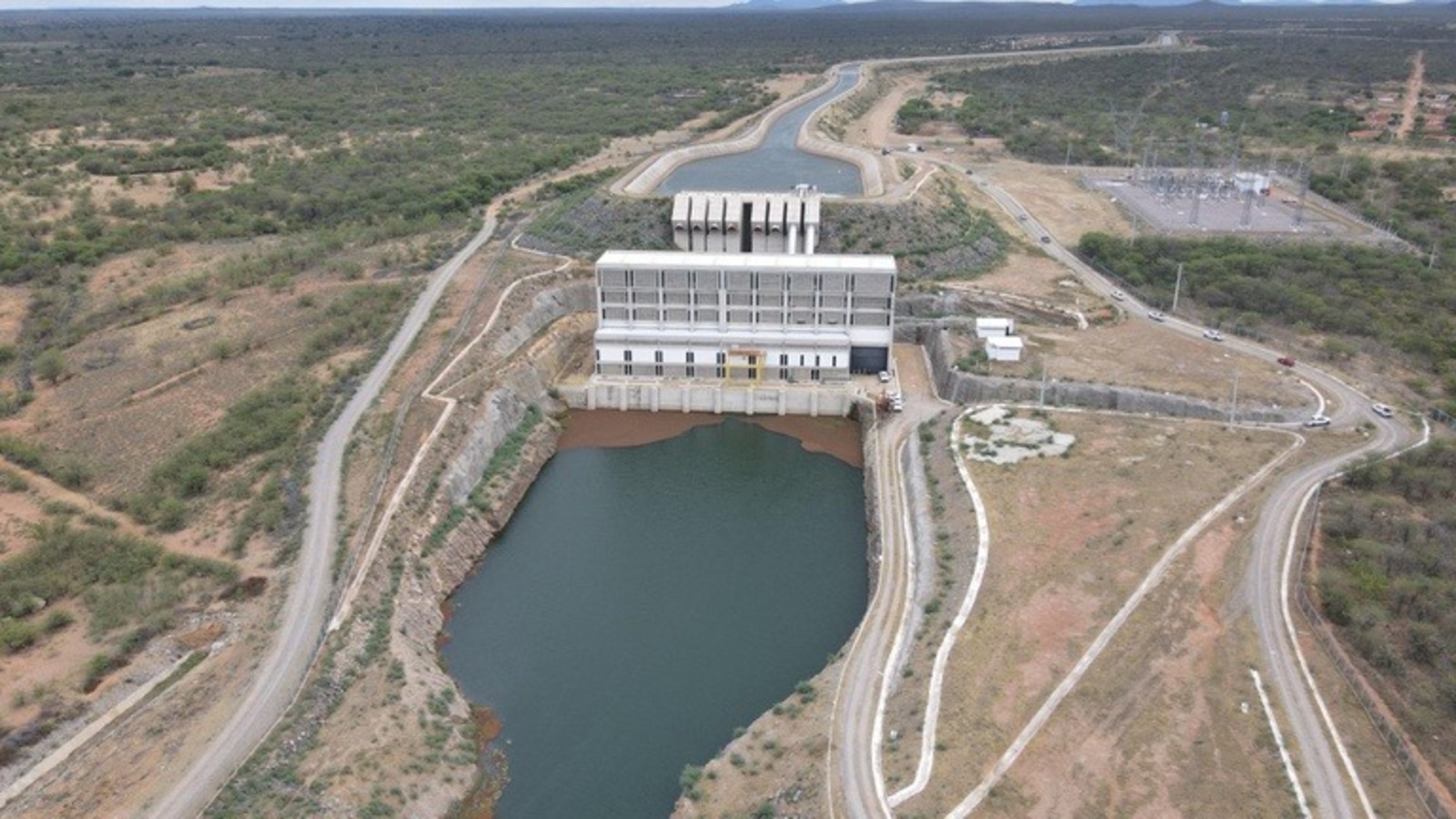


Integration Project of the São Francisco River Raises Water by Up to 332.43 Meters, Overcomes Elevations of 200 Meters, Covers 477 Kilometers of Channels, and Ensures Water Security for 12 Million People in 390 Municipalities of the Semiarid Region
The Integration Project of the São Francisco River uses pumping stations to deliver water to elevated areas of the semiarid Northeast, overcoming elevation differences of up to 332.43 meters and ensuring water security for 12 million people.
The PISF was designed to ensure regular supply to around 390 municipalities in the northeastern semiarid region, confronting limitations imposed by the terrain and the historical water scarcity of the area.
Unlike systems based solely on gravity, the project requires the continuous elevation of water drawn from the São Francisco River to higher land levels.
-
Bosch Unveils Revolutionary 2.3 kg Hub Motor for E-Bikes with 45 Nm Torque and 400 Watts Power, Eliminating Resistance Above 25 km/h in Historic Shift for German Manufacturer

-
Brazilian Engineer Develops Marine Bacteria from Ubatuba into a Mini Power Plant Generating 227 mW per Square Meter, Cleans Air by Capturing CO₂ and Releasing Oxygen
-
Trump Signs Orders to Develop Quantum Computer and Bolster U.S. Systems Against Encryption-Breaking Attacks

-
Breakthrough in Clean Energy: Scientists Develop Battery-Free Artificial Photosynthesis Using Only Sunlight to Generate Chemical Energy


In certain stretches, water is raised by about 200 meters, a height comparable to a 65-story building, before flowing by gravity.
Engineering Applied to the Terrain of the Semiarid Region
The adopted system combines pumping stations, intermediate reservoirs, and long artificial channels, forming a technical route adapted to the natural elevations of the region.
According to Bruno Cravo, director of the Strategic Projects Department of the National Water Security Secretariat of MIDR, the project required specific solutions to overcome pronounced elevation differences.
“The PISF is a project with very particular engineering,” said Bruno Cravo, from SNSH of MIDR, highlighting the robustness of the pumping stations.

Operation of the North Axis
In the North Axis, the first Intermediate Pumping Station, EBI-1, located in Cabrobó (PE), raises the water by approximately 36 meters.
This initial elevation is equivalent to a building of about 12 stories and marks the beginning of the upward journey in the North Axis.
The second station, EBI-2, located in Terra Nova (PE), provides an additional elevation of 58.5 meters, equivalent to nearly 19 stories.
Highest Point of the North Axis
The highest point of the North Axis is located in Salgueiro (PE), where the EBI-3 raises the water to 93.6 meters.
This height corresponds to a building of approximately 30 stories, consolidating the greatest altimetric challenge of this axis.
In total, the three stations overcome an elevation difference of 188 meters along 82 kilometers of the canal’s extension.
This effort allows water to reach areas of the northeastern interior situated above the natural river level.
Structure of the East Axis
The East Axis presents even greater challenges, with 170.6 kilometers in length and six Flow Pumping Stations.
The first three stations, EBV-1, EBV-2, and EBV-3, located in Floresta (PE), raise the water by 168.47 meters.
This set of elevation is equivalent to a 56-story building, concentrating a significant portion of the axis’s energy effort.

Final Stages of the East Axis
After Floresta, the water continues to EBV-4, in Custódia (PE), where an additional elevation of 59.2 meters occurs.
In Sertânia (PE), EBV-5 promotes an elevation of 43.3 meters, while EBV-6 adds another 63.38 meters to the route.
In the end, the East Axis overcomes a total elevation of 332.43 meters, comparable to a building of over 110 stories.
Gravity Distribution
After each pumping stage, the water is directed to higher reservoirs and begins to flow by gravity.
The system uses channels, aqueducts, and tunnels to conduct water to the next station or distribution point.
This mechanism of ascent and descent allows the project to operate in an integrated manner with the regional terrain.
Territorial Reach of the Project
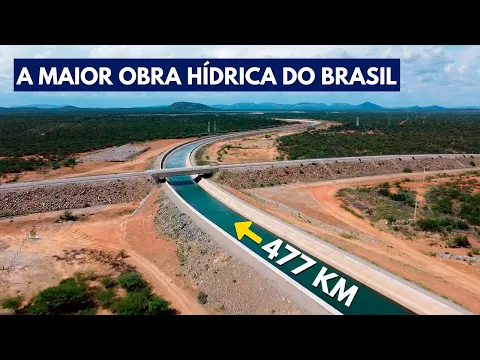
In total, the PISF has about 477 kilometers of channels, benefiting Pernambuco, Ceará, Paraíba, and Rio Grande do Norte.
The infrastructure was designed to serve both large centers and small communities in the semiarid region, according to federal government authorities.

Social Impact and Regional Development
The Minister of Integration and Regional Development, Waldez Góes, stated that the transposition acts as a policy for regional development.
“The transposition traverses the semiarid region benefiting small communities,” declared Waldez Góes from MIDR while commenting on the social effects of the project.
He emphasized that the arrival of water improves living conditions and stimulates local economic activities.
As a precursor, the project has established itself as one of the largest water works in the country, integrating large-scale engineering and public policies aimed at water security.
With information from GOV.


O estado da Bahia é o que tem a maior área territorial banhada pelo Velho Chico e até o momento não foi contemplado pelo projeto. Fala-se no eixo leste que irá melhorar as cidições de vids sofridos agricultores familiares e apesar do custo não excessivo do projeto nada se comenta sobre o mesmo. É lamentável.
Interessante que a reportagem não cita nenhum governo ou grupo político e aí vem alguns cidadãos falar em Dilma, Bolsonaro e Lula. Obras públicas é obrigação, é pra isso que pagamos imposto. O que cada um fez não foi mais que obrigação. Parabéns ao CPG
O duro da polarização é isso. A reportagem nem fala de governo. Todas as estações de bombeamento foram inauguradas entre 2015 (Dilma) e 2021 (Bolsonaro), nenhuma com Lula, mas os comentários são neste sentido. É triste o destino do Brasil.