






 Portuguese
  Spanish


The RS Social Recomeço program, from the Gaucho government, will invest R$ 40 million to offer transitional housing to families in street situations. They will be microhouses of 18 m², made with prefabricated modules with bathroom and kitchenette, in four cities, where each person can stay for up to two years.
Taking someone off the street is not just giving a roof for one night, it’s giving time and structure for the person to rebuild. It was with this logic that Rio Grande do Sul created a program to place families in street situations inside their own microhouses made of prefabricated modules, with bathroom and kitchen, for up to two years. The bet is high and has a defined value: R$ 40 million to build small villages in four Gaucho cities.
The program is called RS Social Recomeço and was instituted by the state government in December 2025, according to the Portal of the State of Rio Grande do Sul. The inspiration came from Vila Reencontro, a program from São Paulo that already uses microhouses to accommodate those who have lost everything. Now it’s the South of the country adapting the model, with its own money and named cities, in a plan that aims not only to shelter but to prepare the qualified exit from the street situation.
What is RS Social Recomeço and how much does it cost
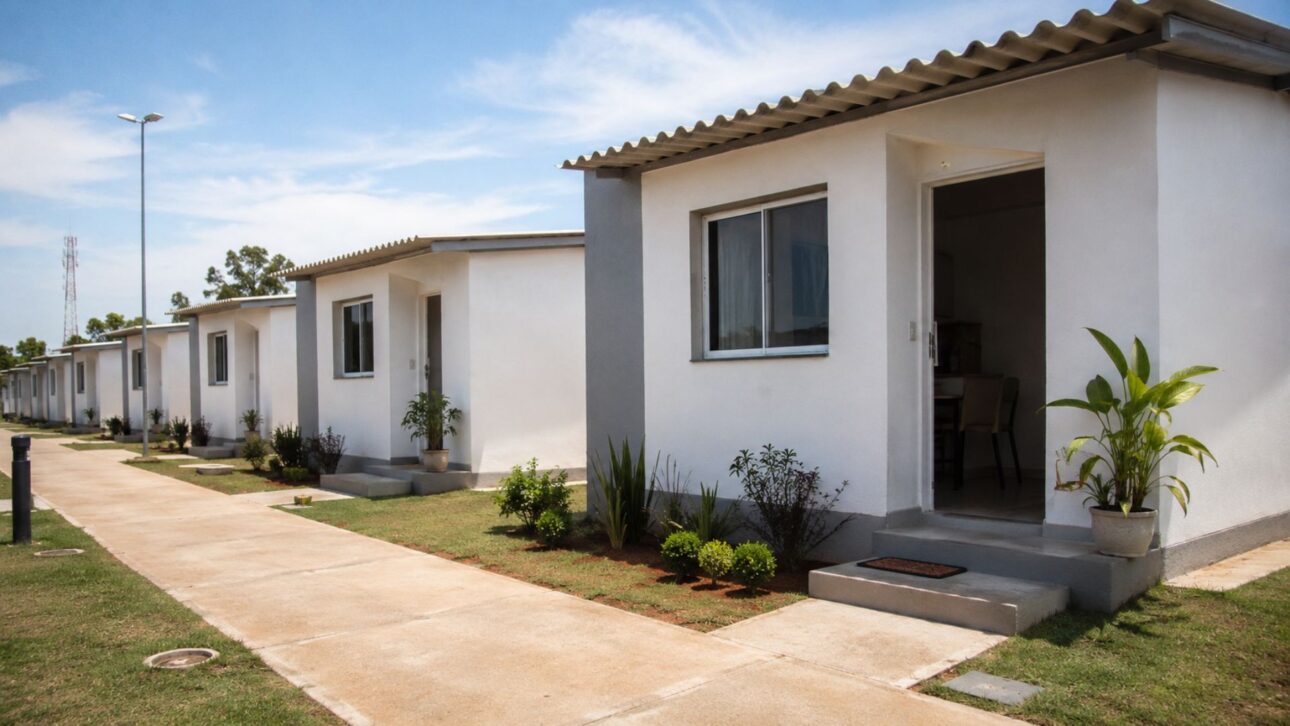
There are R$ 40 million, coming from the Rio Grande Plan Fund, the Funrigs, to implement transitional housing in four municipalities: Porto Alegre, Pelotas, Caxias do Sul, and Santa Maria. Each of these cities will host one of the so-called Recomeço Cities, which are the sets of microhouses with all the support structure around.
-
Brazil’s Piauí State Invests Over $2 Million in Road Restoration and Urban Asphalt Projects

-
Affordable Rainwater Harvesting: Simple PVC System Collects Up to 5,000 Liters for Under $100, Offering a Cost-Effective Alternative to Expensive Installations
-
Brazilian Government Invests $48 Million to Upgrade Highway in Southern Brazil, Elevates Sections to Mitigate Flood Impact

-
Architect Uses 7,000 Clay Tea Cups to Create Natural Air Conditioning, Cooling House by 5°C and Reducing Energy Bills




At the forefront of the program is the Department of Social Development, Sedes, linked to Eduardo Leite’s government. The proposal is not patchwork assistance, but rather a public policy designed to solve the root cause. “This is a structuring proposal for a complex issue”, stated Beto Fantinel, the state’s Secretary of Social Development, summarizing the spirit of RS Social Recomeço.
The criteria for who will be assisted is specific. The focus is on individuals and families experiencing homelessness who have the potential to progress in a reintegration process, with support to return to the job market and rebuild connections. It’s not just about handing over the key, it’s about walking together until autonomy, which is precisely what differentiates this type of program from a common shelter.
Microhouses of 18 m² with bathroom and kitchenette
The heart of the program is the microhouses. Each unit is about 18 m² and is assembled from prefabricated modules, which speeds up construction and reduces costs. Despite the compact size, each microhouse comes with its own bathroom and a kitchenette, enough for a family to have privacy and dignity, away from the overcrowding of a collective shelter.
The choice of prefabricated modules is not a technical detail for no reason. This type of construction allows for the rapid assembly of multiple units, standardizes quality, and enables the swift establishment of villages in the four cities. It’s the same industrial logic that made the São Paulo model viable, and which Rio Grande do Sul now replicates with its own resources.
Having a bathroom and kitchen inside the house changes everything for someone coming from the street. It means being able to cook their own food, take a shower with privacy, and close the door at night. These are simple things that most take for granted, but for those who slept on the sidewalk, they represent the beginning of a new life, and it’s this leap that the 18 m² microhouses deliver.
The Recomeço Cities: much more than just a house
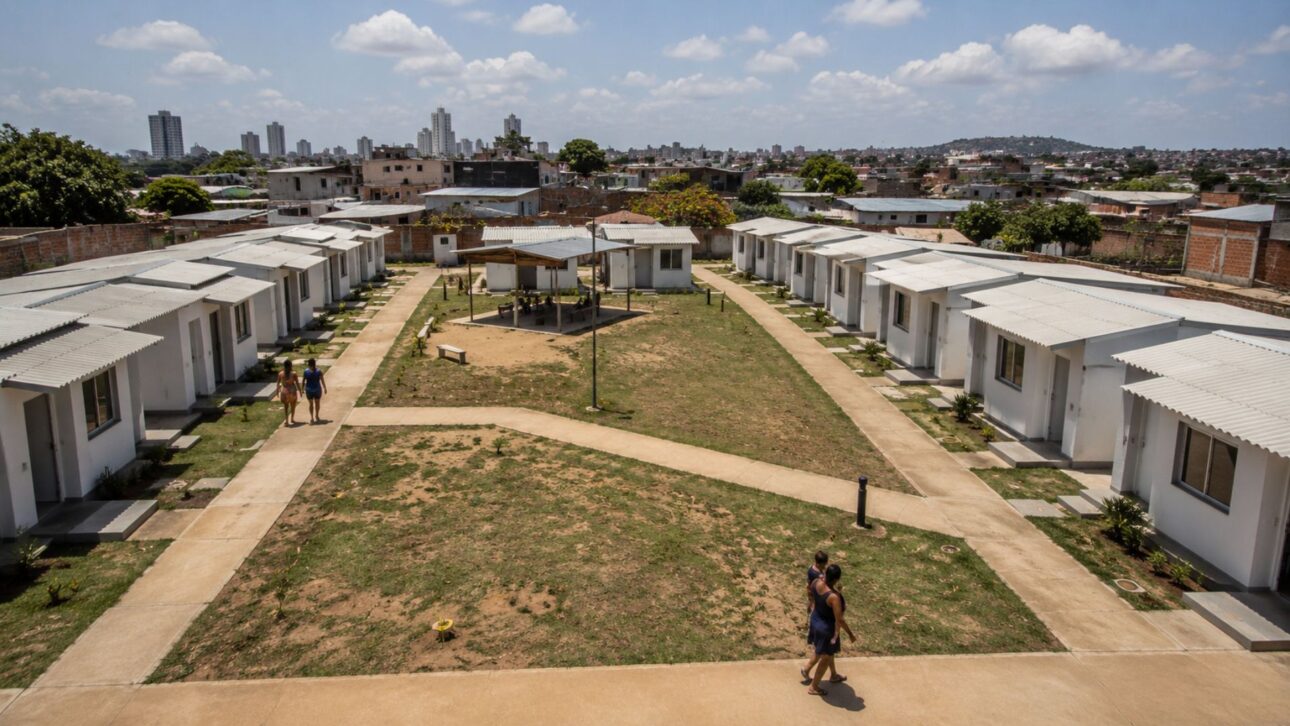
In addition to the prefabricated module microhouses, the complexes will have communal kitchens and laundries, a dining hall, garden, playground, playroom and library, sports court, and a multipurpose room for workshops and courses. The idea is that the person has, in one place, everything they need to rebuild their routine.
The structure considers even the details that are often forgotten. There is provision for space to care for animals and parking for the carts that many homeless people use to store their belongings. These are considerations that show respect for the reality of those who arrive, rather than requiring the person to abandon everything they have to be accepted.
All this aligns with essential public services. The Recomeço Cities will be integrated with health, education, and social assistance, forming a network around the resident. It’s not just a cluster of small houses; it’s a mechanism for social reintegration, designed so that the stay in transitional housing truly leads somewhere.
Up to two years and a plan to get off the street
The length of stay is one of the most intelligent aspects of the design. Each family can stay in the microhouses for up to two years, a period that can be extended upon technical evaluation. Two years is enough time to address health issues, find work, and save some resources, which a shelter for a few nights would never allow.
The keyword here is transitional. Transitional housing is not forever, and that’s the point: it functions as a bridge between the street and independent living, not as a final destination. The goal is for the person to leave the microhouse better than they entered, ready to support themselves, opening the spot for another homeless family to also restart.
To make this happen, the program offers much more than walls. Residents will have healthy food, social support, digital inclusion, and opportunities for professional qualification and income generation. It’s the combination that transforms a temporary roof into a true restart, and that gives the name to RS Social Recomeço.
Why RS was inspired by Vila Reencontro in São Paulo
The gaucho model was not invented from scratch. It draws directly from Vila Reencontro, an initiative in São Paulo that built villages of prefabricated module microhouses to accommodate homeless people and became a reference in the country. Copying what has already worked, instead of reinventing the wheel, is a wise public management decision.
The difference lies in the numbers and reach specific to Rio Grande do Sul. While Vila Reencontro is the showcase of São Paulo, RS Social Recomeço brings a gaucho investment of R$ 40 million, four defined cities, and the brand of Recomeço Cities. It’s the same principle of transitional housing adapted to another state reality, with local identity and budget.
This dissemination is perhaps the most important news behind the announcement. When a successful model jumps from one state to another, it ceases to be an exception and starts becoming national policy. If São Paulo’s example already inspires the South, other states might be next, and microhouses for the homeless population may cease to be a rarity in Brazil.
The size of the challenge and what to expect
It’s worth keeping your feet on the ground in light of the announcement. The RS Social Recomeço was established in December 2025 and is still in the early stages of implementation, which means that success will depend on execution, maintenance of the villages, and monitoring of each family. Announcing is the easy step; sustaining the program for years is the difficult part, and this is where such initiatives are usually scrutinized.
There is also the issue of scale. Four cities and a budget of R$ 40 million are a real advancement, but the homeless population is growing in large Brazilian cities, and no isolated village solves the problem on its own. The program is a bold bet, not a magic solution, and it should be seen as the beginning of a path, not the end point.
Even so, doing something structured is much better than doing nothing. By allocating money, naming cities, and copying a model that already works, Rio Grande do Sul moves from discourse to action. It’s the kind of initiative that deserves to be closely monitored, because if it succeeds, it becomes a map for the rest of the country to address homelessness with dignity.
In the end, the RS Social Recomeço sums up a simple and powerful idea: to provide housing, time and support for those on the streets to truly restart. With R$ 40 million, micro-houses of 18 m², and up to two years of transitional housing in four cities, Rio Grande do Sul bets that dignity and structure are worth more than alms or removal. It’s social housing thought of as a bridge, not as a favor.
And you, do you think your city should create something similar to the Recomeço Cities to take families out of homelessness, or do you have doubts if the micro-house model would work there? Share in the comments what you think about this path.




Be the first to react!