Portuguese
  Spanish


Cosmic Phenomenon Observed 10 Billion Light-Years Away Reveals The Most Powerful Explosion Ever Detected Around A Supermassive Black Hole And May Help Scientists Understand How Giant Stars Form In The Centers Of Galaxies.
Astronomers recorded the most powerful and distant explosion ever associated with a supermassive black hole, a flash that, at its peak, shone with the brightness of 10 trillion suns.
The phenomenon, located about 10 billion light-years from Earth, has been nicknamed “Superman” and may help identify new populations of giant stars in the central regions of galaxies, according to the researchers responsible for the discovery.
An Unprecedented Event
According to a study published in the journal Nature Astronomy, the flash originated from an active galactic nucleus (AGN) — a compact and luminous region powered by a black hole that consumes gas and dust.
-
At 17, she hand-painted her first watercolor design for school uniforms; her brand grew without investors, sold 135,000 pieces, and aims for $3 million in revenue by 2026.

-
Shell Discovers Intact Early 19th-Century Wooden Shipwreck in the Gulf of Mexico at Over 1,300 Meters Deep
-
Brazilian Entrepreneur Turns Door-to-Door Jewelry Sales into a Family Business Empire with Over 70 Stores

-
$75 Million Bridge in Brazil Opens to Connect Cities, Create Jobs, and Cut Travel Time from 30 to 2 Minutes; Spanning 1.24 km, It’s Among the Country’s Largest and Ends Decades of Ferry Queues.




As this material rotates around the black hole and is compressed, it reaches extreme temperatures and releases a large amount of energy.
The scientists concluded that the origin of the explosion is a tidal disruption event, when a star is torn apart by getting too close to the gravitational field of the black hole.
In this case, the star had at least 30 times the mass of the Sun, while the black hole involved has about 500 million solar masses.
The brightness of Superman was reported to be 30 times more intense than any other similar event ever recorded, surpassing the previous record known as “Scary Barbie”.
How The Phenomenon Was Identified
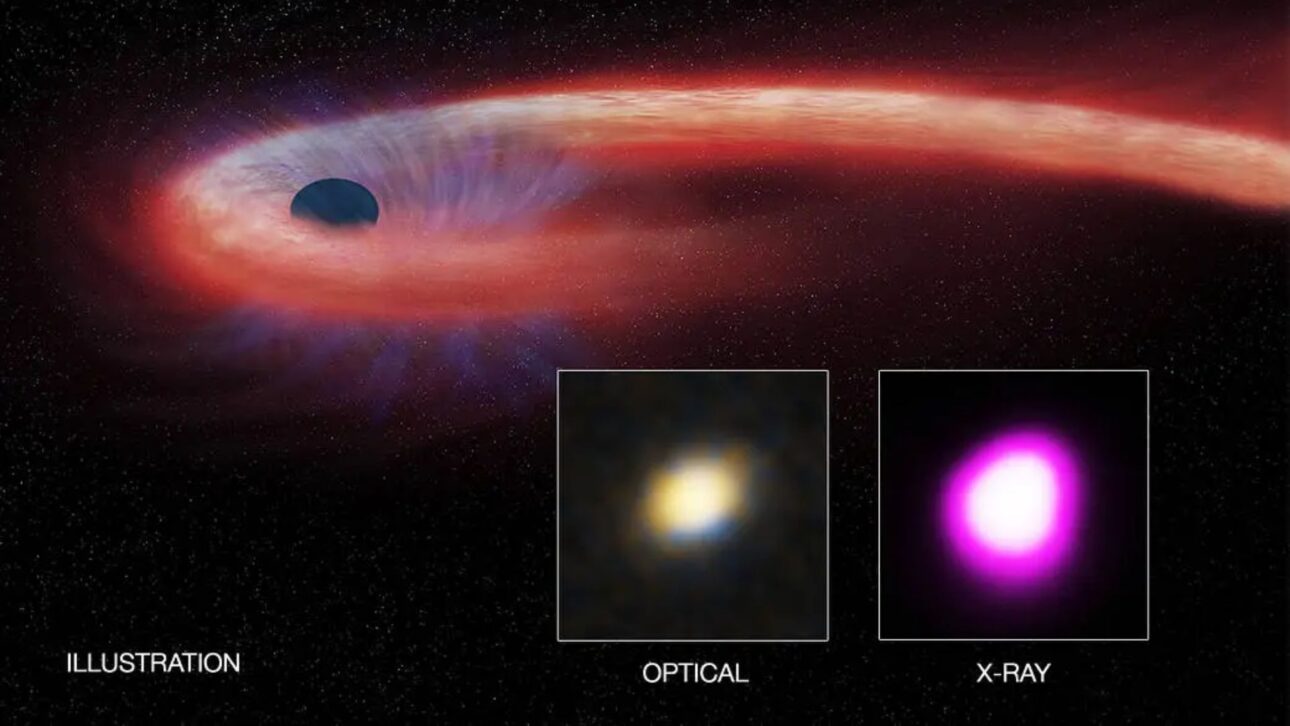
The event was detected for the first time in November 2018, based on the Catalina Real-Time Transient Survey and Zwicky Transient Facility (ZTF) surveys conducted at Palomar Observatory in California.
Initially, the object was classified as a possible blazar, a type of black hole that shoots energetic jets directly toward Earth.
With further monitoring and analysis of brightness variations, observations made with other instruments, such as the W. M. Keck Observatory in Hawaii, showed that the source was more energetic than previously thought.
From this data, the scientists reclassified it as an extreme nuclear transient (ENT) — a category of rare and still poorly understood explosions occurring in the centers of galaxies.
According to the astronomers, Superman remains active, indicating that the black hole is still consuming stellar material.
Researcher Matthew Graham from the California Institute of Technology (Caltech) explains that “about one in every 10,000 active galactic nuclei exhibit some type of explosion, but this case is so extreme that it falls into its own category — something close to a one-in-a-million event.”
What Causes Such Brightness
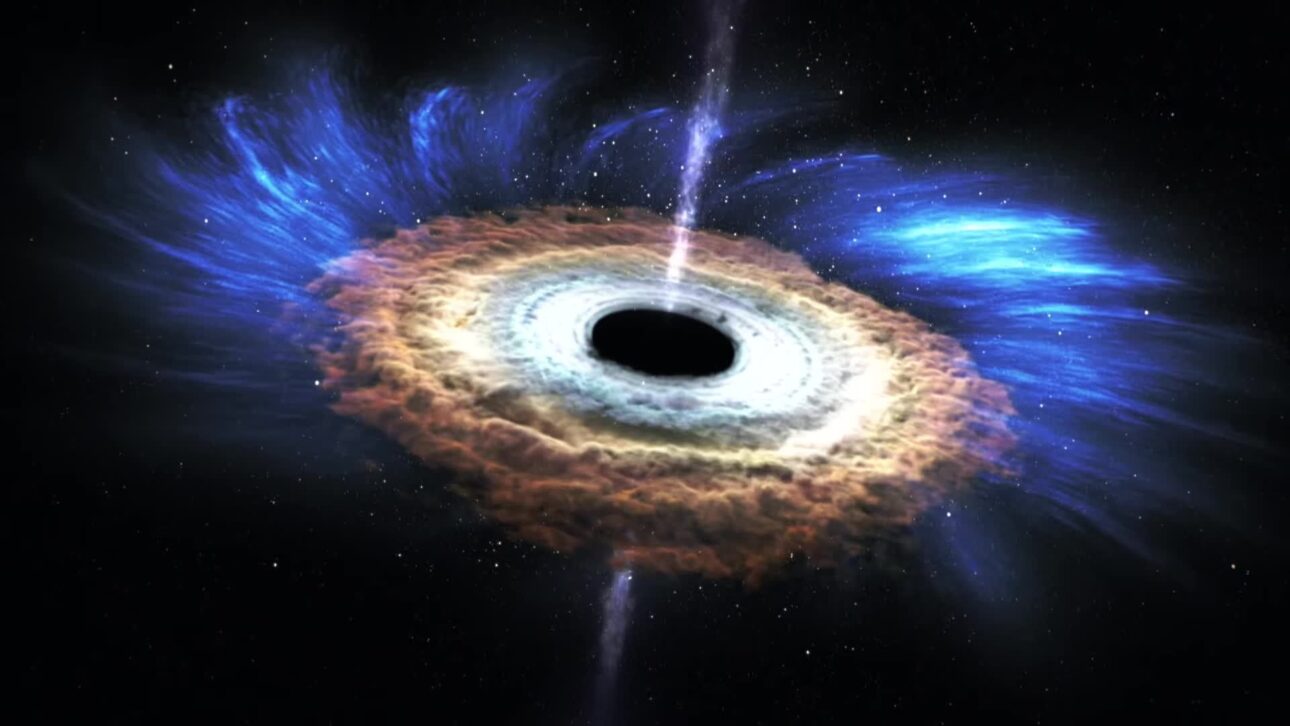
In phenomena of this type, the gravitational forces of the black hole are intense enough to completely rupture the structure of the star, generating a massive release of energy.
Part of the material is ejected, while the remainder forms a rotating gas and dust disk, responsible for the observed brightness.
Professor Graham explains that cosmological time dilation affects how the event is viewed from Earth.
Since the light traveled billions of years to reach here, the phenomenon appears to be observed more slowly than it occurs at the origin.
This allows scientists to follow the evolution of the process in detail.
Clues About The Formation Of Stars And Galaxies
The study co-author K. E. Saavik Ford from the Borough of Manhattan Community College and the American Museum of Natural History states that Superman reinforces the hypothesis that very massive stars orbit near supermassive black holes, within the gas disks that feed them.
“This suggests that there are large, young stars living in extreme density environments in the inner regions of galaxies,” Ford explains.
For scientists, these events help to understand how black holes grow and influence galaxy formation.
The energy released during the explosions can alter the behavior of the surrounding gas, interfering with the creation of new stars and the structure of the central galactic regions.
Comparison With Previous Phenomena
The Superman event surpassed in brightness and energy the case known as “Scary Barbie”, detected in 2021.
According to researcher Danny Milisavljevic from Purdue University, who studied the previous phenomenon, the new detection “belongs to an emerging class of extreme nuclear transients that is challenging current models of black hole and star interactions.”
Other experts, such as astronomer Alex Filippenko from the University of California, Berkeley, assess that these observations provide a unique opportunity to study the most extreme physical conditions in the universe.
“Explosions of this kind function as natural laboratories, allowing us to investigate how matter and gravity behave on scales that we cannot reproduce in experiments on Earth,” said the researcher in a statement.
Next Steps In The Research
Superman is still being monitored by telescopes from different parts of the world.
Scientists intend to measure how much material remains from the destroyed star and how long the black hole will continue to emit radiation.
According to the study, future observations with next-generation equipment, such as the Vera C. Rubin Observatory in Chile, should enable the discovery of other similar events.
This could expand the understanding of the frequency and impact of these explosions in the cores of galaxies.
For Matthew Graham, the continuation of this type of monitoring will help further understand the environment surrounding supermassive black holes, considered one of the most dynamic and energetic areas of the cosmos.
The discovery raises new questions about the behavior of these cosmic structures and about how many phenomena like Superman may still be happening, undetected, in other parts of the observable universe.