






 Portuguese
  Spanish
  3 min of reading
  1 comment


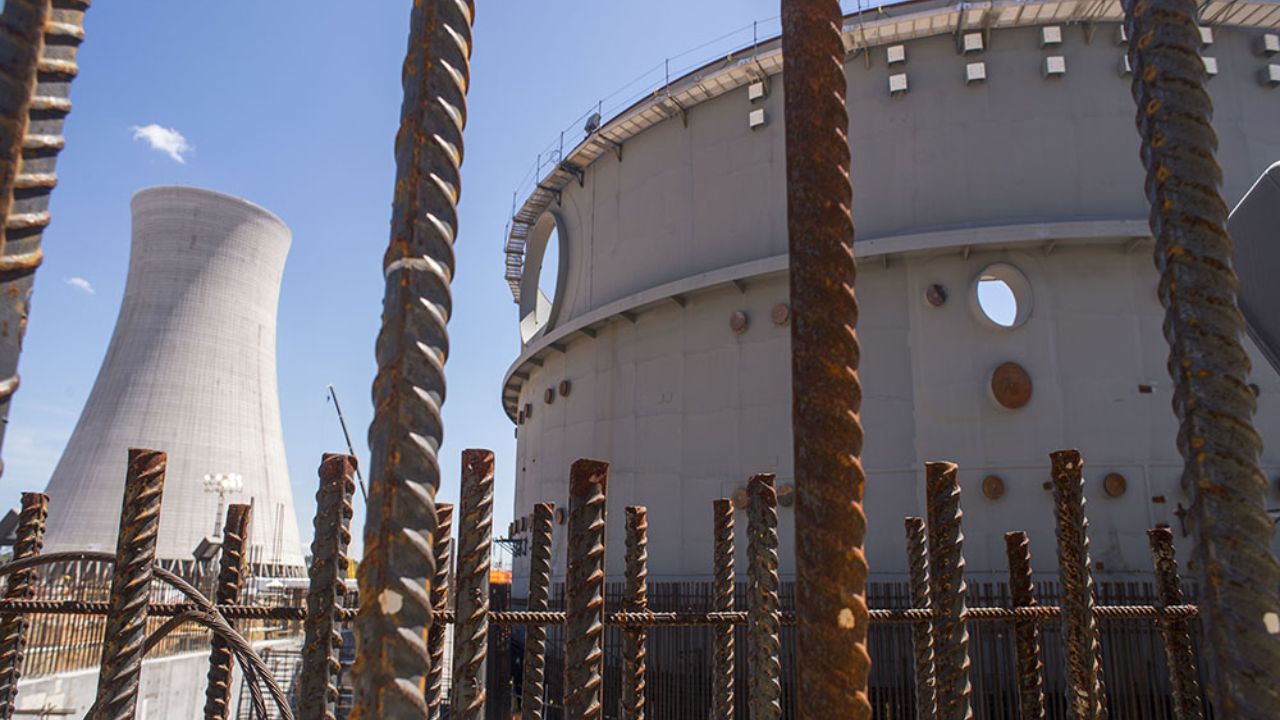


Researchers from Tokyo University Discovered That Nuclear Radiation Can Trigger a Self-Repairing Effect in Concrete, Making Its Structures More Resistant and Durable in Nuclear Power Plants. This Advance Could Revolutionize Engineering and Prolong the Useful Life of These Constructions.
Let’s face it: concrete is everywhere. Streets, buildings, bridges, and even in places we don’t even imagine, like nuclear power plants. And when we talk about nuclear energy, the first thing that comes to mind is safety. After all, any structural failure can have catastrophic consequences.
For decades, engineers have been wondering: does radiation affect concrete to the point of weakening it? The fear is real, as nuclear structures need to last for decades without compromising safety. But now, a study from Tokyo University brought a surprising discovery: instead of deteriorating the material, radiation may actually make it stronger. That’s right, concrete may have a hidden superpower.
The Radiation That Heals Concrete

It all started when the researchers decided to investigate the impact of radiation on concrete, more specifically on quartz, one of its main components. The expectation was to find signs of wear, but what they saw was something completely unexpected: the concrete was, in a way, “healing” itself.
-
Bolivian Female Construction Workers Form Association to Combat Discrimination and 38% Pay Gap in the Industry

-
Near Amsterdam, residents buy land and discover they must also build streets, manage drainage, handle waste, and grow food on half their plot.
-
Brazil’s WEG to Open New Factory in China by 2027, Expanding Production of Large Rotating Electric Machines and Low to Medium Voltage Motors in Rugao

-
Chinese Shipyard Secures $1 Billion in Orders for Low-Carbon Container Ships Amid Global Fleet Renewal Efforts


What happens is that radiation interacts with quartz crystals, distorting their structure. However, instead of simply cracking and weakening, the material activates an internal recovery mechanism. In other words, it kind of adjusts itself, compensating for the damage.
It’s like having a glass that, instead of cracking and breaking, is capable of regenerating when exposed to the sun. Amazing, right?
How Radiation Works in This Case?
Neutron radiation hits the quartz crystals in the concrete and disrupts their structure. Normally, this would cause expansion and weakening. But what scientists discovered is that, thanks to the interaction between silicon and oxygen atoms, the material undergoes a “healing” process that reduces these negative effects.
Basically, radiation messes with quartz, but the quartz itself finds a way to reorganize and recover. The result? Concrete may end up lasting much longer than we imagined, especially in high radiation environments such as nuclear power plants.
Will Concrete Become a Self-Repairing Material?
If this discovery is confirmed in new studies, we are talking about a true game changer for civil engineering. Maintaining nuclear structures is an expensive and complex job, and any crack can become a significant problem. Now, imagine if we have concrete that fixes itself? That would be quite an advance!
And it’s not just in the nuclear sector that this could make a difference. The construction industry as a whole could benefit from this technology to create buildings, bridges, and even highways that require less maintenance. Can you imagine a world where concrete repairs become a thing of the past?





Tá, funciona com usinas nucleares, até porquê, aquilo esta encapsulado e a irradiação acontece, querendo ou não. Mas não dá para ficar irradiando com nêutrons pontes, prédios e outras obras por aí só pela manutenção.
Concreto armado tem suas patologias bem conhecidas e, portanto, tem suas técnicas de manutenção bem estabelecidas. Se uma cultura de manutenção fosse bem difundida não haveria necessidade de maia nada. O concreto é muito durável, desde que bem conservado.
(Pontes como aquela que colapsou na região amazônica no final do ano não cairam por falta de irradiar nêutrons mas por descaso do poder público com com a manutenção tradicional mesmo.)