





 Portuguese
  English
  Spanish
  3 min of reading


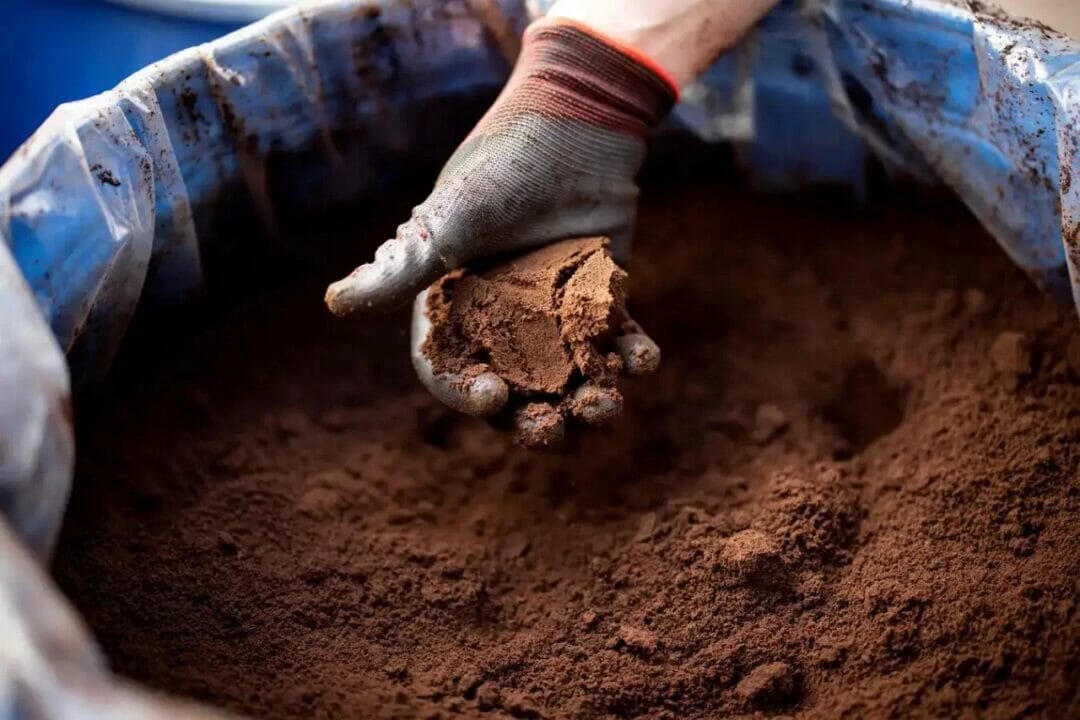
New Concrete Made From Coffee Grounds Could Revolutionize The Construction Industry. The Technology Focuses On Sustainability, Being Up To 30% Stronger Than Conventional Concrete.
Although it is a material that has been created for thousands of years, concrete is going through various technological innovations lately, promising to revolutionize the construction industry, placing it on a more sustainable and planet-friendly path. In this list, there is a new concrete that captures carbon instead of emitting it, customized concrete with metamaterials, concrete that speaks, transparent concrete, and even concrete made from blood, tears, and sweat. This time, engineers from Australia have developed a way to make concrete stronger using coffee grounds.
Understand How Concrete With Coffee Grounds Can Be Up To 30% Stronger
According to Rajeev Roychand from RMIT University, the inspiration for the scientists’ work was to find an innovative way to use the large amounts of coffee waste in construction projects, rather than having them go to landfills, to give coffee a double energy injection.
The technique involves adding carbon to the cement that is part of the concrete. For this to be possible, the coffee grounds are transformed into biochar, which replaces part of the sand that is used to make the concrete, thus revolutionizing the construction industry.
-
A former SpaceX engineer left rockets to reinvent home construction and founded a startup that manufactures wall panels from a grass that grows about 15 centimeters per day.

-
He transformed an abandoned plastic water tank into an underground house in the “hobbit hole” style, using only repurposed pallet wood, without heavy machinery or expensive labor.

-
How much does it cost to install gutters in a house in 2026? See the average costs of materials, labor, and the most common extra expenses that may arise during installation.
-
China wants to install a giant power bank in space to harvest solar energy continuously, day and night, and has already tested on the ground, in a 75-meter tower, the wireless transmission of energy over a distance of 100 meters to various moving targets.


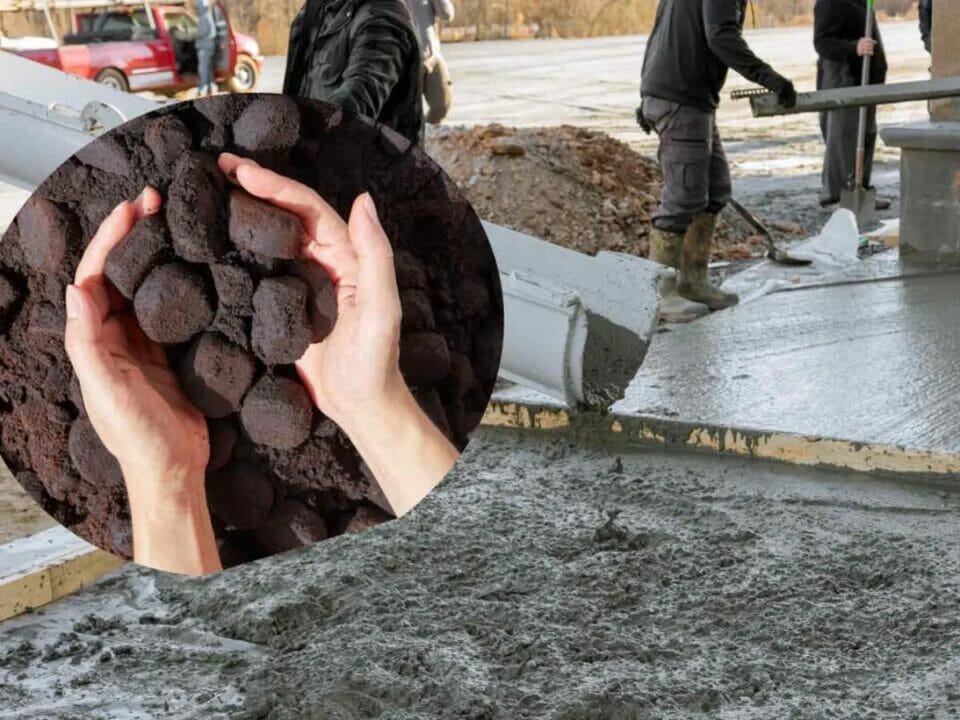
The original coffee grounds contain organic compounds that hinder the hydration reaction, thus reducing the compressive strength of the concrete. Therefore, in order to be used, the grounds first need to be pyrolyzed between 350 and 500 ºC, which gives them a stronger bond with the cement matrix.
The replacement of 15% of the sand volume with biochar pyrolyzed at 350ºC provides an improvement of approximately 30% in the concrete’s strength, representing an innovation for the construction industry.
Benefits That Coffee Grounds Bring To The Construction Industry
In addition to making the concrete stronger, the mixture works in two essential areas related to the environment by providing a useful destination for coffee grounds, which are currently thrown into landfills and reducing the need for sand extraction.
According to Professor Jie Li, the continuous extraction of natural sand worldwide, typically taken from riverbeds and banks, to meet the industry’s high demands has a significant impact on the environment.
There are major critical and enduring barriers to maintaining a sustainable sand supply due to the finite nature of resources and the environmental impacts of sand mining. Thus, coffee grounds can offer a great solution, benefiting nature.
Researchers are now planning to move to field tests in collaboration with companies that can turn coffee grounds into biochar and with contractors for the use of the resulting concrete.
Other Sustainable Concretes Emerging Around The World
As mentioned at the beginning of the article, concrete is increasingly bringing innovative technologies. In July of this year, researchers developed a technically and economically viable formula to produce carbon-negative and environmentally friendly concrete that is almost as strong as conventional concrete.
Zhipeng Li and researchers from Washington State University in the U.S. took ordinary cement and infused it with biochar, a type of charcoal made from organic waste that had previously been reinforced with wastewater collected from the cement production itself.
The biochar was able to absorb up to 23% of its weight in carbon dioxide from the air during the curing process, giving it comparable strength to ordinary cement. This represents a potential to significantly reduce the carbon emissions of the cement industry, which is one of the most polluting among all manufacturing industries.





Be the first to react!