






 Portuguese
  Spanish


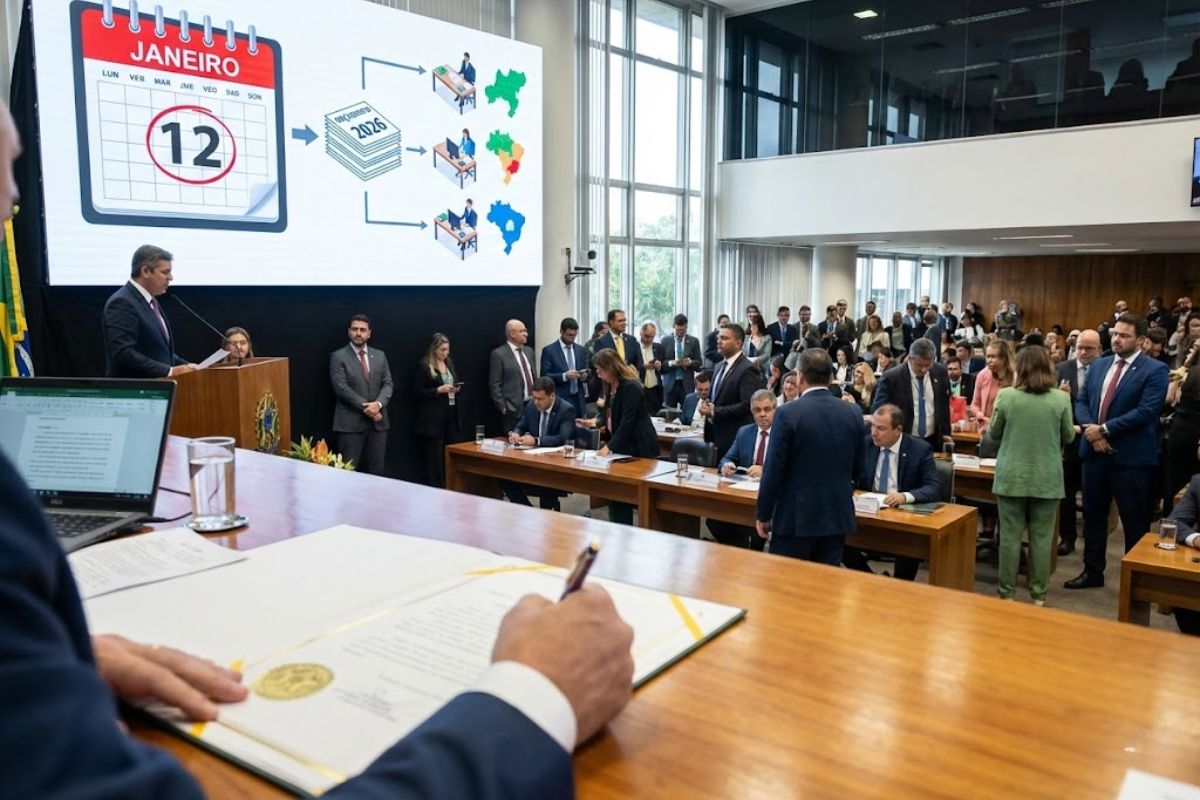

Congress Law Allows States and Municipalities to Pay Retroactive Benefits to Employees in 2026 and Recognize Rights Suspended During the Pandemic Between May 28, 2020 and December 31, 2021, But Each Entity Needs to Approve Norm and Indicate Budget; Lula Has Until January 12 to Sanction
The approval in Congress paved the way for retroactive benefits to state and municipal employees, with payment expected in 2026, but conditioned its execution on local laws and the indication of budget space. In the report signed by Carolina Carvalho on 01/07/2026, the measure is described as applicable even in an election year.
According to Folha de São Paulo, the project was voted on in the Senate during the last week of legislative activities last year and still depends on the sanction of President Luiz Inácio Lula da Silva until January 12, or it will take effect automatically.
What Congress Approved for 2026
Congress approved a law allowing states and municipalities to pay retroactive benefits to their employees in 2026.
-
Trump’s 50% Tariff on Brazilian Goods Cuts U.S. Exports by 30%, Brazil Sets Records in 42 Countries and Germany Becomes Top Coffee Buyer

-
Brazil Harvests Record 358 Million Tons of Grain but Lacks Storage for 134 Million Tons

-
A New Bakery Opens Every Six Minutes in Brazil, Highlighting a Surge of 26,400 Small Businesses in Early 2025
-
Brazil’s Lula Government Allocates $463 Million Quota for Electric Car Parts, Waives Import Tax Until December, Sparking Competition Among BYD, Automakers, and Unions as Consumers Question Impact on Prices and Local Industry


The text also reverses the freeze on benefits instituted between May 28, 2020, and December 31, 2021.
With the reversal, this period is once again effective for grants and for the financial adjustment described in the report.
The focus is to recover rights that were blocked during the period defined by the norm itself.
States and Municipalities Need to Approve Laws and Prove Budget
Even with federal authorization, states and municipalities still need to approve their own laws to enable retroactive benefits.
The report states that each entity must indicate if there is budget space for payment.
This means that the rule does not impose automatic and uniform disbursement.
Implementation varies according to local law and the budget capacity presented by each state and municipality.
Lula Has Until January 12 and Automatic Implementation
The project approved by Congress awaits presidential action.
Lula has until January 12 to sanction; if there is no sanction within the deadline, the rule will take effect automatically.
The report points out that after the Senate stage, Lula’s decision is the last federal step before states and municipalities address laws and budgets.
Why the Freeze Began During the Pandemic and the Role of R$ 60 Billion
Retroactive benefits are related to the Covid-19 pandemic and the freeze applied from May 28, 2020, to December 31, 2021.
At the time, Jair Bolsonaro’s administration injected R$ 60 billion into states and municipalities to combat the pandemic, but the aid was conditioned on the suspension of raises and other actions that could increase personnel expenses.
The then Minister of Economy, Paulo Guedes, called the clause a “grenade in the pocket” of employees, in a recording released by the STF, the Federal Supreme Court.
The expression is cited in the report to characterize the weight of the restriction.
What Gets Counted Again and How It Affects Additional Payments and Leaves
Besides banning raises, the clause barred the period from being counted as an eligibility period for additional service time, premium leaves, and similar mechanisms.
The project approved by Congress allows this period to be counted once more.
With the resumption of counting, pathways are opened for interrupted grants and, in some cases, for the adjustment of retroactive benefits.
Concrete application depends on local laws and the budget declared by states and municipalities.
Who Can Receive and How the Retroactive Payment Comes In
The report states that employees who had a raise postponed between May 2020 and December 2021 will be granted the benefit, with payment of retroactive amounts.
Still, states and municipalities need to approve laws and point out budgets, because federal authorization does not replace local validation.
In summary, Congress authorizes, Lula defines federal validity, and each entity assesses if it can pay retroactive benefits in 2026 within the reported budget.
To track the impact in 2026, check if your state or municipality will approve a specific law and publish the budget indication to pay retroactive benefits within the local calendar.
In your city, do you think there is budget and law to release retroactive benefits in 2026?


