Portuguese
  Spanish


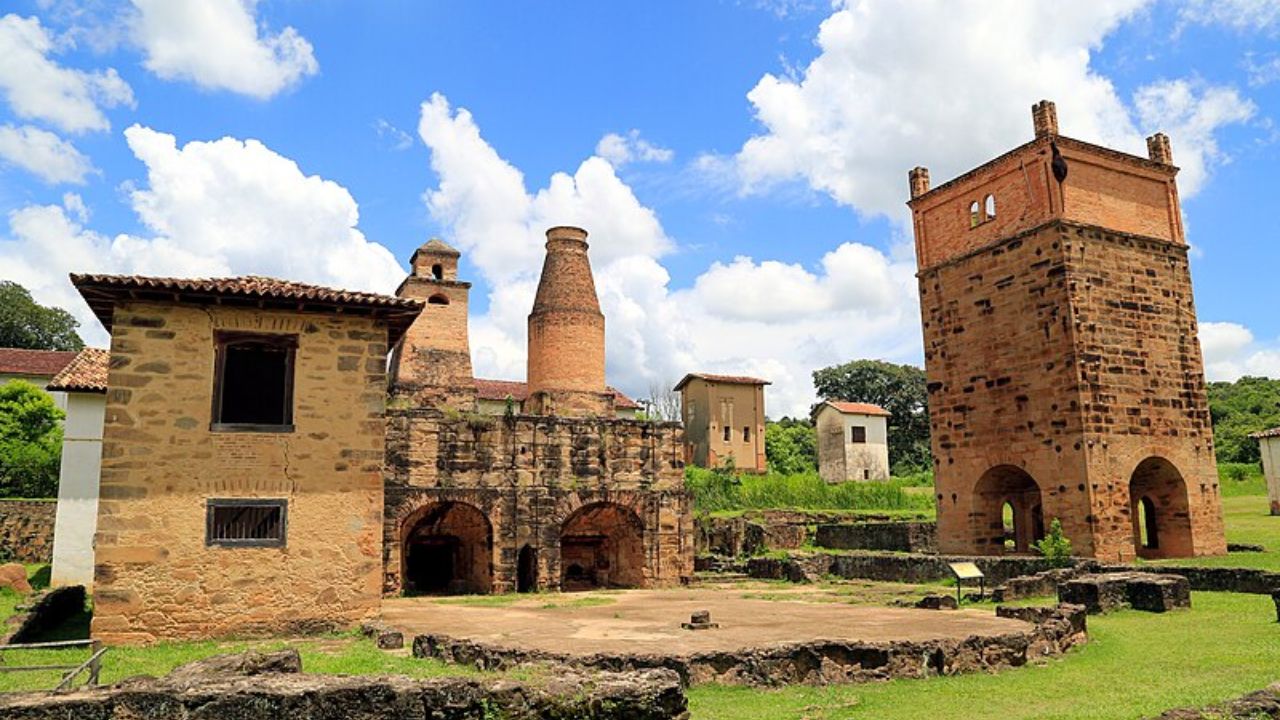


Erected in 1810 by royal decree to produce cannons, the steel factory in the interior of São Paulo marked the beginning of the industrial era in the country and is now a historic monument.
In the heart of the Ipanema National Forest in São Paulo, imposing stone ruins tell the story of the beginning of Brazilian industry. The Royal Iron Factory of São João de Ipanema operated there. The site was the epicenter of one of the boldest projects of the Joãoin Brazil. The goal was to forge, from iron ore, the foundations of a new nation.
A Royal Decree to Produce Iron and Weapons
The creation of the factory was a strategic decision. It arose from a geopolitical necessity. The Portuguese Court came to Brazil in 1808, fleeing from Napoleon. The colony became the seat of the empire. As a result, it needed military autonomy.
One of the first acts of D. João VI was to repeal the law that prohibited manufactures in Brazil. The foundation of the factory in 1810 was a direct consequence. The main objective was to produce iron for cannons and armaments. The sovereignty of the empire depended on this production. The chosen site, Morro de Araçoiaba, was already known for its rich deposits of iron ore (magnetite).
-
Tokyo Scientists Create First 18cm Biohybrid Hand Using Human Muscle, Capable of Scissor Gesture and Holding a Pipette

-
Brazil Faces Norway in World Cup at Stadium Linked to Jimmy Hoffa’s Mysterious Disappearance

-
Retired Woman Leaves French Public Housing Due to Fear, Lives in Van for Weeks, Prompting Response from Local Authorities and a Priest
-
9-Year-Old Fabio Isaac Wins Gold at Copernicus Math Olympiad in Singapore, Representing Peru Against Global Young Talents



The Technology to Forge Iron
Certainly. Here are the excerpts with the main highlighted information:
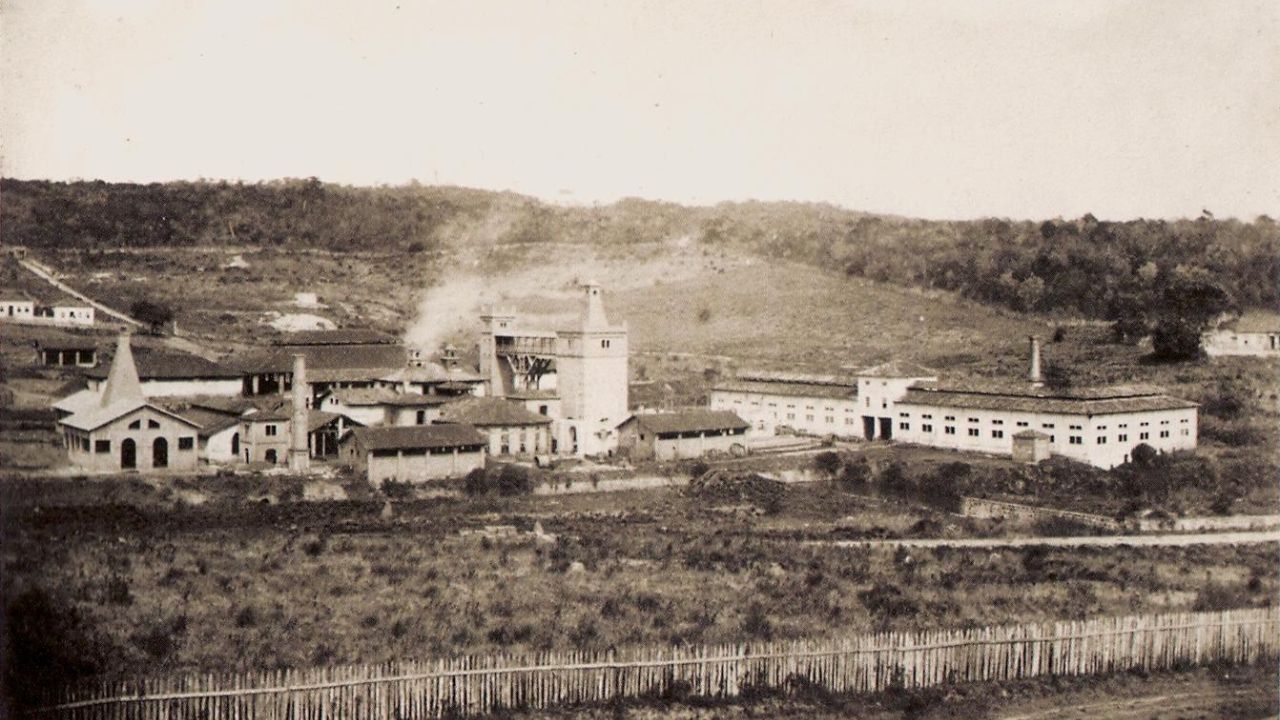
The operation of the factory was a stage for innovations and frustrations. The initial management, by the Swede Carl Hedberg, failed to meet the ambitious production targets, which were between 480 and 600 tons of iron annually.
The technical turning point came with the German-born military engineer Friedrich Wilhelm von Varnhagen. He built the iconic twin blast furnaces. On November 1, 1818, a historic milestone occurred: the first pig iron produced in blast furnaces in Brazil flowed from the furnaces.
Despite the advance, actual production never exceeded 30 tons per year, a fraction of the projected goal. One of the technical peaks was the manufacture of cast iron cannons. The process was complex, requiring precise drilling of a 10 cm diameter hole in a massive 600 kg iron piece.
European Labor and Enslaved Workforce
The factory was a micro-industrial society. Its structure was rigidly hierarchical. At the top were the engineers and skilled workers from Europe, earning high salaries. At the base was the vast forced labor, composed of enslaved individuals of African origin.
They performed the hardest and most dangerous tasks. This included extracting iron ore, cutting wood, and heavy work in the furnaces. The operation of the factory was intrinsically dependent on slave labor.
A curiosity reveals the contrasts of the site: in 1811, the first Protestant cemetery in Brazil was established there. It was created to bury Lutheran workers from Sweden, who could not be interred in Catholic soil.
From Peak to Closure in 1895


The end of the factory was not sudden. It was a long process of decline that lasted more than seven decades. There were cycles of abandonment and attempts at revival, such as during the Paraguayan War, when the demand for weapons increased.
However, structural problems were never resolved. Transportation was expensive and inefficient. Even with the construction of a railway, freight costs remained prohibitive. This made the iron from Ipanema more expensive than similar products imported from Europe.
In August 1895, after 85 years of struggle and with an accumulated debt of 750 contos de réis, the factory definitively ceased its activities.
Why Ipanema Matters and How to Visit Today the Legacy of Iron
The nickname “mother of industries” does not come from commercial success, but from its legacy. The factory catalyzed modernization in other sectors of the economy.
It produced about 200 iron mills for the sugar industry, more efficient than wooden ones. It supplied rolled iron bars for the first railroads. It pioneered the production of iron artifacts that changed domestic life, such as pots and stove plates.
Today, the ruins are a historical monument within the Ipanema National Forest (Flona de Ipanema), managed by the Chico Mendes Institute for Biodiversity Conservation (ICMBio).