Portuguese
  Spanish


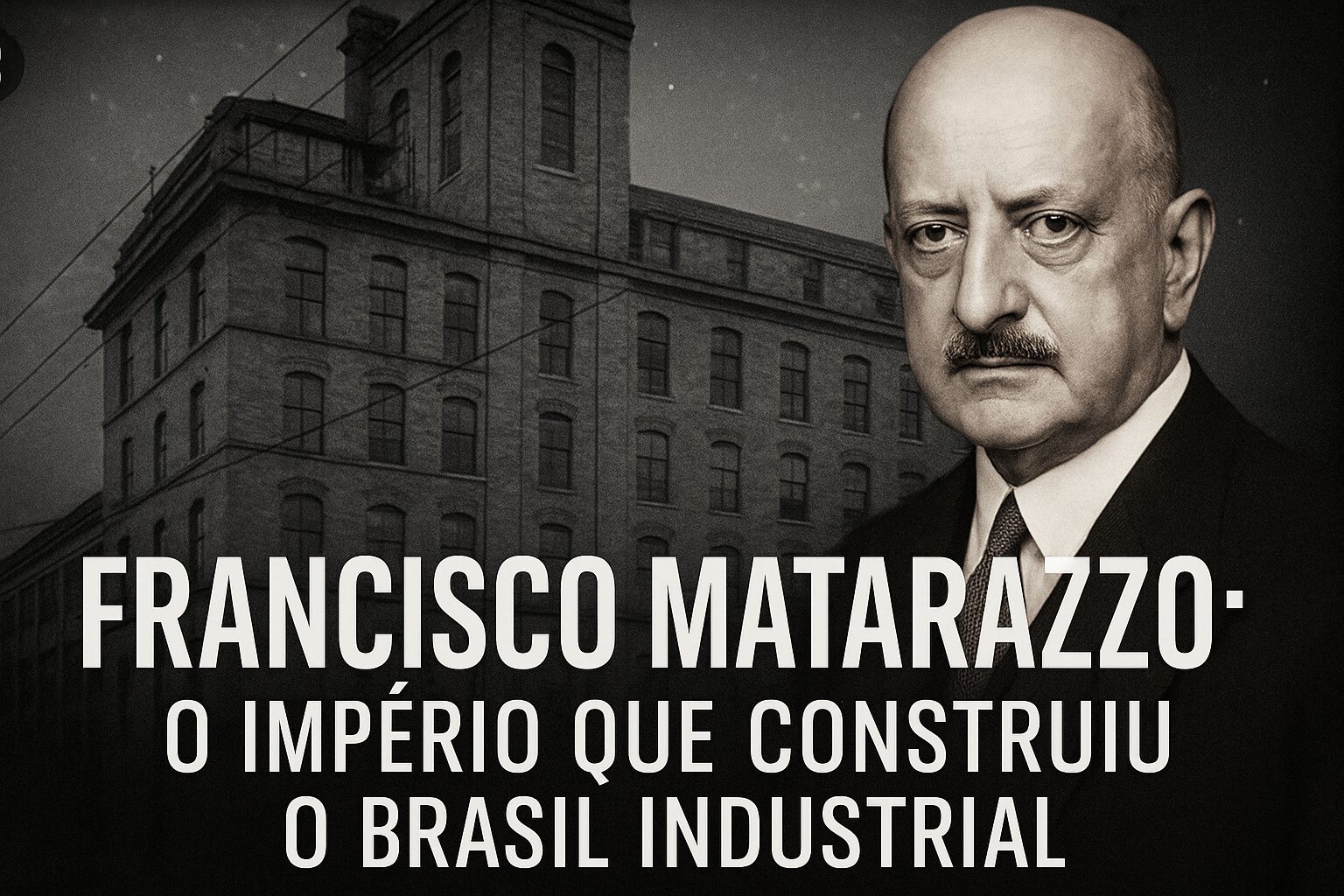

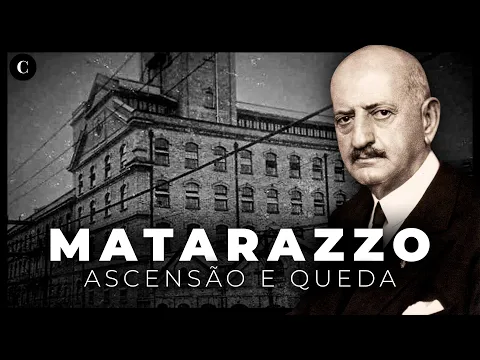
The Legacy of a Titan: Francisco Matarazzo Created Over 200 Factories and Shaped São Paulo Like Never Before. Understand How He Built and Lost the Largest Industrial Empire in Latin America
Francesco Matarazzo, known in Brazil as Francisco Matarazzo, was born on March 9, 1854, in Castellabate, in the Naples region of Italy. From a wealthy background, he saw his reality change after his father’s death in 1870. The economic crisis in southern Italy pushed him, years later, to seek new opportunities in Brazil, encouraged by a friend.
His arrival in 1881 was marked by a dramatic episode: he nearly lost all his savings when two tons of lard he brought to sell sank. Still, in Sorocaba (SP), he began his journey working as a peddler until he opened his first fat factory.
From the beginning, Matarazzo adopted a philosophy that he would carry throughout his life: “The good deal is made in the purchase, not in the sale.” This reasoning guided his strategies and solidified his meteoric rise.
-
Eco Invest Auction Aims to Unlock $10 Billion in Investments, Focusing on Green Fertilizers, Critical Minerals, Batteries, and AI for Clean Industry in Brazil

-
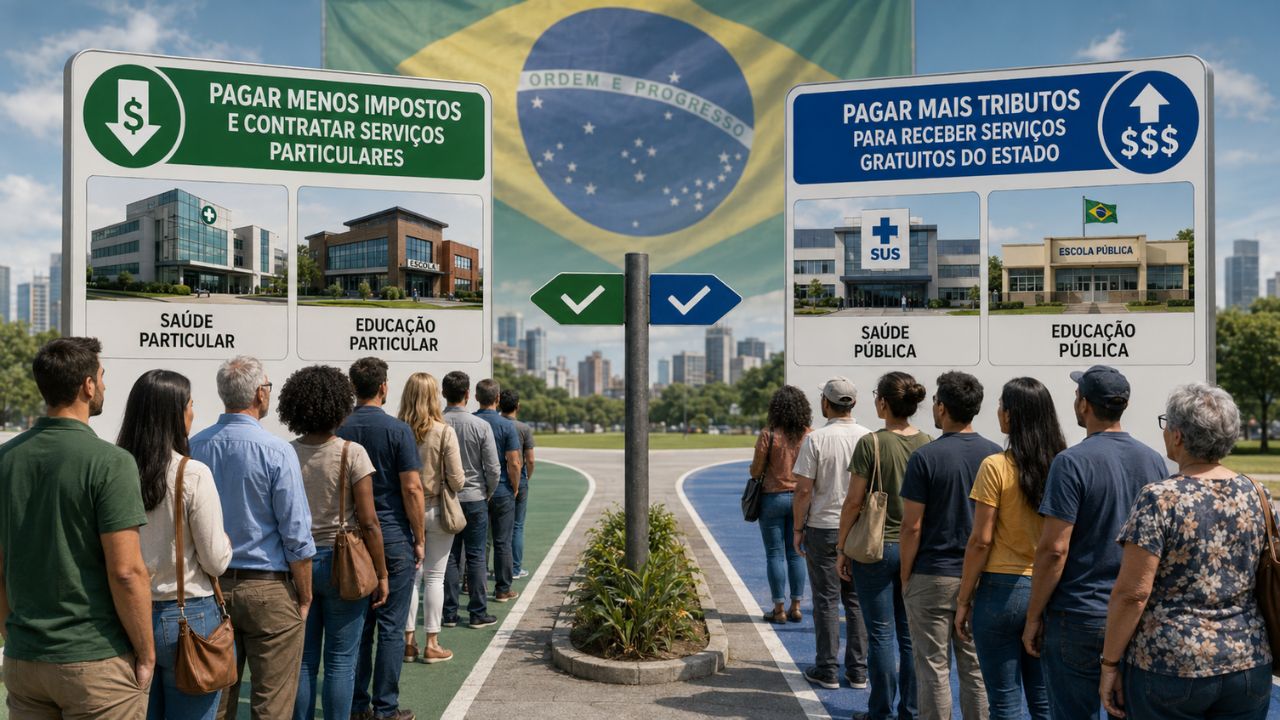
Half of Brazilians Prefer Lower Taxes with Private Health and Education, While 44% Opt for Higher Taxes for State-Provided Services, Datafolha Survey Reveals

-
Brazil’s Most Expensive Toll Rises to R$ 40.60 on Route from São Paulo to the Coast, Nearly Matching Bus Fare to Santos

-
As Brazil Expands Social Welfare, Survey Reveals 40% Blame Poverty on Laziness, While 58% Cite Lack of Opportunities




The Construction of the Largest Business Group in Latin America
The turning point came in 1890 when he moved to São Paulo and founded the Moinho Matarazzo, the first and most modern wheat mill in Latin America. Innovation did not stop there: to supply his own factories and reduce external dependencies, Matarazzo created several verticalized industries, an unprecedented movement in Brazil.
This led to the establishment of factories for textiles, soaps, furniture, nails, chemical products, and even ships. In 1911, the Indústrias Reunidas Francisco Matarazzo were officially founded, bringing together over 200 factories. At its peak, they employed about 30,000 workers — more than many Brazilian multinationals today, such as Gerdau.
With a fortune that, adjusted for current values, would exceed US$ 27 billion, Francisco Matarazzo was at one point the fifth richest man in the world.
Count Matarazzo and the Consolidation of Power
In recognition of his role in the distribution of food in Italy during World War I, Matarazzo received the title of Count from the Italian King Vittorio Emanuele III in 1917.
Throughout the 1920s, he further expanded his businesses, investing in logistics (with the creation of his own fleet of ships) and enlarging his factories in the Água Branca neighborhood of São Paulo. Unlike the coffee barons, who were severely hit by the 1929 Crisis, Matarazzo benefited from the international crisis to consolidate his industrial dominance.
His political involvement was always pragmatic: he supported Getúlio Vargas after the 1930 Revolution, despite his friendship with Washington Luís. However, he remained neutral during the 1932 Constitutional Revolution.
The Fall of the Empire After Matarazzo’s Death
Francisco Matarazzo passed away on March 10, 1937, in São Paulo, leaving behind a gigantic legacy. His funeral brought the city to a standstill, with over 100,000 people in the streets.
Control of the group passed to his grandson, Francisco Matarazzo Júnior, known as “Chiquinho.” Although initially successful, Chiquinho proved to be risk-averse and resistant to innovations — for example, he refused the proposal from Juscelino Kubitschek to participate in the establishment of Volkswagen in Brazil.
Conservatism and difficulty in modernizing the industries led to the group’s decline. From the 1960s onwards, Indústrias Reunidas began to face severe financial difficulties. In 1983, several companies filed for bankruptcy, marking the end of the empire.
An Indelible Legacy
Although the group has disappeared, the Matarazzo brand remains alive in Brazil’s history. Francisco Matarazzo is regarded as the father of Brazilian heavy industry and was one of the founders of the FIESP (Federation of Industries of the State of São Paulo).
The Matarazzo Building, now the headquarters of the São Paulo City Hall, is a physical testament to the grandeur he represented.
To this day, family members remain active in different areas: the politician Eduardo Matarazzo Suplicy, the journalist Cláudia Matarazzo, and the soap opera director Jayme Monjardim Matarazzo are examples.
Matarazzo was a man of his time, with merits and contradictions, but undeniably one of the most extraordinary figures in Brazilian business history.