






 Portuguese
  Spanish
  3 min of reading
  0 comments


Meet The OE-35: The Largest Wave Energy Buoy Installed In Oahu. With 1.25 MW Of Power, It Is A Crucial Step Towards Marine Renewable Energy, Funded By The USA And Ireland
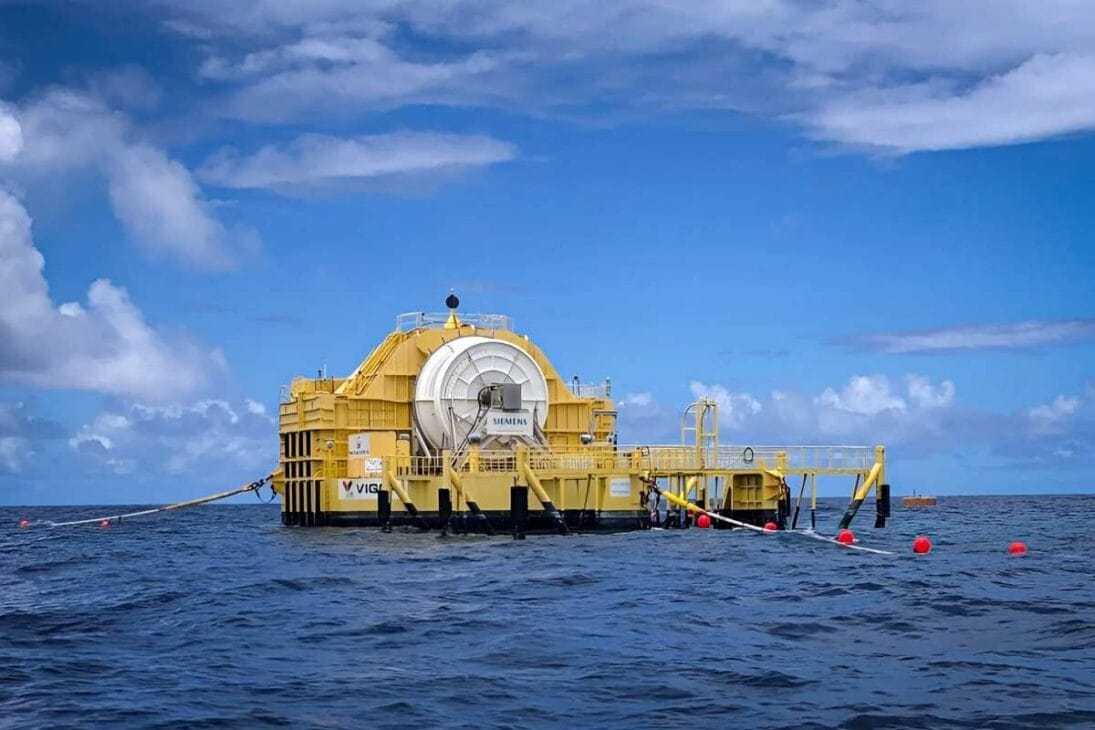
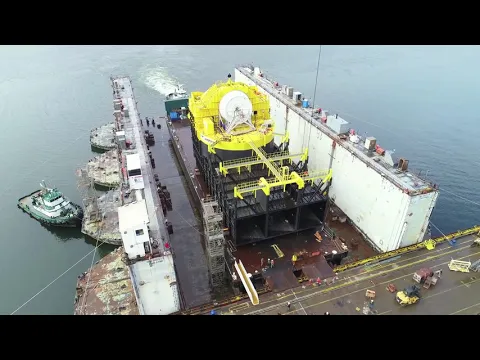
Ocean Energy has implemented its wave energy converter buoy, the OE-35, weighing 826 tons, at the US Navy’s wave energy test site located off the coast of the island of Oahu. This installation was carried out prior to the connection to Hawaii’s electrical grid.
The OE-35 measures 38 x 18 meters, with a draft of 9 meters. It was already a familiar sight in Kaneohe Bay, on the windward side of Oahu. It was anchored north of the Mōkapu peninsula, which hosts a US Marine Corps base.
Projects And Funding
The system has been tested not only in Hawaii but also in Scotland, as part of a $12 million project funded by the Office of Energy Efficiency and Renewable Energy of the US Department of Energy and the Sustainable Energy Authority of Ireland (SEAI). With a potential output of 1.25 MW, the OE-35 harnesses wave energy using a remarkable dual airflow system.
-
Cutting-edge engineering transforms an abandoned 88-meter-deep quarry into a luxury ‘earthscraper’ in China with submerged floors and geothermal energy.

-
Without mortar, without water, and without mess: young people create a dry flooring system that fits ceramic tiles like a puzzle, reduces construction time, and promises to revolutionize the way floors are installed in civil construction.

-
They built an entire village of houses with their own hands made of earth and old tires, in the ecovillage Aardehuis, in the Netherlands, where 44 residents live in Earthships that generate almost all the energy, heat with the sun, and treat sewage in their own garden.
-
Villagers dig a road by hand on a 1,200-meter cliff in China after decades of extreme isolation, creating one of the most dangerous and impressive tunnels in the world.




Turbine Technology
Some wave energy systems operate by using the passage of waves to compress a column of air that drives a turbine as the wave passes and the air expands. However, these systems typically operate like a piston engine, with a power stroke followed by a dead period as the air is vented and the system resets in anticipation of the next wave.
The OE-35 is different, as it uses a turbine that operates on the Wells turbine principle, invented by Alan Arthur Wells of Queen’s University in Belfast in the late 1970s. This is a low-pressure air turbine that spins continuously in one direction, regardless of the air flow direction. In other words, as the wave compresses the air in three chambers inside the buoy, the turbine rotates. Then, as the air expands and the flow reverses, the turbine continues to spin in the same direction. This eliminates the need for complex mechanisms and valves to handle bidirectional airflow.
Efficiency And Future
Although not the most efficient way to generate energy, as the turbine blades have a higher drag coefficient than conventional turbines and the system is prone to stalling, it works well enough for the subsidiary of Ocean Energy Group Ireland to expect to commission the OE-35 soon after the final tests, with the system being connected via an underwater cable to the state’s electrical grid.

At 1.25 MW, it is not much compared to the state’s energy consumption, but it could be a harbinger of what is to come. “After more than a decade and a half of design, trials, testing, and construction, we are excited to finally take this significant step towards commercialization with our world-class OE-35 device,” said Professor Tony Lewis, Chief Technology Officer at Ocean Energy. “This internationally significant project could not have come online at a more critical time for the US and Ireland as the world needs to accelerate the pace of decarbonization with new and innovative technologies.”
The development of wave energy technologies represents a crucial step in diversifying renewable energy sources, contributing to energy security and reducing carbon emissions. The OE-35, with its continuous generation capacity and adaptability to different ocean conditions, demonstrates the potential of innovative marine technologies to complement other renewable sources, such as wind and solar energy.
Furthermore, the success of the OE-35 may pave the way for the implementation of large-scale wave energy parks, with multiple devices operating simultaneously to provide stable and sustainable power to coastal communities and offshore operations. The international collaboration between the USA and Ireland on this project highlights the importance of global cooperation in the pursuit of sustainable energy solutions.
More Information: https://oceanenergy.ie







Be the first to react!