Portuguese
  Spanish


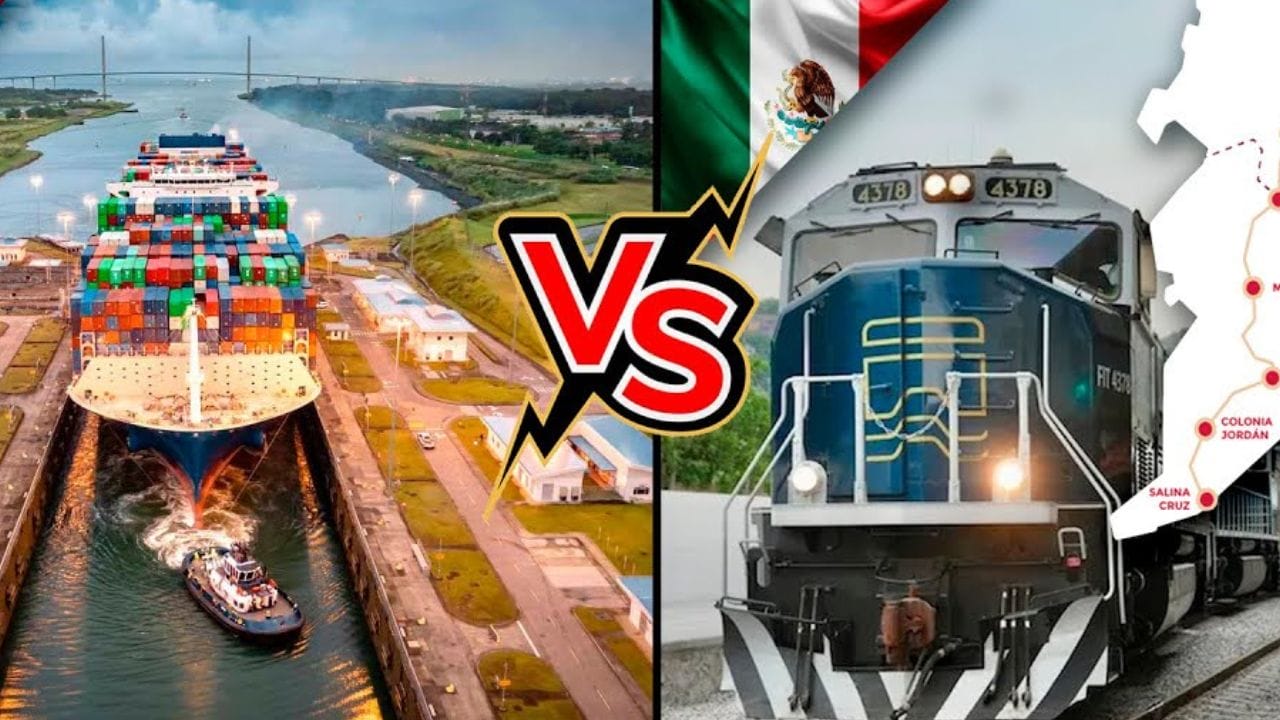

The Interoceanic Corridor in Mexico, a 4 billion dollar Mexican project, emerges as an innovative alternative to the Panama Canal, promising to transform global trade and stimulate economic development through modernized infrastructure that includes new railways and enhanced ports, while facing environmental and social challenges.
For over a century, the Panama Canal has been a vital artery for global trade, facilitating the transit of goods between the Atlantic and Pacific oceans. However, a new competitor is about to emerge, promising to reshape the dynamics of international maritime transport: the Interoceanic Corridor in Mexico. This 4 billion dollar project, located in Mexico, is not only a milestone of modern engineering but also a bold bet to become an efficient alternative to the traditional Panama Canal.
The Legacy of the Panama Canal


Before diving into the nuances of the Interoceanic Corridor in Mexico, it is essential to recognize the historical and current significance of the Panama Canal. Inaugurated in 1914, this engineering feat radically transformed world trade, reducing distances, costs, and travel times between the Atlantic and Pacific. The canal, with its 65 kilometers in length, though not the longest, stood out for its ability to adapt the elevation of vessels through a complex lock system, becoming a pillar of global maritime transport.
The Emergence of the Interoceanic Corridor in Mexico
The Interoceanic Corridor of the Isthmus of Tehuantepec (CIIT), however, is not an entirely new concept. Dating back to the late 19th century, Mexico has been exploring ideas to facilitate transport between its Atlantic and Pacific coasts. Under the administration of President López Obrador, the project received new momentum and robust investment for its realization.
-
The Port of Itaqui closes the best first semester in history with over 17 million tons and takes off as the locomotive of the Northern Arc.

-
Brazil’s North-South Railway to Auction Two Grain Terminals in Central Tocantins

-
AI-powered traffic cameras in São Paulo now issue fines for cellphone use and seatbelt violations around the clock

-
Free Upgrade to Professional Driver’s License Categories in Over 130 Locations in Brazil, Including Exams and Courses



With the promise of over 1,000 kilometers of new railways and the modernization of ports at either end of the isthmus, the CIIT is not limited to rail transport; it aims to integrate a logistics complex that includes industrial parks and a significant remodeling of port infrastructure, thereby increasing its capacity to compete with the Panama Canal.
The CIIT promises not only to revolutionize interoceanic transport but also to significantly boost the local economy, creating jobs and attracting international investments. However, the project faces challenges, including environmental and social concerns, highlighting the importance of sustainable and inclusive development.
Competition or Complement?
The big question that arises is whether the Interoceanic Corridor of the Isthmus of Tehuantepec will position itself as a direct competitor or a complement to the Panama Canal. With the increasing demand for transport routes and the recent challenges faced by the canal, such as limitations due to drought, the CIIT has the potential to offer a valuable alternative, relieving pressure on the Panama Canal and diversifying route options for global trade.
The Future of Interoceanic Trade
As the Interoceanic Corridor of the Isthmus of Tehuantepec moves toward its completion and operation, its impact on trade between the Atlantic and Pacific promises to be significant. This project not only symbolizes innovation and progress in transport infrastructure but also reiterates the strategic importance of Mexico as a vital link in global trade. With both the Panama Canal and the CIIT, the future of interoceanic transport looks brighter and more efficient, with repercussions that will reverberate worldwide.
The dynamic between the Interoceanic Corridor in Mexico and the Panama Canal represents a fascinating evolution in international trade routes. While the future unfolding of this rivalry remains uncertain, one thing is clear: the world is about to witness a significant transformation in maritime transport, with implications that will go beyond the economy, encompassing geopolitics and environmental sustainability.