






 Portuguese
  Spanish
  3 min of reading
  0 comments


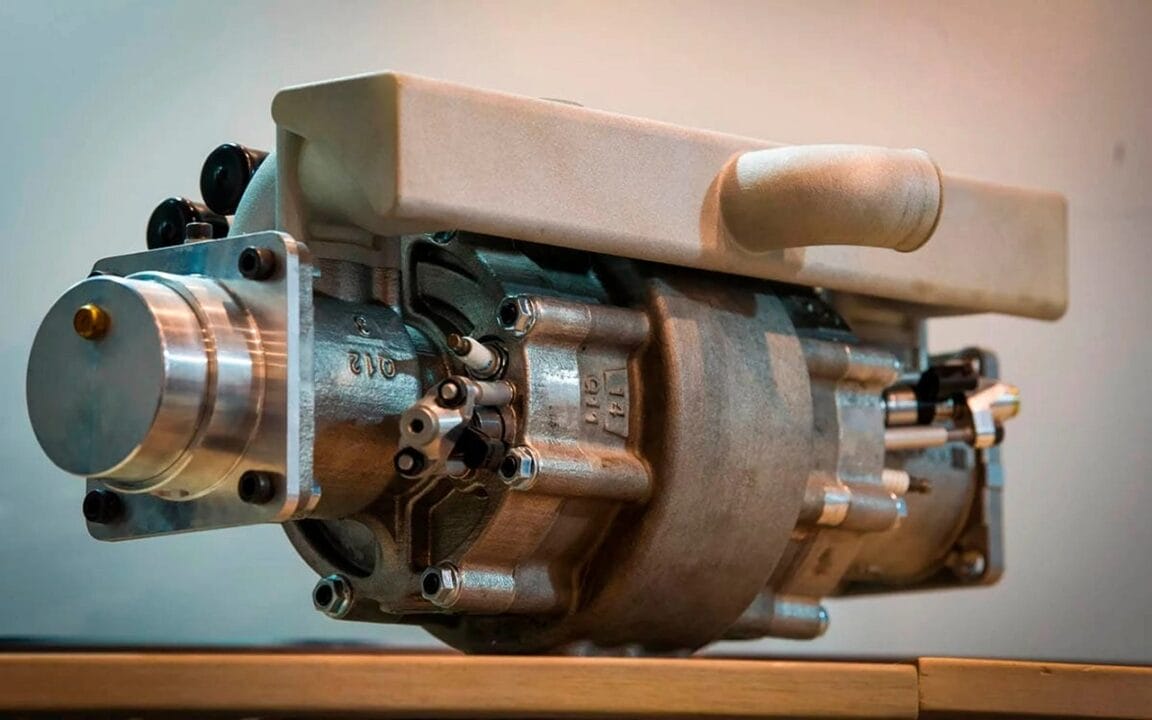
Meet the 10kg Engine That Works Without Oil and Accepts Methanol, Ethanol, and Hydrogen. Revolution in the Automotive Industry
In the cutting-edge world of automotive technology, where innovation and sustainability are increasingly intertwined, a proposal emerges that promises to mark a milestone in the industry: the Aquarius engine. This engine, remarkable for its oil-free design and surprising weight of only 10 kg, has captured global attention for its bold promise to revolutionize the sector.
Focusing on efficiency, reducing polluting emissions, and simplifying maintenance, the Aquarius engine stands out not only as a promising solution for extended-range electric vehicles but also for a wide range of applications in transportation and energy generation.
An Engine with Only One Piston and About 10.5 Kilograms.
The Aquarius Two Sided Free Piston Linear Engine (FPLE) was characterized by its simplified structure, featuring a piston that moves horizontally in a two-stroke cycle, injectors at both ends, and integrated intake and exhaust ports in the shaft.
-
Elon Musk Plans $25 Billion Chip Factory with SpaceX and xAI at Tesla’s Massive Texas Site, Visible from Space

-
Brazilian Innovator Marcelo Loureiro Sets Guinness World Record with 12,000 km Robotic Surgery from Brazil to Kuwait
-
Workers Discover 19th-Century Iron Ship and Indigenous Artifacts During COP30 Construction in the Brazilian Amazon
-
Chinese robots trained for two weeks to row a dragon boat at the Sichuan Festival in China, took full control when humans stopped rowing, and even made rice dumplings in one of the most unusual tests ever conducted with humanoids.


With only 20 moving components and graphite rings to reduce friction, this engine eliminates the need for oil, thus reducing its polluting emissions and maintenance.
The Engine Designed by Aquarius Engines Promised to Operate with Only 20 Moving Components and Eliminating the Need to Use Oil, Being a More Than Promising Solution for Power Generation Applications or Even Extended-Range Electric Vehicles.
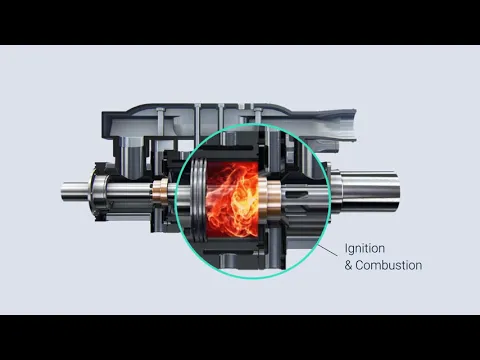

Reduced Maintenance.
Since the beginning of its development in 2014 by the Israeli company Aquarius Engines, this engine has demonstrated its potential for a wide range of applications: from range extenders in hybrid and electric vehicles to its use in boats, drones, and as an auxiliary power source in heavy transportation. Additionally, its ability to operate with different types of fuels, including methanol, ethanol, and hydrogen, further expands its possible applications.
This technology not only sought to transform the world of vehicles but mainly to offer efficient, compact, and low-maintenance stationary energy solutions.
It was estimated that it could operate for 1,000 hours between maintenance periods. In a car, as a range extender, the company estimated that it would be equivalent to traveling 50,000 kilometers.
An Innovative Solution for Mobility and Energy Generation with Low Maintenance and High Efficiency.
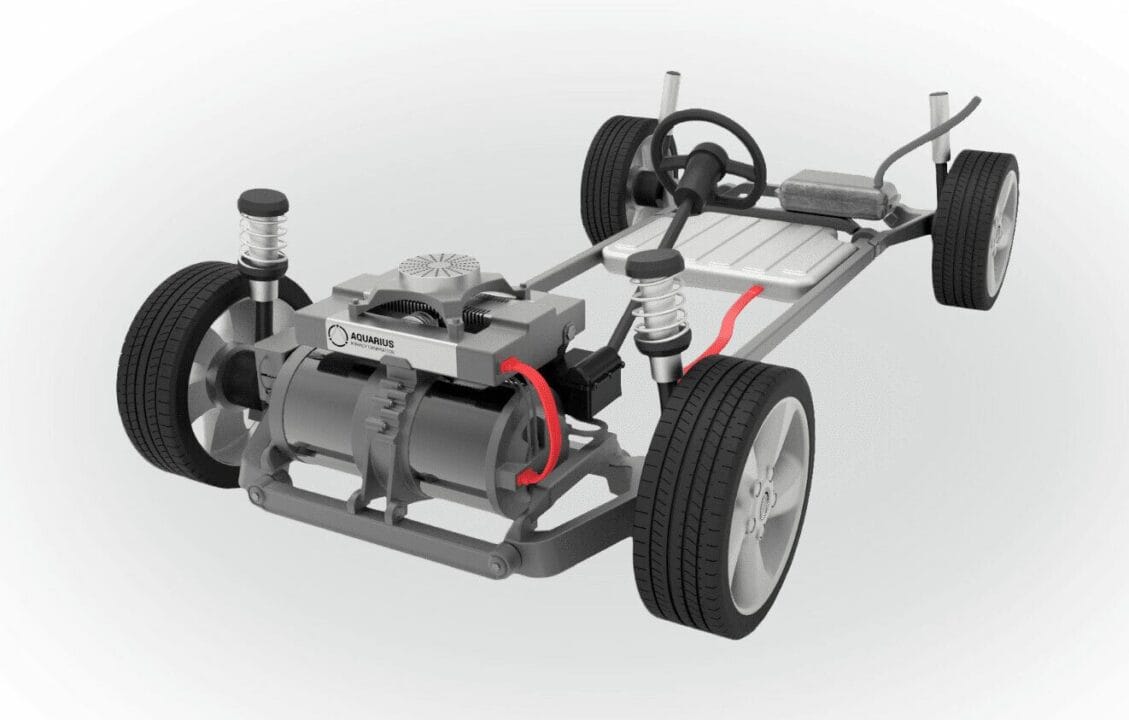
The Engine That Wanted to Revolutionize the Industry.
In recent years, information about this engine and its advancements has dwindled, far from the industrialization advancements announced in 2021. Aquarius Engines even signed a memorandum of understanding with the Dubai-based Kampac International to build a factory in the United Arab Emirates and a purchase option for 10% with a valuation of 5 billion dollars (Globes). None of the projects materialized (CTech).
In recent years, Aquarius Engines also signed agreements to develop systems for the United States Army, which were extended in the summer of 2022 (PR Newswire).
So far, Aquarius Engines’ stock is traded on the Tel Aviv stock exchange at 2.36% of the peak it reached in February 2021. A good example of how complicated it is, even with such a promising idea, to carry forward a project like this.


Be the first to react!