






 Portuguese
  Spanish


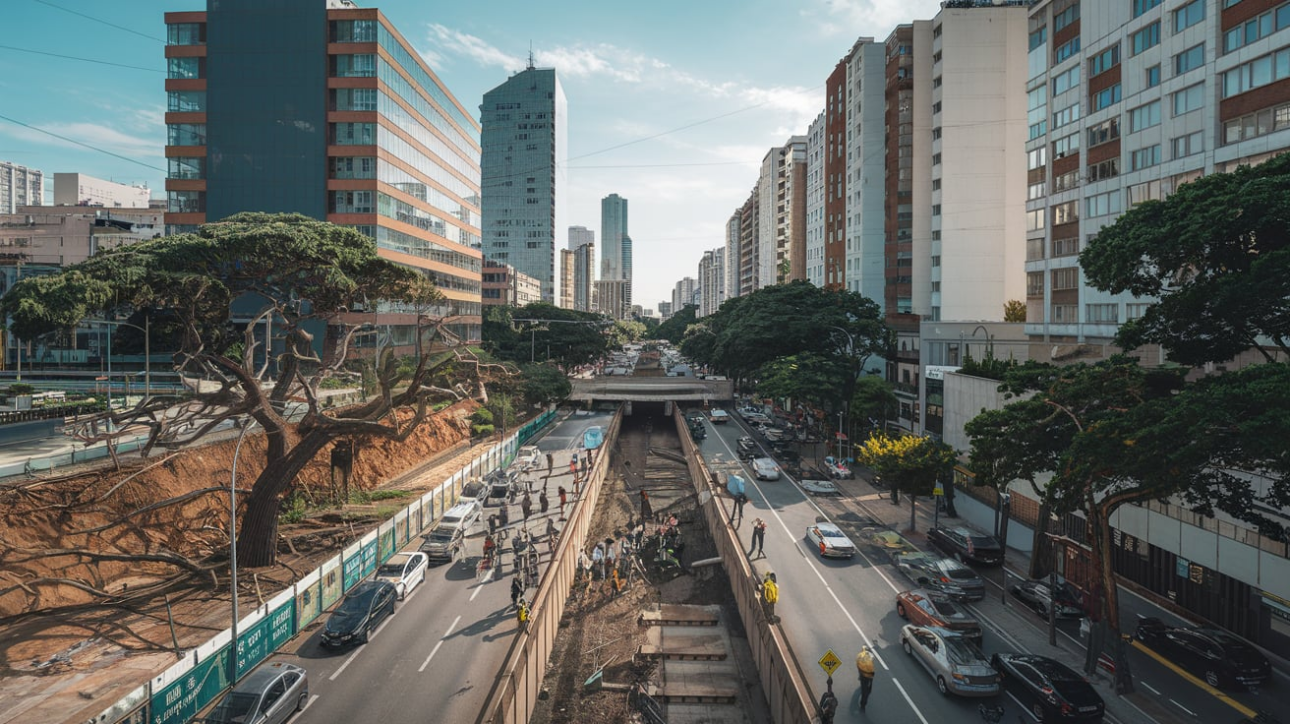
The construction of the tunnel, budgeted at R$ 531 million, was suspended by the court due to environmental and social issues. The project involves the removal of 172 trees and the displacement of 150 families.
The construction of the tunnel that will connect Rua Sena Madureira to Avenida Ricardo Jafet, in the South Zone of São Paulo, is surrounded by a series of environmental and social concerns.
Amid protests and legal actions, the São Paulo court ordered a halt to the works on Wednesday (13), complying with a public civil action filed by the Public Prosecutor’s Office of São Paulo (MP-SP).
The suspension remains in effect until the completion of an assessment, which will evaluate the environmental damage and check for possible technical irregularities in the licensing.
-
Controversial 6-day Workweek Elimination in Brazil Faces Economic Criticism Over Productivity Claims

-
Itaú to Refund Customers After 14 Years of Unauthorized Credit Card Charges; Agreement Includes No Interest or Adjustments, Deadline by 2028, with Potential Impact of Up to $6.5 Billion

-
Brazilian Company Grows from Bartering Soap for Food to Producing 30 Million Units Monthly, Challenges Global Giants with $100 Million Revenue and Expands into Premium Cosmetics
-
Petrobras and Engeko’s New Investment Plan Promises Billions and Thousands of Jobs, Capturing Market Attention


The project not only involves a billion-dollar investment but also requires high-cost compensatory measures.
Investigation into Environmental Damage and Costs
The decision from the 2nd Public Finance Court includes a daily fine of R$ 50,000 if activities continue and R$ 100,000 for each tree removed, a hefty penalty for a project that plans to cut down 172 trees, 78 of which are native.
This project of significant environmental impact is located in a Special Area for Environmental Protection (ZEPAM), an area recognized for its ecological importance.
For the experts appointed by the court, the challenge will be to assess whether it is possible to continue the project without further compromising the local ecosystem and whether the environmental licensing process was conducted properly.
In response, the City Attorney’s Office has not yet been officially notified but has already indicated it will take the necessary measures.
The consortium responsible for the project, led by Álya Construtora (formerly Queiroz Galvão), has chosen not to comment at this time.
Billion-Dollar Investment and Transparency in Debate
Started more than a decade ago and initially estimated at around R$ 220 million, the tunnel project has now ballooned to a current cost of R$ 531 million.
This increase is due to contract addendums and ongoing supervision, in addition to adjustments to mitigate environmental and social impacts.
The project was recently resumed by Mayor Ricardo Nunes, marked by controversies regarding the choice of the same construction company, which has been involved in corruption allegations in previous projects.
Moreover, to meet legal requirements and reduce environmental impacts, the project has already incurred R$ 34 million in supervision costs.
Environmental organizations and urban planners question the lack of transparency, especially regarding the criteria for selecting the company and the plans for environmental compensation.
On the other hand, municipal authorities defend the project as necessary to improve traffic and urban mobility in the region.
Displacement of Residents and Social Impact
The removal of trees is not the only factor causing tension in the local community. About 150 families, who have lived in the Souza Ramos and Luiz Alves communities for decades, are being displaced to make way for the project.
These residents have been in the area since 1945, and the location where they are situated is a Special Zone of Social Interest (ZEIS).
Despite the City Hall promising alternatives for compensation or relocation, the details have yet to be disclosed, and residents report uncertainties regarding their future.
Dissatisfaction also comes from environmentalists and neighborhood movements, who organize protests and argue that the project should better respect the environment and the rights of local communities.
In addition to the removal of trees, the project is affecting the Embuçu Stream, one of the last open watercourses in São Paulo, posing risks of soil contamination and loss of biodiversity in the area.
Controversy and Discussions About the Future of the Project
The construction of the tunnel between Rua Sena Madureira and Avenida Ricardo Jafet remains on hold, but discussions regarding it are far from over.
Experts are divided on the need for such a project.
While some engineers and urban planners support the expansion to solve traffic problems, others believe that the social and environmental impacts outweigh the benefits.
According to environmentalists, the project jeopardizes the future of the ecological corridor, and City Hall needs to provide greater transparency and engage with the public to mitigate the consequences.
Pressure on the municipal government to commit to sustainable and just solutions is growing as more questions about the project arise.
With an investment of over half a billion reais, the tunnel reflects a dilemma between urban development and environmental conservation.
What do you think about the impact of such large-scale projects? To what extent does urban mobility justify changes in the environment and in people’s lives?






Interessante, que a maioria das pessoas comentando não devem saber muito sobre a região. Árvores ali, mais antigas que a propria Sena Madureira. O trânsito lá é caótico? SIM. Mas não justifica a derrubada das árvores. Se fossem removidas e replantadas, ok. O que não ocorrerá. Não há transparência por parte desse carioca ****, a mais de 15 anos se briga, não por conta da obra, mas por ela estar sendo feita de qualquer jeito ….. Questões ambientais são necessárias SIM! Estão achando ruim?, NÓS, MORADORES estamos com a razao!
Tudo isso pode ser resolvido sem precisar cobrar 100 mil por cada árvore através de uma gestao pensada e bem estudada pois esse tunel sera um corredor que vai facilitar muito o deslocamentona regiao…..acho que o que está havendo é criar problemas pra vender soluções….
Nesta altura das mudanças climáticas é necessário preservar toda a natureza ou pagar o preço levando a raça humana a extinção.