Portuguese
  Spanish


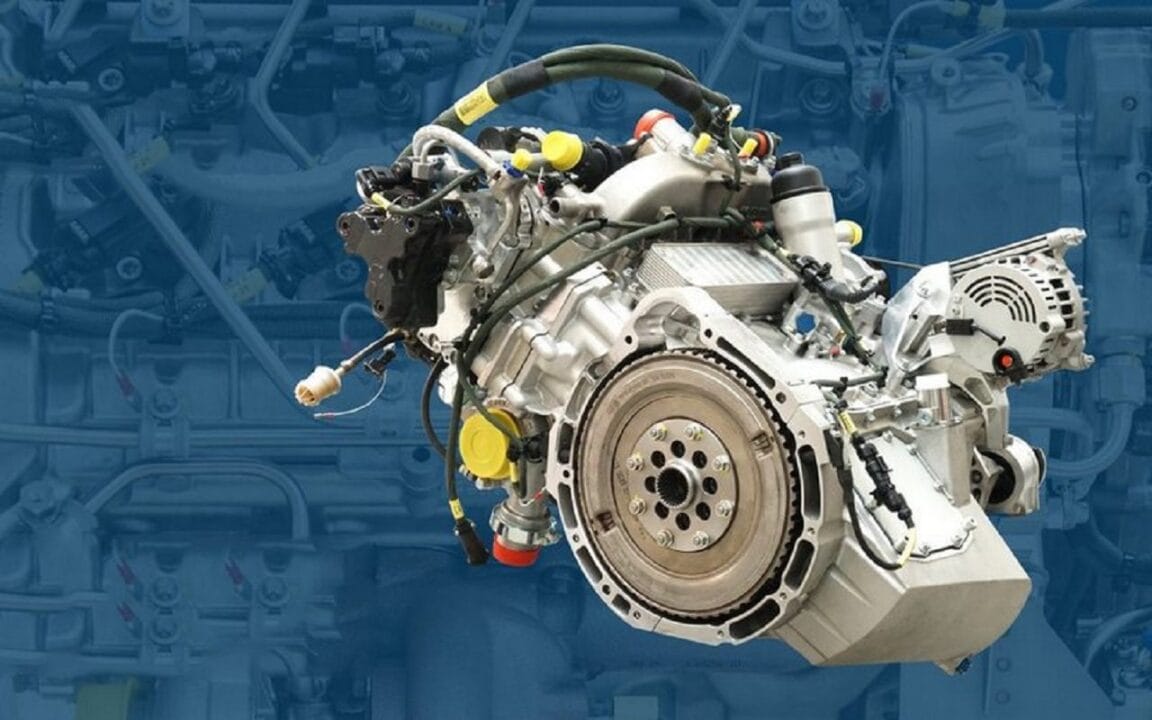

New Engine from Continental Aerospace Promises 170 HP of Power Running on Aviation Kerosene. In Addition, It Requires Maintenance at 100-Hour Intervals.
The aircraft engine manufacturer Continental Aerospace has introduced its new line of CD-170R diesel cycle piston engines, which can be fueled with aviation kerosene (Jet A). The focus of Continental’s new engine is to serve the light helicopter market, offering lower operating costs.
New Engine from Continental Delivers 170 HP of Power
The new variant of the CD-100 series was developed exclusively for helicopter applications and has begun the certification process with the European Union Aviation Safety Agency (EASA), expected to be completed later this year.
The CD-170R series is an evolution of the CD-170 version, which underwent several improvements and design changes, standing out with its performance similar to the fixed-wing version while maintaining the same standards of efficiency, reliability, and temperature management ease. One of the major highlights of Continental’s new engine that uses aviation kerosene is the scheduled maintenance at 100-hour intervals.
-
Brazil Welcomes Spanish Wamos Air and Nigerian Air Peace, Potentially Transforming International Routes and Increasing Competition

-
Why can the crane operator only obey the correct signalman on the construction site: among dozens of workers, a hand raised by the wrong person can confuse the maneuver and turn a load of tons into an immediate risk.
-
What changes with the new public transportation rules that can reduce pressure on fares and pave the way for zero fare in Brazil?
-
Offshore air transport soars in Brazil, surpasses 2.5 million passengers, and reveals how oil has transformed Rio’s airports into key pieces of national logistics.





According to Continental, the new turbocharged four-cylinder engine, which uses aviation kerosene, delivers 170 HP of power and is equipped with Full Authority Digital Engine Control (FADEC), which allows for reduced fuel consumption and better parameter management throughout all phases.
The official data released by the brand highlights that the engine consumes an average of 30 liters per hour of Jet-A in cruise flight. Controlled via FADEC with specific software mapping for helicopters, pilots can now focus their attention on the critical phases of flight and mission, alleviating the need to simultaneously manage power and collective, according to David Dörner, Vice President of Global Development at Continental.
Discover More Popular Engines from Continental
As a new engine from Continental specifically for helicopter use, the CD-170R does not have a reduction gearbox, allowing for a better power-to-weight ratio, being about 16 kilograms lighter than the fixed-wing version.
It is worth mentioning that the Jet-A engines from Continental are world-class references in General Aviation, with over 7,500 produced and delivered, and more than 2,000 engines currently in operation, reporting over 9 million hours. They are preferred by flight schools and specified by leading OEMs.
Jet-A engines operate with universally available aviation kerosene (Jet Fuel, Jet-A, and EASA and other certified aviation fuels). Each one is certified according to FAA, EASA, and the requirements of over 78 countries.
Continental continues to develop its technologically advanced engine series, which now includes engines ranging from 135 HP to 300 HP. As an example of its commitment to continuous improvement, the CD-135, CD-155, and CD-300 engines have been updated to 2,100 and 2,000 hours, respectively.
Get to Know Continental Aerospace
Continental Aerospace Technologies is a global leader in General Aviation. It is the only company to offer a complete range of gasoline and Jet-A engines, as well as aviation services. The company has significant operations on three continents, a global supply chain, highly experienced teams, and excellent MRO capabilities at Continental Services.
Continental is synonymous with excellence in products and customer service, based on over 100 years of reliability and innovation. The company serves OEMs, flight schools, fleet customers, and pilots at its manufacturing and service centers in the U.S., Europe, and China. In addition to Jet-A, the company also works with AVGas engines.