






 Portuguese
  Spanish
  6 min of reading
  0 comments


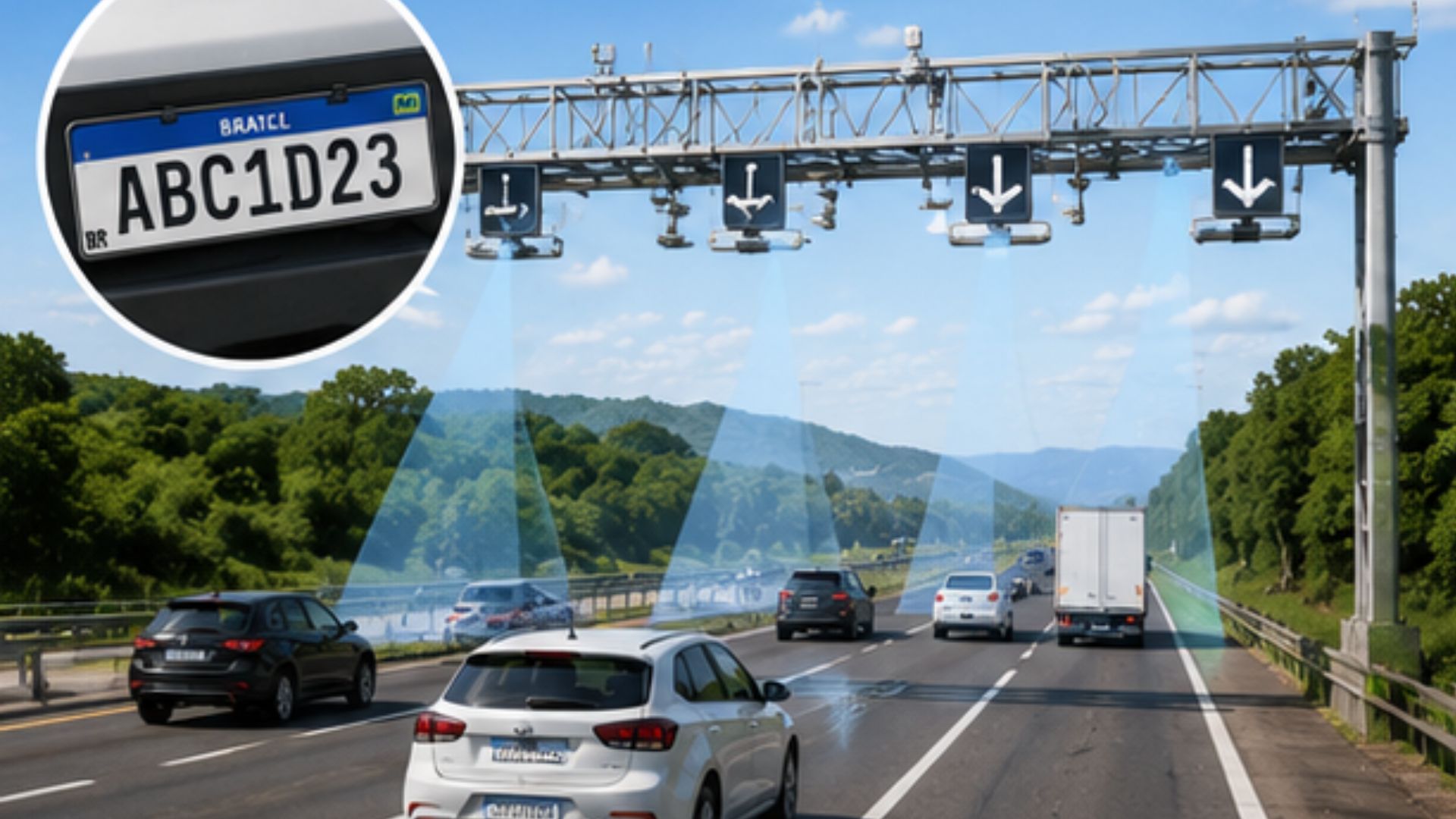
Contran suspended 3.4 million Free Flow-related fines across Brazil. Drivers have until November 16, 2026, to settle any outstanding debts without penalties, and the CNH do Brasil app is expected to incorporate the electronic toll system within 30 days, according to a recent announcement from the Ministry of Transport.
The reorganization of Brazil’s electronic toll system gained clearer contours this week. The National Traffic Council, known by the acronym Contran, suspended approximately 3.4 million fines applied to drivers by the Free Flow system, granting a deadline until November 16, 2026, for drivers to settle any outstanding debts without the application of additional penalties.
The measure comes amidst a series of changes announced by the Ministry of Transport to modernize the relationship between drivers, highway concessionaires, and the federal government. The CNH do Brasil app is also undergoing a significant reformulation, with the electronic toll system expected to be integrated within 30 days, centralizing services previously dispersed across different regional and private platforms.
What is Free Flow and why did it generate so many fines

Free Flow is the technical name for the barrier-free electronic toll system implemented on Brazilian federal highways in recent years. Instead of the traditional collection point with a human booth, gantries installed at specific points along the roads automatically identify passing vehicle license plates, without needing to stop traffic.
-
FIRJAN’s mega plan of R$ 526.3 billion for Rio de Janeiro aims to revive Brazil’s largest industry, with two-thirds of the investments going to oil and gas.

-
China signals an increase in beef imports, Brazil has already consumed 70% of the 1.106 million ton quota and seeks to renegotiate the tariff that jumps from 12% to 55%, while demand from the US also skyrockets.
-
Food inflation rose 302% in 20 years in Brazil, but the supermarket changed: purchasing power yielded 87% more mortadella and 31% less fruit, and ultra-processed foods took over the cart.
-
Petrobras sells the first batch of 3,800 m³ of aviation fuel made with certified soy, capable of reducing emissions by up to 70%, in an unprecedented project that anticipates the aviation sector’s requirements expected for 2027.



The proposal is technically modern and highly praised when it works. Drivers pass through the toll plaza without any interruption and later receive the toll charge, a model already adopted in several countries and one that tends to gradually replace the old booth system in Brazil over the coming years.
The problem is that the transition between models generated a lot of confusion. Many drivers passed through the gantries without even knowing they needed to pay, accumulating debts without clear prior notice, and the system ended up applying fines to those who were still learning about the new payment method.
The scale of the problem is impressive. Approximately 3.4 million fines were registered in this format, a number that reflects both the extent of the highways served by Free Flow and the difficulty of communication to the end consumer, especially for sporadic trips or routes unfamiliar to the driver.
The suspension of 3.4 million fines and the new deadline
Given the number of reported problems, Contran made an important decision for affected drivers. According to Agência Brasil, all 3.4 million fines were suspended, allowing for regularization without additional penalties during a specific period.
The new deadline provides considerable leeway for drivers. Drivers have until November 16, 2026, to settle any Free Flow-related debts without any penalty, a policy that acknowledges the atypical nature of the transition phase between the two collection models used by federal concessionaires.
It is important to note, however, that the suspension does not mean cancellation of the charges. Toll fees remain due, and what was suspended was only the additional fine applied when the driver fails to pay within the deadline established by the concessionaires.
Those who have already paid fines related to the system are also entitled to request a refund. The rule only requires the driver to prove payment of the corresponding toll fee, demonstrating that the fine was paid without real necessity, a situation that often occurs in cases of duplicate billing or improper application.
Integration with the CNH do Brasil app
The most ambitious part of the recent announcement is the integration between Free Flow and the official CNH do Brasil app. The federal platform will incorporate the electronic toll system within 30 days, according to a statement by Minister of Transport George Santoro in an interview with Exame magazine.
The goal is to simplify the lives of drivers across the country. The integration allows drivers to receive automatic notifications about gantry passages and pending charges directly on their cell phones, eliminating the need to consult each concessionaire separately to monitor the status of their own debts.
Data centralization occurs under the coordination of the National Traffic Secretariat, known as Senatran. The measure eliminates the current method, where each driver needs to contact different highway operating companies to check charges and organize pending payments throughout their journeys.
For the common user, the change can represent an important turning point in their routine. Instead of discovering an old fine only when transferring the vehicle or renewing the annual license, the notification arrives directly on the cell phone at the exact moment of passing through the gantry, allowing immediate regularization through the official app itself.
The 100-day deadline for concessionaires to adapt
The system reform also imposes responsibilities on the concessionaires that manage Free Flow highways in Brazil. They need to adapt their internal platforms to ensure integration with the centralized federal system within a specific deadline.
The schedule is tight for the sector. Companies have 100 days to complete this technical adaptation and ensure communication between their internal systems and the federal environment, a deadline that involves changes to servers, billing programs, and even the data submission format.
Technical adaptation requires considerable investment from the companies involved. Each concessionaire must ensure that vehicle passage data through the gantries reaches the federal system without delays or losses, an essential flow for the automatic notifications in the CNH do Brasil app to function as promised.
For the sector, this transformation represents a paradigm shift. Until now, each company had total autonomy over its billing system and customer relationships, and federal centralization brings more transparency, but also requires rapid adaptation of internal processes consolidated over years.
The instructor’s new journey and the digital credential
In addition to the toll changes, the CNH do Brasil app also gains specific functions for those undergoing the licensing process. The so-called new instructor journey centralizes, within the app, the entire flow of hiring accredited professionals during the driving course.
The feature is completely free for the user. After passing the theoretical exam, the candidate can locate accredited professionals, consult reviews from other students, and initiate direct contact through the platform itself, in an environment that eliminates informal intermediaries and provides more transparency to the training process.
Practical lessons undergo rigorous monitoring under the new format. Each session is registered by biometrics and GPS, with real-time integration to Renach, the acronym for the National Registry of Licensed Drivers, a federal system that organizes all information about future drivers in the country.
Another novelty is the creation of the National Instructor Credential, a free digital document with QR Code authentication. Instructors already registered with state traffic authorities have until July 6, 2026, to update their data on the federal platform, creating a unified national registry for the professional category across Brazil.
The expected impact on Brazilian drivers
For those who drive frequently in Brazil, the changes promise to simplify tasks currently spread across different platforms. Instead of accessing each concessionaire’s websites, consulting multiple private applications, and organizing separate payments, everything will now happen within a single official federal environment.
This ease has another important practical consequence for the average driver. The ability to receive automatic notifications on the cell phone avoids the surprise effect at critical moments such as vehicle transfer or annual licensing, situations where old debts can make the procedure unfeasible or generate unexpected extra costs.
Regularization without fines until November 2026 also opens an important window for those with old pending charges. This period allows settling accounts calmly, without rushing due to additional penalties, and can significantly reduce the total outstanding balance in the country’s electronic toll systems.
It remains to be seen in the coming months how the integration between Free Flow and the CNH do Brasil app will develop in practice. The project’s success depends both on the agility of concessionaires in meeting the 100-day deadline and on the federal government’s ability to maintain a stable and user-friendly system for the end-user, who tends to be demanding when it comes to digital services related to their finances.
And you, have you already passed through a toll with a Free Flow system in Brazil and found the billing process confusing or practical? Do you believe that integration with Brazil’s CNH app can truly make daily life easier for Brazilian drivers?
Tell us in the comments if you’ve ever received an electronic toll fine without even knowing, if you trust centralized federal systems to manage services previously administered by different private companies, and how you would like billing notifications to appear within the official app. The discussion helps to understand how Brazilian drivers are viewing this modernization of federal highways and the unification of services related to driver’s licenses in the country.





Be the first to react!