Portuguese
  Spanish




Conference Held in November 2025 Consolidated a New Arrangement Between Climate, Nature, and Finance, Expanding Risks, Opportunities, and Responsibilities for the Business Sector
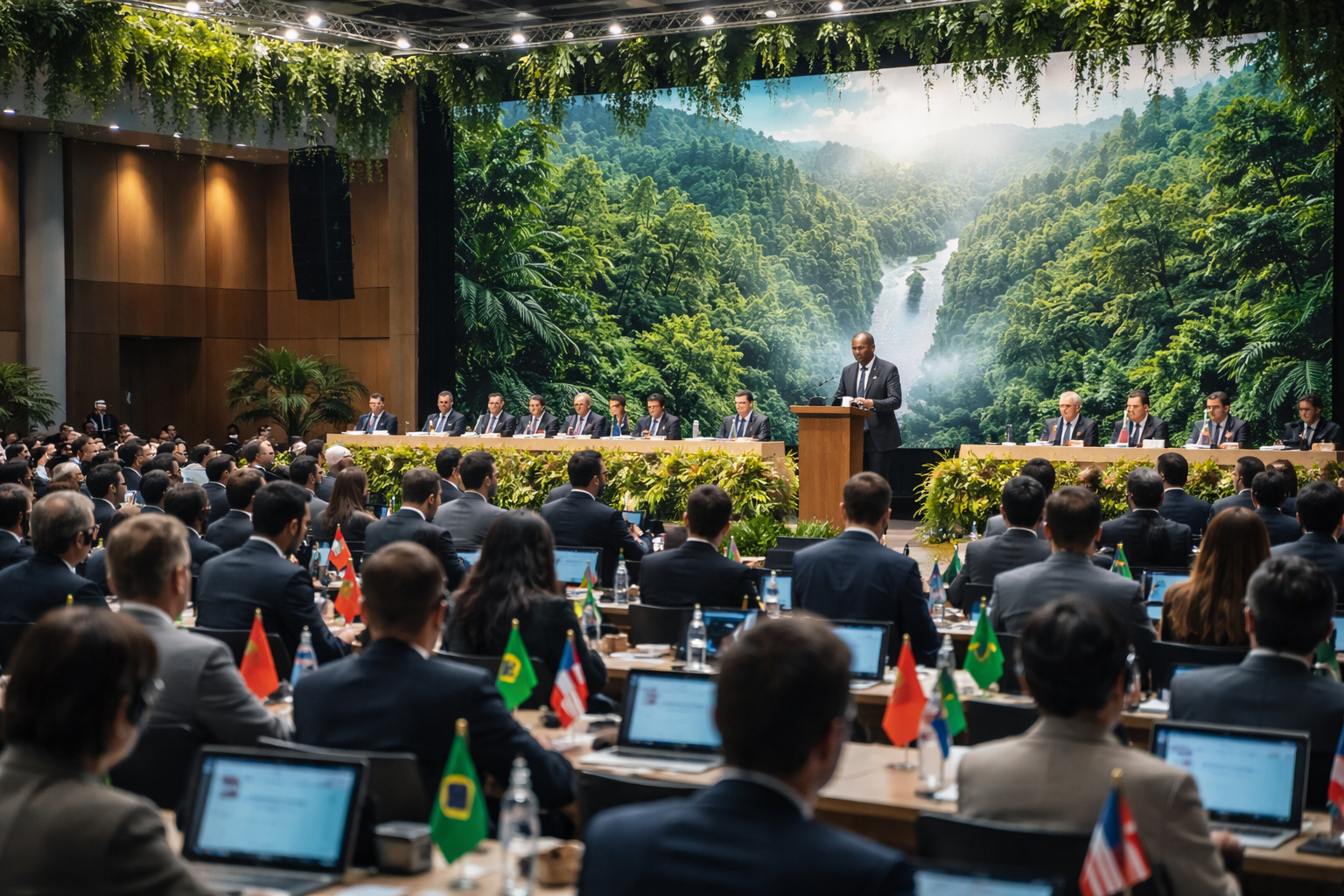
After the conclusion of COP30, held on November 22, 2025, in Belém, the global climate agenda entered a new phase. Since then, the so-called Belém Package has been approved by consensus among 195 countries, consisting of 29 official decisions. Among them, the launch of the TFFF, an international funding mechanism aimed at the conservation of tropical forests, was highlighted as one of the most relevant milestones of the meeting.
In this context, the Belém Package has more structurally consolidated the convergence of climate, nature, and global finance. Thus, environmental conservation ceased to occupy only a symbolic space. Gradually, preserving forests began to represent access to financial resources, multilateral incentives, and new international partnerships, as discussed officially during the 2025 conference.
At the same time, this movement redefined the competitive environment. Companies with direct environmental impact, intensive land use, sensitive production chains, complex logistical operations, or dependence on natural resources began to operate under new criteria. Thus, practices previously treated as social and environmental responsibility started to consolidate as an essential part of the social license to operate and compete.
-
Warm water hidden deep in the ocean has been moving towards Antarctica for 20 years, potentially accelerating glacier melting from below.

-
U.S. Offers Nearly $200,000 to Combat Invasive Mussels Threatening Waterways and Hydroelectric Plants
-
Cigarette Butts Pollute Brazilian Beaches, Sparking Debate on Coastal Environmental Protection Measures
-
App Drivers Unite in Major Solidarity Effort to Aid Venezuela Earthquake Victims, Mobilizing the Brazilian Amazon with Donation Campaign


From a practical standpoint, COP30 formally approved the long-term funding structure for forest conservation. Initially, a commitment exceeding US$ 5.5 billion was announced, with the explicit support of dozens of countries for the launch of the TFFF, according to records released at the end of the conference.
Additionally, relevant advances in climate adaptation, just transition, and social inclusion were also observed. Therefore, the climate emergency began to be treated as a systemic agenda that involves economy, society, and governance, and not just as an isolated environmental issue.
However, despite the progress, not all expectations translated into binding decisions. COP30 did not approve an immediate global timeline for the elimination of fossil fuels. Thus, the level of regulatory uncertainty remained high, which continues to affect investment decisions and strategic planning.
Moreover, the success of the TFFF will necessarily depend on clear governance frameworks, effective oversight, robust incentive structures, functional public-private partnerships, and, above all, the trust of international investors. Therefore, although the announcement was formalized in 2025, implementation will be crucial in the coming years.
For companies, this new context demands continuous attention. Requirements such as traceability, social and environmental compliance, transparency, climate risk management, and regulatory adequacy have ceased to be differentiators. They have thus become conditions of competitiveness, access to capital, and continuity in global markets, according to recurring analyses from the financial sector and multilateral organizations.
At the same time, concrete opportunities have emerged. Businesses related to conservation, environmental restoration, bioeconomy, environmental services, carbon credits, and sustainable logistics are increasingly expected to gain value and traction. Therefore, companies that anticipate these changes may occupy relevant strategic positions.
Still, the moment calls for caution. Emerging initiatives, such as the TFFF, do not guarantee automatic returns. They require planning, governance frameworks, technical rigor, and long-term vision, as emphasized in the final debates of COP30.
Finally, COP30 formalized a new global ecosystem of incentives linked to nature, climate adaptation, and environmental conservation. In light of this, ignoring the changes already observed — such as short and intense rains, more extreme summers, harsh winters, and alterations in production cycles — may pose significant risks for companies and societies. Thus, acting with responsibility, clarity, and a long-term strategy has become a central requirement for the sustainability of businesses in the post-2025 scenario.
By João Roncati, CEO of People+Strategy – a recognized and respected Brazilian consulting firm for its strategic work with the senior leadership of large companies.