






 Portuguese
  Spanish


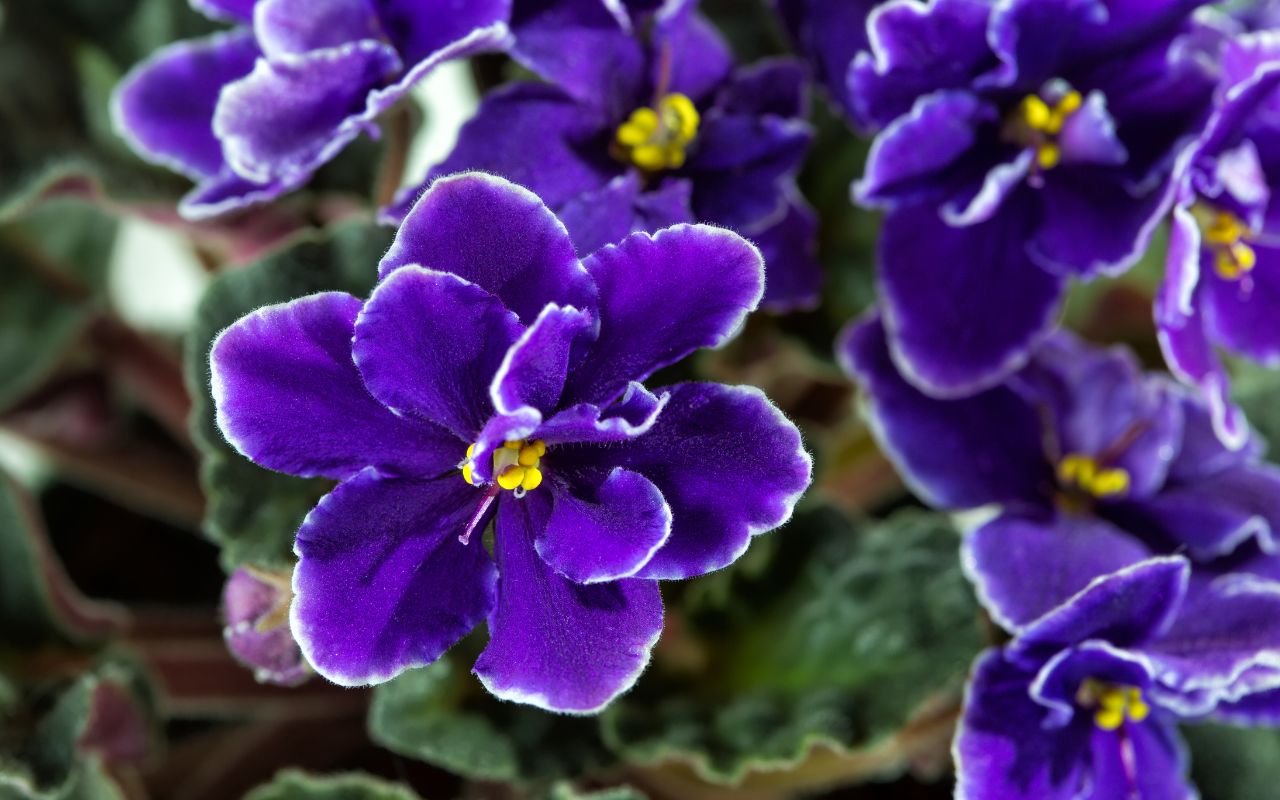


Violet Is Considered The Rarest Color In Nature. Understand Why This Shade Is So Difficult To Produce And Discover Plants That Exhibit The Hue.
The violet is the rarest color in nature, in biology, few species can produce the pigments and the structures necessary to reflect such short wavelengths.
This rarity is linked to how light interacts with biological compounds and evolutionary microstructures, making violet a visual phenomenon that almost never appears, even in color-rich environments.
Why Is Violet The Rarest Color In Nature?
The rarity of the color, according to studies on light and biological coloration, is directly related to its positioning in the visible spectrum.
-
2,000-Year-Old Gold Rings Found with Human Bones in Thailand Reveal Rare Burial and Feature Ancient Indian Inscription

-
Lenovo Unveils Legion Y700 Tablet with RGB Backlighting, 5G, and SIM Card Support

-
World’s First Nuclear Hydrogen Unit Begins Operation: Copper-Chlorine Technology with Initial Capacity of 150 Liters per Hour, Aiming for 3,000 Liters per Hour
-
Mechanics Retrofit Old Fiat Uno with BYD Electric Motor for Silent, Low-Voltage Operation Reaching Nearly 60 km/h in Home Test



Colors appear to us as light is reflected, and violet needs to return very short wavelengths, close to 400 nanometers — something that few living structures can produce.

While hues like red or green appear easily, violet requires sophisticated mechanisms, whether through specific pigments or microstructures that manipulate light.
Few living beings have evolved such capabilities, which explains why this is considered the rarest color in nature.
How Does Light Influence The Emergence Of Violet?
White light is composed of various colors, each with its own wavelength. For a plant or animal to appear violet:
- it needs to absorb most of the light
- and reflect only the shortest part of the spectrum
This process requires highly specialized pigments or an internal physical architecture capable of interfering with light.

In many cases, violet doesn’t even come from pigments — but rather from a phenomenon called structural coloration, where tiny layers reflect light selectively.
This ingenuity of nature explains why violet is so difficult to find.
The Role Of Plant Pigments In Creating Violet
In plants, violet primarily appears due to anthocyanins, pigments that can reflect shades ranging from lilac to deep violet.
They arise as a response to different factors, such as:
- soil acidity
- light intensity
- temperature
Even so, not all plants can produce this shade. Curiously, blue — often considered rare — is even more difficult to generate in natural pigments, highlighting violet’s prominence.
Violet In Animals: Even Rarer
In the animal kingdom, the color is practically an exception. Almost no animal has pigments that reflect this color.
When it appears, it is usually the result of complex microstructures in the skin, feathers, or scales that precisely redirect light.
This process is evolutionarily costly and difficult to occur, which is why so few animals exhibit truly violet hues.
Plants That Naturally Exhibit Violet Hues
Although considered the rarest color in nature, violet can still be found in various well-known plants.
Lavender (Lavandula) is one of the most emblematic examples: a fragrant flower easily recognized by its violet inflorescences and its preference for full sun environments.

On the other hand, the bugleweed (Ajuga reptans ‘Atropurpurea’) catches attention for its leaves in shades that vary between purple and bronze and for forming dense carpets that bloom in blue-violet, especially in moist and shaded areas.
The Dalmatian bellflower (Campanula portenschlagiana) also makes this list, displaying flowers that range from blue-lilac to violet and working well as ground cover or a highlight in garden borders.
Another representative is the Viola, quite popular in Brazil, especially the African violet variety, which grows best in partial shade, with moist and well-drained soil.
The butterfly orchid (Phalaenopsis amabilis) appears in various shades and, depending on the growing conditions, can show delicate variations that enhance any environment.
Finally, the hydrangea (Hydrangea macrophylla) completes the group, as its inflorescences can take on violet tones depending on the soil acidity, a characteristic that makes it one of the favorite species for those who appreciate colorful and dynamic gardens.
Why Does Our Vision Influence The Perception Of Violet?
The way each person perceives the color depends on the sensitivity of the photoreceptors in the retina.
Since this color is at the lower limit of the visible spectrum, small biological variations between individuals can alter the way violet is perceived.
This particularity reinforces the charm around the rarest color in nature: in addition to being rarely produced by plants and animals, it is also interpreted differently by each human eye.
The rarest color in nature because it requires pigments capable of reflecting light from very short waves or highly specialized microscopic structures — resources that are uncommon in the evolution of plants and animals.
This combination of biological limitations and optical phenomena makes violet one of the most intriguing shades ever observed in the natural world.
With information from Revista Casa e Jardim.


Muito interessante esta matéria.
Parabéns…