Portuguese
  Spanish


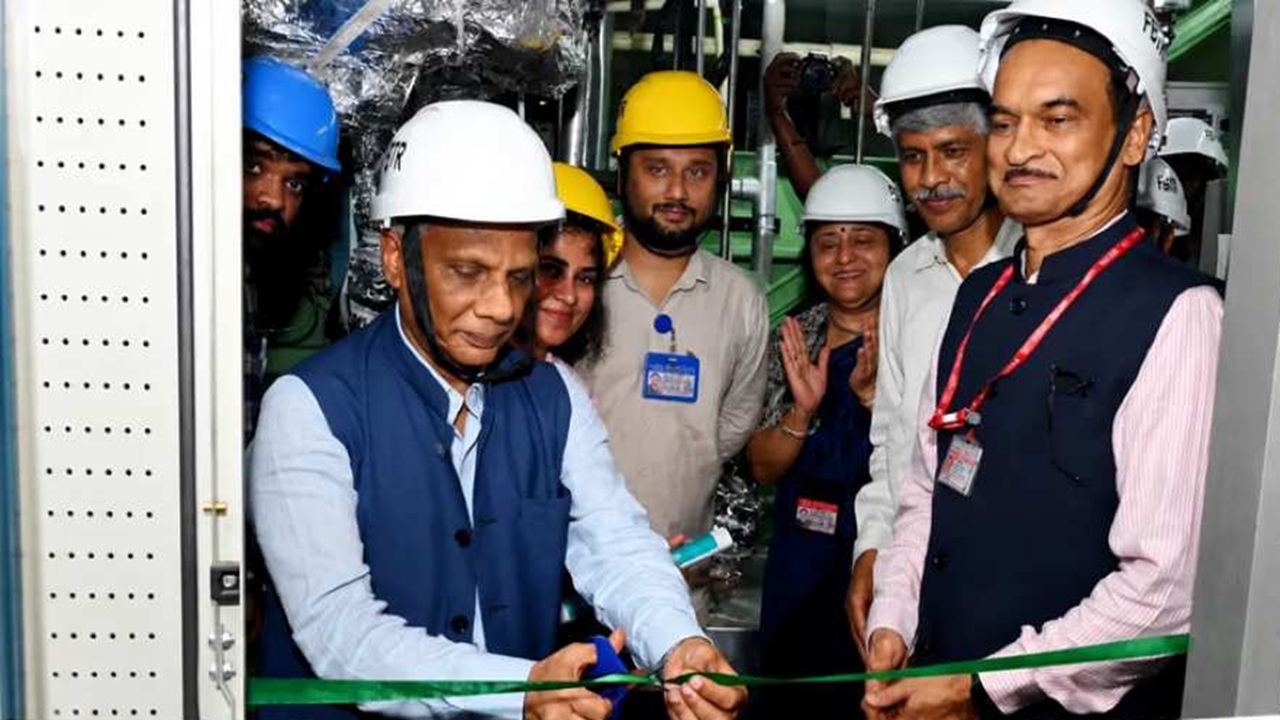
Inaugurated on June 26, 2026, at the Indira Gandhi Center for Atomic Research in Kalpakkam, the Indian facility uses the copper-chlorine thermochemical cycle and nuclear heat from the FBTR to produce hydrogen, in a demonstration project that could pave the way for a larger unit near the PFBR.
India inaugurated in June 2026 the world’s first nuclear hydrogen facility at the Indira Gandhi Center for Atomic Research in Kalpakkam, Tamil Nadu. The project uses nuclear heat to extract hydrogen from water.
The unit was installed in the Fast Breeder Test Reactor, known by the acronym FBTR. It is the first and oldest Indian fast breeder reactor, used in research since it reached criticality in 1985.
The inauguration took place on June 26, within a strategic complex for the country’s atomic program. On the same campus is the Prototype Fast Breeder Reactor, the PFBR, commercial, with 500 MW.
-
Lenovo Unveils Legion Y700 Tablet with RGB Backlighting, 5G, and SIM Card Support

-
Mechanics Retrofit Old Fiat Uno with BYD Electric Motor for Silent, Low-Voltage Operation Reaching Nearly 60 km/h in Home Test
-
Free Internet Begins Testing in São Paulo Metro Stations, Network-Wide Rollout Expected by 2026
-
Man Transforms Desert Ranch into Forest by Harvesting Rainwater, Captures 15,000 Gallons in One Downpour, Builds 100 Dams with 6 Volunteers



Nuclear hydrogen uses heat instead of electricity
The facility functions as a technological demonstration. The goal is to show that hydrogen can be produced with chemical reactions and nuclear process heat, without relying on the electricity used in conventional electrolysis.
Like green hydrogen plants, the system starts with water, whose formula is H2O, to obtain hydrogen, H2. The difference lies in the path used to separate these elements.
Instead of consuming electricity, the facility takes advantage of residual heat from the fast reactor and a thermochemical chain based on copper and chlorine. The method is called the copper-chlorine thermochemical cycle.
Ajit Kumar Mohanty stated that nuclear energy can provide reliable, carbon-free electricity, and high-temperature process heat, suitable conditions for producing hydrogen on a large scale.
Why India calls the project a technological milestone
The Department of Atomic Energy classified the facility as a milestone of the Indian three-phase nuclear program. This program was conceived in the 1950s by nuclear physicist Homi Jehangir Bhabha.
The strategy was born in a context of limited uranium reserves and the intention to explore thorium resources available in the country. The first phase involved pressurized heavy water reactors, like those in Kudankulam.
The second phase includes fast breeder reactors, such as the FBTR and the PFBR, in Kalpakkam. These reactors operate with the logic of producing more fuel than they consume.
Unlike traditional reactors, which use uranium, Indian fast reactors utilize plutonium. They were also designed to eventually operate with thorium.
The FBTR, however, is not a commercial plant. With a capacity of 40 thermal megawatts, it functions as a test platform for fuels, advanced technologies, and larger future applications.
Initial capacity is still demonstrative
The technology was developed by the Bhabha Atomic Research Centre, or BARC. A 2025 document stated that the facility has the capacity to produce 150 normal liters of hydrogen per hour.
BARC and the Department of Atomic Energy plan to expand the project with a unit of 3,000 normal liters per hour. The informed expectation is that this stage will be commercially viable.
This unit will likely be built near the PFBR, on the same Kalpakkam campus, indicating a transition from technological demonstration to a larger scale production model.
Process has a footprint comparable to green hydrogen
Anil Kakodkar stated that hydrogen is becoming one of the most important vectors of the global clean energy transition. For him, reducing production costs will be necessary.
Kakodkar explained that the cost of hydrogen comes from the energy consumed in electrolysis. By replacing this step with nuclear process heat, efficiency increases significantly.
He also noted that the product is not classified as green hydrogen, because the process uses nuclear heat, not renewable energy. Still, its carbon footprint would be comparable to that of green hydrogen.
Sreekumar G. Pillai, director of IGCAR, stated that the achievement is supported by four decades of operational and technological experience in the fast reactor program.