





 Portuguese
  English
  Spanish
  4 min of reading
  0 comments


Plasma Cutting Technology Establishes Itself as an Innovative Solution for Oil Refinery Maintenance in Brazil, Offering Safety, Time Savings, and Productivity Gains.
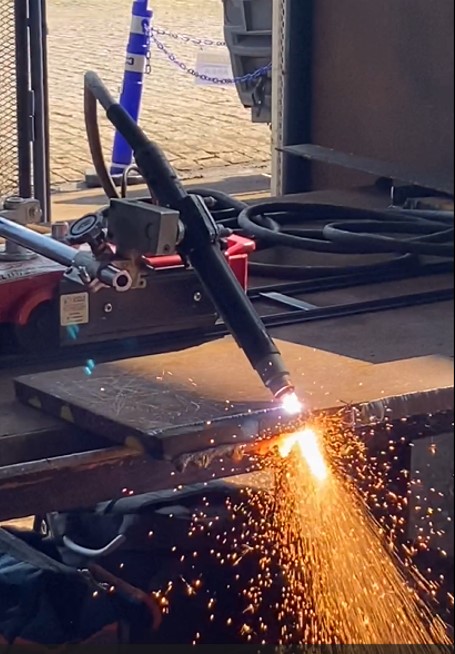
The oil and gas sector is one of the pillars of the Brazilian economy, with direct and indirect impacts on Gross Domestic Product (GDP) and the generation of millions of jobs. The National Confederation of Industry (CNI) estimates that this sector contributes more than 10% of industrial GDP and generates about 1.6 million jobs, driving the economy and ensuring energy supply. In this context, innovation is constant, focusing on the safety and efficiency of operations.
Plasma cutting, an increasingly popular technology, was evaluated in a recent study by Hypertherm Associates and industry experts, confirming that, compared to oxy-fuel cutting and abrasive discs, it offers performance up to eight times faster, with significant improvements in working conditions and resource savings.
The Importance of Innovation in the Oil and Gas Sector
The oil and gas sector in Brazil demands reliable and safe maintenance solutions to meet the complexity of operations. In refineries, where cutting metal materials is necessary to repair or adapt equipment, the plasma cutting method stands out for its competitive advantages. With significant productivity gains and lower accident risk, this technology represents a crucial transformation in how cutting operations are performed.
-
90 billion barrels of oil, 1.669 trillion cubic feet of natural gas, and 84% of probable reserves in offshore areas are under the Arctic, and the melting ice that opens maritime routes and exposes this energy treasure is turning the North Pole into a strategic dispute between the USA, Russia, China, and Canada for oil, gas, navigation, and military power.

-
IBS and CBS regulations change credit reimbursement and raise financial alert in the oil and gas industry

-
China puts into operation the largest shallow lithology offshore field in the country, with 79 wells, heavy oil, and a production of 20,000 barrels per day.

-
Petrobras announces an investment of R$ 2.8 billion in Amazonas to expand natural gas production in Urucu and modernize the river fleet, boosting energy, logistics, and the regional economy with new vessels adapted for operation in the Amazon.




Benefits of Plasma Cutting: Why Is It More Efficient?
Traditional cutting methods, such as oxy-fuel cutting and the use of abrasive discs, still prevail in Brazil. However, plasma cutting offers advantages that make it the ideal choice for a sector that demands agility and safety.
- Superior Speed: Studies indicate that plasma cutting is up to 8 times faster than oxy-fuel cutting. For example, a process that would take 6 hours with conventional methods can be completed in approximately 18 minutes using plasma.
- Higher Precision: Plasma cutting provides a high-quality finish, minimizing the need for rework, which reduces the overall time of maintenance operations.
- Cost Reduction: Time savings and efficiency in the use of materials and energy result in lower costs for companies, fostering a more sustainable working environment with less waste.
Plasma Cutting and Workplace Safety
The study revealed that the use of plasma cutting also directly contributes to the safety of workers. Unlike methods such as oxy-fuel cutting and the use of abrasive discs, which generate large amounts of sparks and toxic fumes, plasma offers a safer working environment. This technology not only reduces accident risks but also improves the health of the professionals involved.
Main Benefits for Worker Safety:
- Lower Exposure to Toxic Fumes: Plasma cutting generates less smoke and potentially hazardous particles, which reduces the risk of respiratory diseases, such as bronchitis and other health complications.
- Less Noise and Heat: The plasma process is quieter and generates less heat, factors that contribute to a more comfortable and safe working environment.
- Lighter Equipment: Plasma tools are lighter than traditional abrasive discs, reducing physical exertion and, consequently, the risk of muscle injuries.
Worker Health and Plasma Technology
The study conducted by Hypertherm Associates also highlighted the positive effects of plasma on worker health. The use of this technology minimizes exposure to carbon monoxide, nitrogen oxides, and fine particles, elements associated with a range of respiratory and neurological issues.
How Plasma Cutting Can Transform the Future of Refineries in Brazil
In a constantly expanding sector like oil and gas, operational efficiency and safety are essential to meet the growing demand. The use of plasma cutting has been gaining traction as a promising alternative, with the potential to transform conventional practices and drive the sustainable growth of the industry.
Main Market Trends:
- Automation of Plasma Cutting: With technological advancements, plasma is expected to be increasingly integrated into automated processes, which should further improve the precision and efficiency of operations.
- Sustainable Solutions: Reducing waste and minimizing harmful particle emissions contribute to a more sustainable operation, something increasingly relevant for energy companies.
Comparison: Plasma Cutting vs. Other Technologies
One of the main attractions of plasma cutting is its efficiency compared to traditional technologies. Below is an overview of the key points that differentiate plasma cutting from oxy-fuel cutting and the use of abrasive discs:
| Characteristic | Plasma Cutting | Oxy-Fuel Cutting | Abrasive Discs |
|---|---|---|---|
| Speed | High | Medium | Low |
| Cutting Precision | High | Medium | Low |
| Particle Generation | Low | High | High |
| Safety | High | Medium | Medium |
| Operational Cost | Medium | High | Low |
This analysis reinforces how plasma cutting not only excels in performance but also offers a positive balance in terms of safety and cost-effectiveness.
Challenges for Implementing Plasma Cutting
Despite the advantages, the adoption of plasma cutting in Brazil faces challenges, such as the initial cost of equipment and the need for operator training. However, considering the efficiency and long-term benefits, oil and gas companies are increasingly investing in plasma technology, expecting to maximize their return on investment.
Plasma cutting has already established itself as a revolutionary solution for oil refinery maintenance in Brazil, offering significant improvements in safety, speed, and quality. Companies that adopt this technology can optimize processes, reduce costs, and provide a safer working environment for their employees.
In the future, the expectation is that plasma cutting will continue to gain traction and establish a new standard for industrial maintenance in the oil and gas sector, especially with the increase in automation and sustainable practices in the industry.








Be the first to react!