





 Portuguese
  English
  Spanish
  4 min of reading
  0 comments


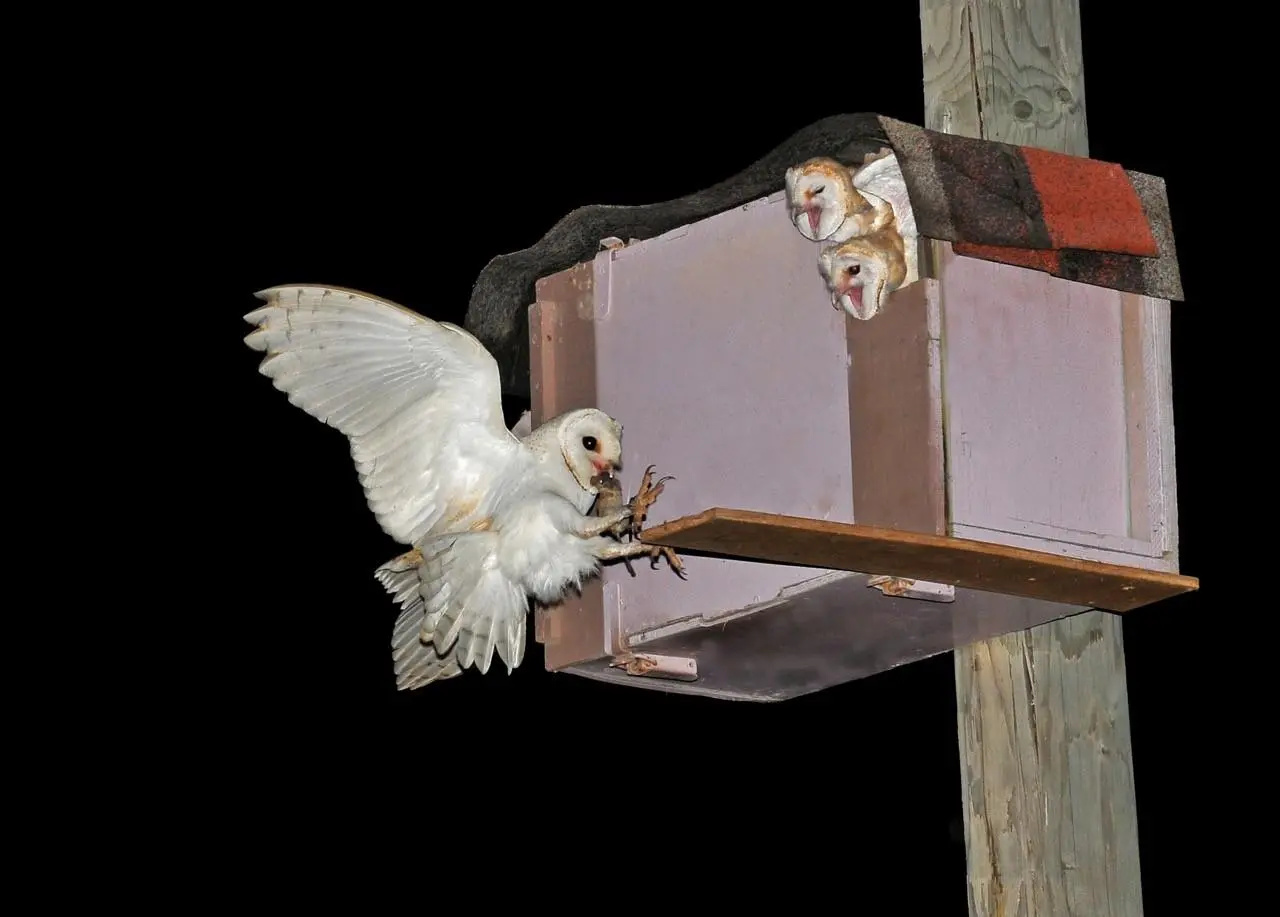
Programs with Nest Boxes Are Bringing Owls Back to the Urban Edges of the U.S., Reducing Rats and Revealing How Cities Feed Pests and How Ecology Responds.
For decades, American urban expansion has pushed large predators off the map. Constant noise, loss of ancient trees, use of poisons, and habitat fragmentation have created hostile cities for nocturnal raptors. In recent years, however, a silent phenomenon has begun to reverse this logic: owls have returned to occupy peri-urban areas of the United States, and not by chance. They are being actively invited back through artificial nest boxes, installed by researchers, farmers, and environmental managers as a direct response to the growth of rats and mice associated with human activity.
What began as a practical attempt to reduce pests without poison has become something larger. Today, these owls function as biological sentinels, providing scientists an unprecedented window into understanding how urbanization alters food chains, concentrates prey, and creates artificial niches that favor opportunistic species.
Nest Boxes: The Simple Engineering That Changed the Game


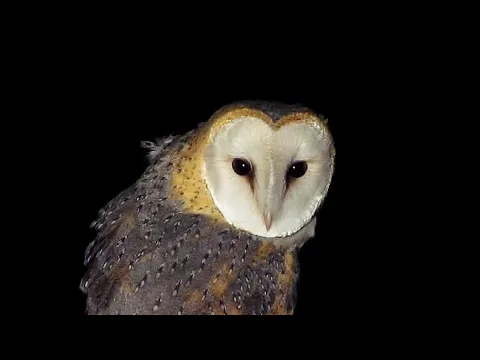
The species most associated with this movement is the barn owl (Tyto alba), famous for its predatory efficiency. One pair can capture thousands of rodents per year, especially mice and small rats.
-
A 600-meter hill in the interior of Santa Catarina hides a volcanic past of almost 600 million years. The Morro do Garrafão in Corupá may have been an ancient extinct volcano, and science now confirms what the residents have always suspected.

-
Family has lived for over 50 years without electricity and running water at home in the South of Minas, 10 minutes from the city, improvising light, bath, and water while facing a lack of basic resources and awaiting property regularization.

-
Children from the 1980s and 1990s who spent hours playing in the street until dark naturally developed spatial intelligence, which today has become the subject of expensive courses, cognitive training, and modern methods of child and adult learning.

-
Without bombs, without electricity, and without drilling the ground, villages in southwestern Morocco have discovered how to extract water directly from the air using only polymer nets, wind, and the humidity of the Atlantic amidst the advancing desert.



The problem is that, in modern cities and suburbs, natural nesting sites have nearly disappeared. Old barns, hollow trees, and rural buildings have been replaced by concrete, glass, and sealed structures.
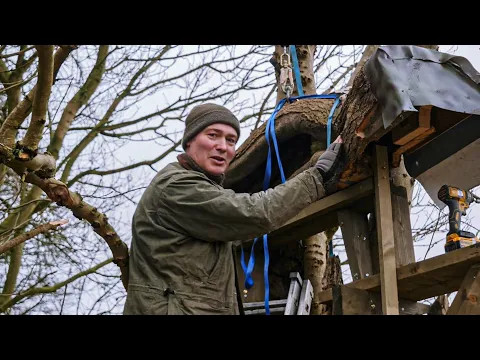
The nest boxes emerge precisely to fill this void. Built from wood or composite materials, elevated off the ground and positioned in open areas, they recreate ideal breeding conditions. In states like California, Texas, and Florida, programs installing these boxes have shown a consistent effect: the owls return, establish themselves, and begin to hunt intensely in the surrounding areas, exactly where the rodent density is highest.
What Owls Eat Reveals How the City Works
The scientific turning point comes next. Owls regurgitate pellets containing bones and fur from the prey they have ingested.
Analysis of these pellets allows accurate identification of which rodent species dominate a particular region, at what time of year, and in what proportion. For researchers, this is equivalent to a biological map of urban pests.
In peri-urban areas of the U.S., these studies have revealed something important: the most consumed rodents are directly linked to trash, artificial irrigation, lawns, and agricultural areas adjacent to the city.
In other words, owls not only reduce populations of rats and mice but also help track the side effects of modern urbanization, showing where the human environment is creating opportunities for pest population explosions.
Less Poison, More Natural Predators
Another decisive impact of using nest boxes is the reduction of chemical rodenticides. Anticoagulant poisons, widely used in urban rat control, do not only affect pests. They rise up the food chain and can kill birds of prey, coyotes, bobcats, and even domestic animals.
By replacing part of this chemical control with natural predators, communities and farmers can reduce environmental risks without losing effectiveness.
American studies show that areas with a stable presence of owls exhibit less need for recurring chemical control, especially in vineyards, peri-urban farms, and transition zones between city and countryside.
The result is not the total eradication of rodents, but a more stable balance, with populations maintained below the threshold of economic and sanitary damage.
Why This Does Not Happen in City Centers
It is important to separate myth from reality. Owls are not dominating dense urban centers such as Manhattan or the heart of Los Angeles.
Intense artificial light, constant traffic, and lack of open areas make these places unsuitable. The phenomenon occurs mainly at the urban edges, extensive parks, green belts, agricultural areas nearby, and neighborhoods with lower density.
This limitation, far from weakening the story, makes it more interesting. It shows that the design of cities matters. Where there are green corridors, open spaces, and tolerance for wildlife, predators return. Where everything is sealed by concrete, pests thrive alone.
Owls as Living Tools of Urban Science
By combining nest boxes, population monitoring, and food analysis, researchers in the United States have turned owls into living research instruments.
They indicate where rodents are, which species dominate, how climate and land use influence prey abundance, and even how changes in urban management alter ecological balance.
More than a symbol of the return of wildlife, these birds demonstrate that cities are not closed ecosystems, but dynamic systems shaped by human choices.
By providing shelter to a natural predator, the U.S. has discovered that it is possible to control pests, reduce poisons, and learn from wildlife—all at the same time.
In the end, the owls are not just hunting rats. They are telling the invisible story of how our cities create problems and how simple solutions can help fix them.








-

-

-

4 people reacted to this.