Portuguese
  Spanish


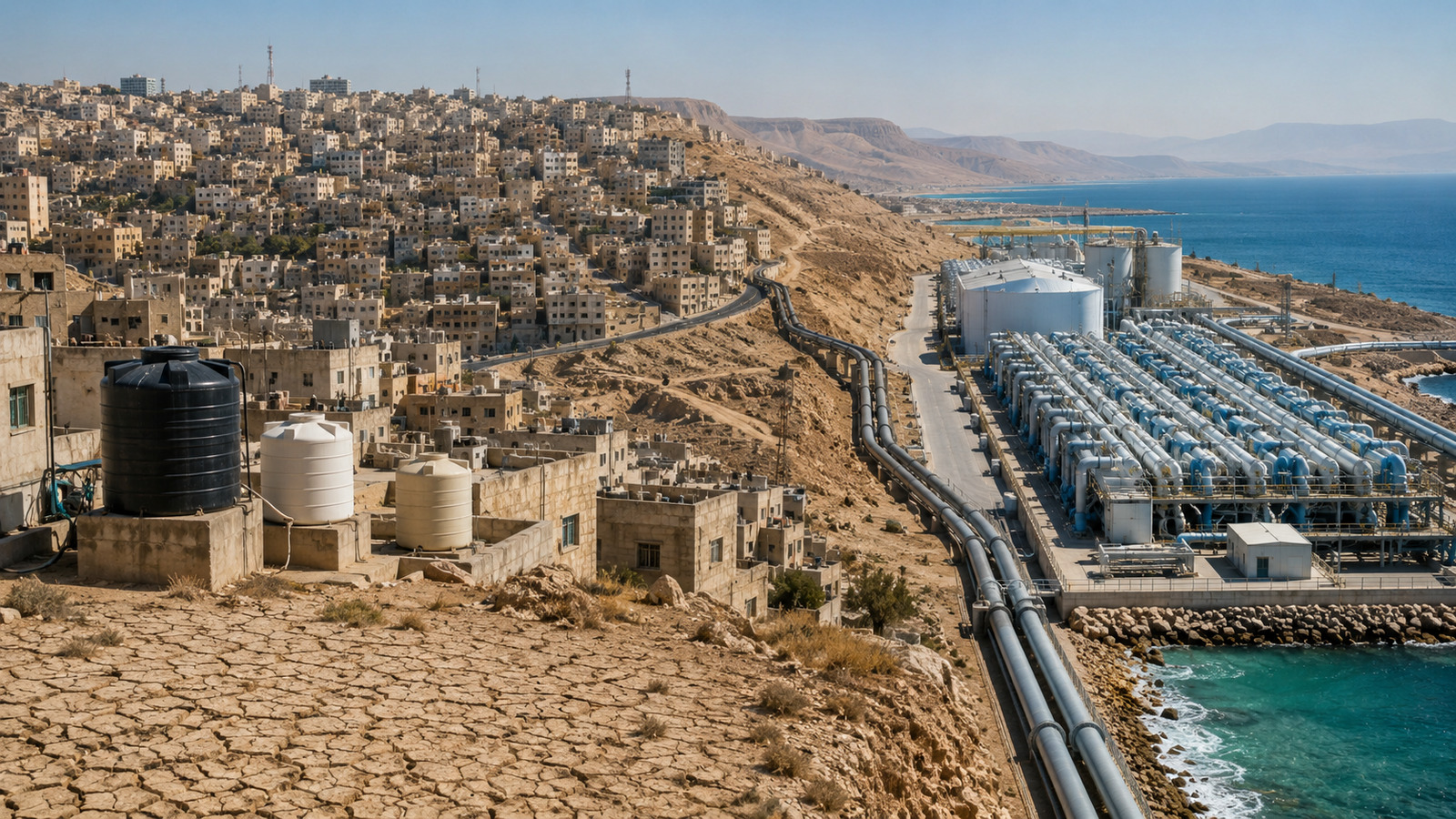

With only 61 cubic meters of water per person per year, Jordan invests in a desalination megaproject to supply Amman and reduce pressure on families affected by rationing
Desalination in Jordan is considered one of the main responses to the country’s extreme water scarcity, which has only 61 cubic meters available per person per year. The project aims to draw water from the Red Sea, treat the resource, and pump it over 400 kilometers to Amman, with completion expected in 2030.


Jordan experiences absolute water scarcity
Jordan is among the most arid countries in the world and ranks second in water scarcity in some classifications. According to UNICEF, each inhabitant has access to 61 cubic meters of water per year.
This volume represents about 12% of the 500 cubic meters minimum established by the United Nations to characterize a condition outside of absolute scarcity. In practice, the lack of water is not a distant problem but part of the population’s routine.
-
Brazil to Issue “Panda Bonds” in China, Aiming to Raise Up to 5 Billion Yuan at Lower Interest Rates Than Dollar Debt
-
NATO Faces Internal Tensions as U.S. Pushes for Increased Defense Spending, Targeting 5% of GDP by 2035, with Warnings for Countries Near 2% Level

-
Brazil to Introduce B16 Diesel with Increased Soybean Oil Content for Trucks by 2026
-
Brazil’s July Bolsa Família Payments May Include Extra $150 and $50 for Families with Children, Pregnant Women, and Updated CadÚnico Registration


The water challenge adds to another milestone for the country: in 2026, the Jordanian team will compete for the first time in the World Cup, after nine unsuccessful attempts.
But off the field, the pressure on supply remains one of the most urgent issues.
Climate, geography, and evaporation worsen the problem
According to Luis Antonio Bittar, full professor at the Department of Geography at USP and specialist in natural resources, the main causes of scarcity are climatic and geographical.
More than 90% of the rain that falls in the country evaporates before infiltrating the soil and recharging the aquifers. Rising temperatures intensify this process, affecting both rainwater and surface reservoirs.
Geography also plays a role. About 80% of Jordanian territory is made up of arid and desert areas, which increases evaporation and reduces the natural capacity for storage and renewal of fresh water.
According to Bittar, author of the book “Water in the Middle East: the flow of peace,” the situation is further aggravated by geopolitical disputes involving shared sources.
Jordan shares the Jordan River and the Yarmouk River with Syria and Israel, in a context of military and political control over these waters.
Rationing affects homes and weighs on the budget
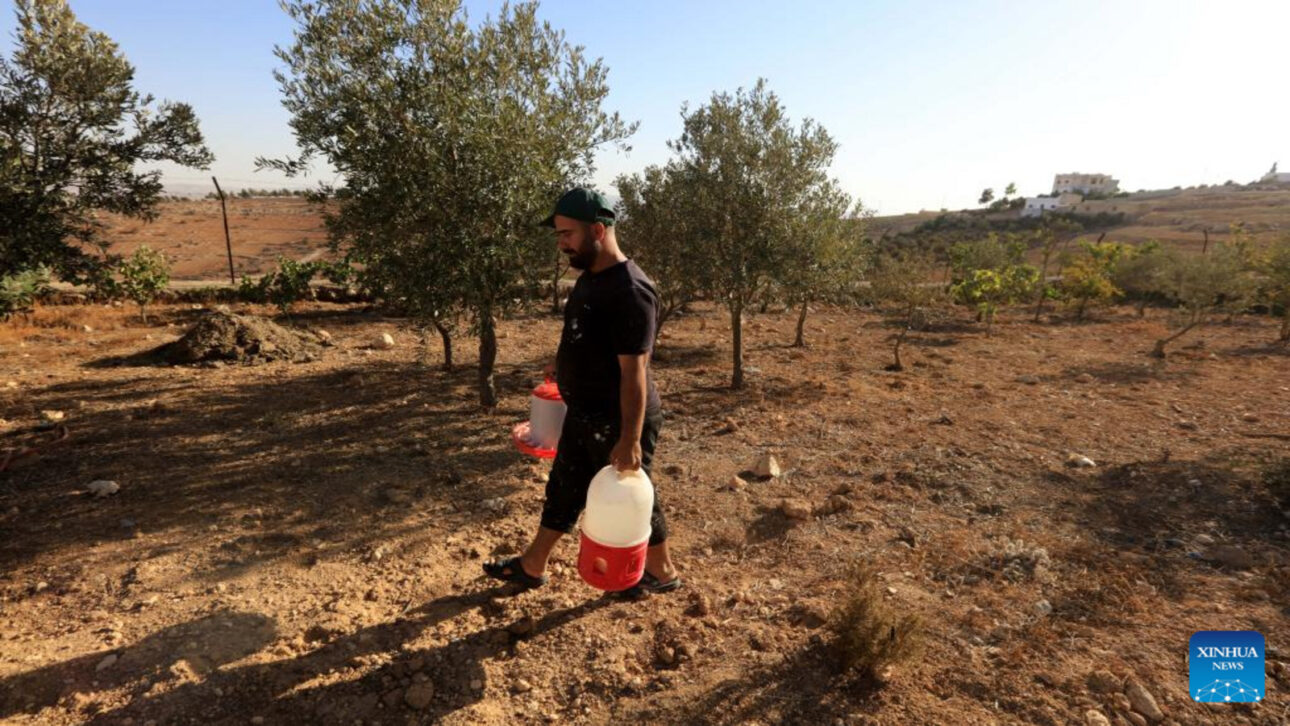
The effects on the population appear in daily supply. Bittar, who has been to Jordan on three occasions, reports that rationing is frequent in Amman and other regions of the country.
In most urban areas, homes receive piped water once a week. In some rural regions, the interval can reach two or three weeks.
Therefore, many households have cisterns to store water on the supply day. When the volume runs out before the new delivery, families need to resort to private water trucks, which increases the burden on the household budget.
Another pressure factor is the population growth associated with the arrival of refugees. Jordan has received, in recent decades, people mainly from occupied Palestine, Iraq, and more recently, Syria.
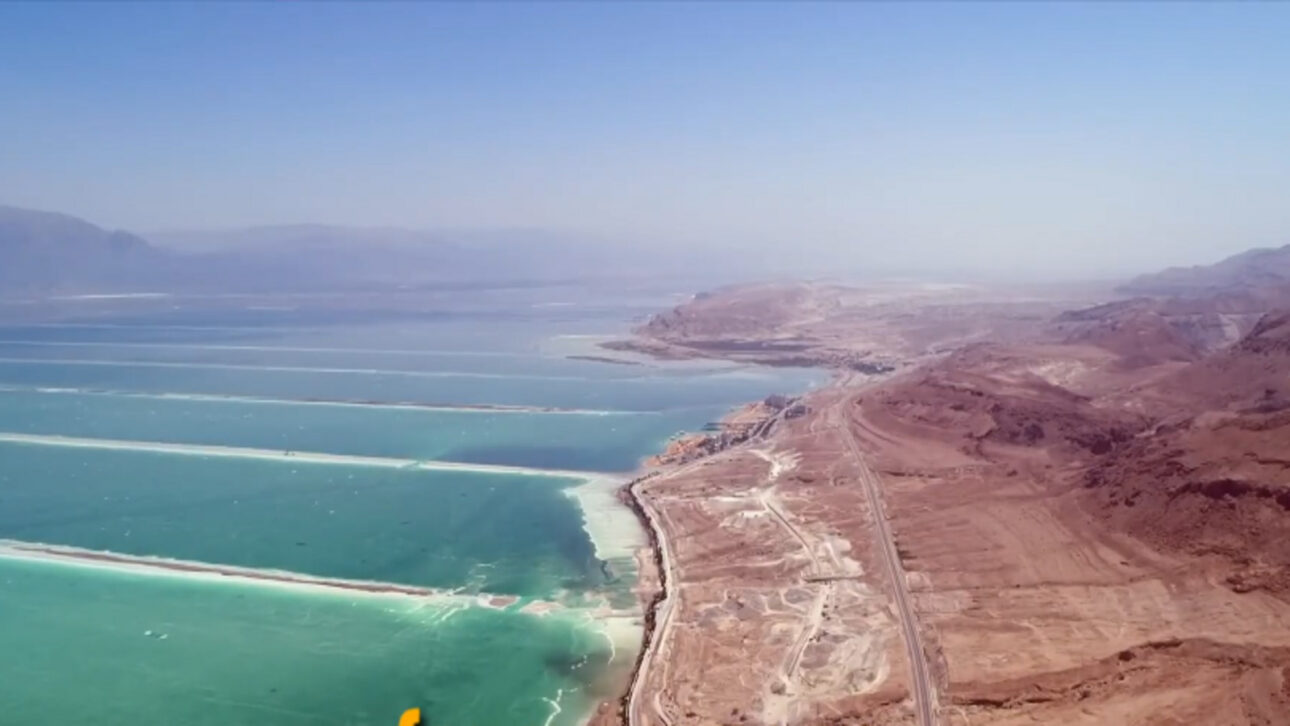
Desalination is expected to bring water from the Red Sea to Amman
The large desalination project is seen as an alternative to reduce dependence on natural freshwater sources, such as rivers, aquifers, and water tables, which are already below demand.
The planned structure will collect water from the Red Sea in Aqaba, in the southwest of the country. After desalination, the treated water will be pumped over 400 kilometers to Amman, the Jordanian capital.
The expectation is that the project, when completed, will supply about 40% of the country’s supply needs. The forecast is that the works will be completed by 2030.
According to Bittar, the advantage of desalination is not depending on rainfall or disputes over transboundary rivers.
Even with lower operating costs compared to previous years and less need for electricity, the plant still requires time to become fully operational.
This article was prepared based on information from the provided source material, with data, numbers, and statements preserved as per the consulted material.