






 Portuguese
  Spanish


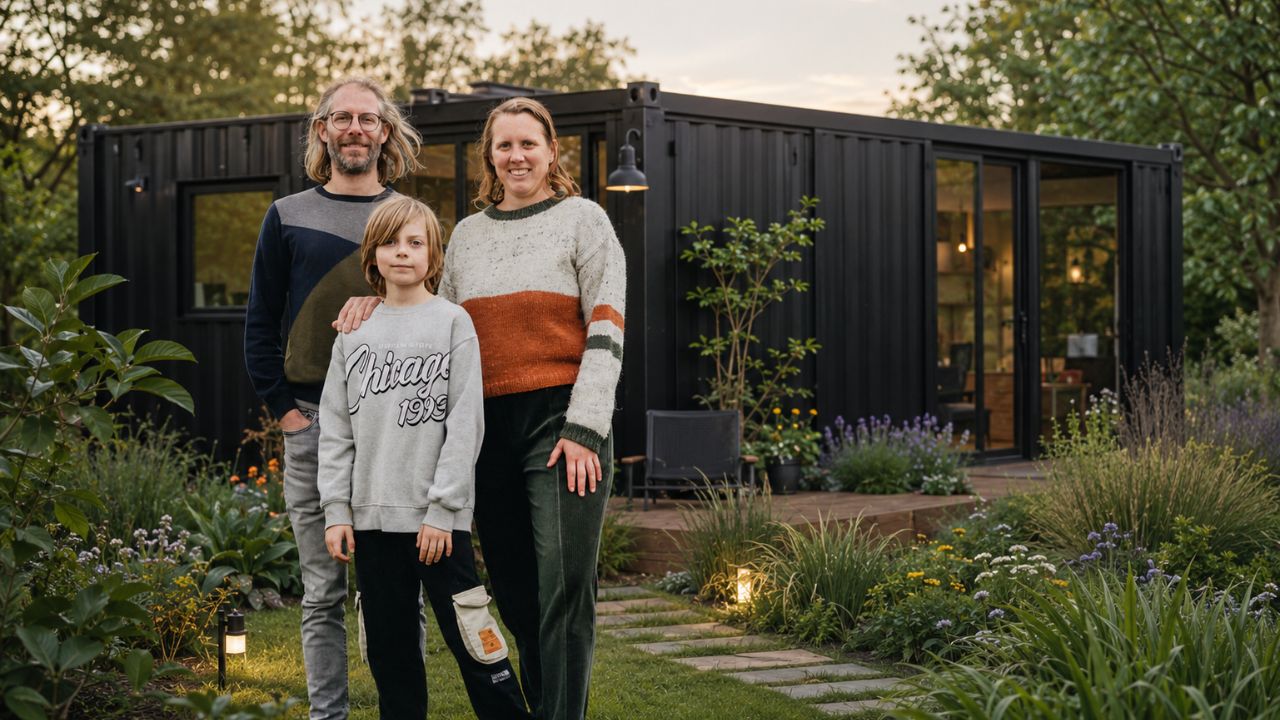

Belgian couple swapped a conventional house for a 62 m² house made with recycled containers and gained more contact with nature.
A family from Belgium decided to follow a different path amid rising housing costs and the search for a routine more connected to the natural environment. Bert, Evi, and their son Georges left behind the concept of conventional housing and started living in a house built with recycled shipping containers. The change occurred after years of searching for a property that offered more outdoor space and less built-up area, a goal they couldn’t find in the options available on the market.
The choice ended up attracting attention in different European countries. According to the German publication Focus, the family’s experience became an example of a trend gaining strength on the continent: the adoption of compact, sustainable homes adapted to new lifestyles.
When a smaller house delivers more quality of life
Contrary to what usually happens in the real estate market, the couple was not looking to expand the built-up area. The goal was precisely to reduce the internal space and increase interaction with open areas.
-
China’s Engineered Bamboo: The “Material of the Future” Stronger Than Steel and a Sustainable Wood Alternative

-
Egypt’s “New Nile”: 170 km Artificial River Aims to Turn Desert into Farmland, but Water Supply Concerns Loom
-
Unable to secure a mortgage as a self-employed single mother, she designed her own floating home from a 20-meter boat and now lives “off-grid” with her two children and solar panels on an English canal.
-
Man Transforms Rusty Shipping Container into Luxury Home with Insulated Walls, Large Windows, and Drywall Finish, Surprising Onlookers


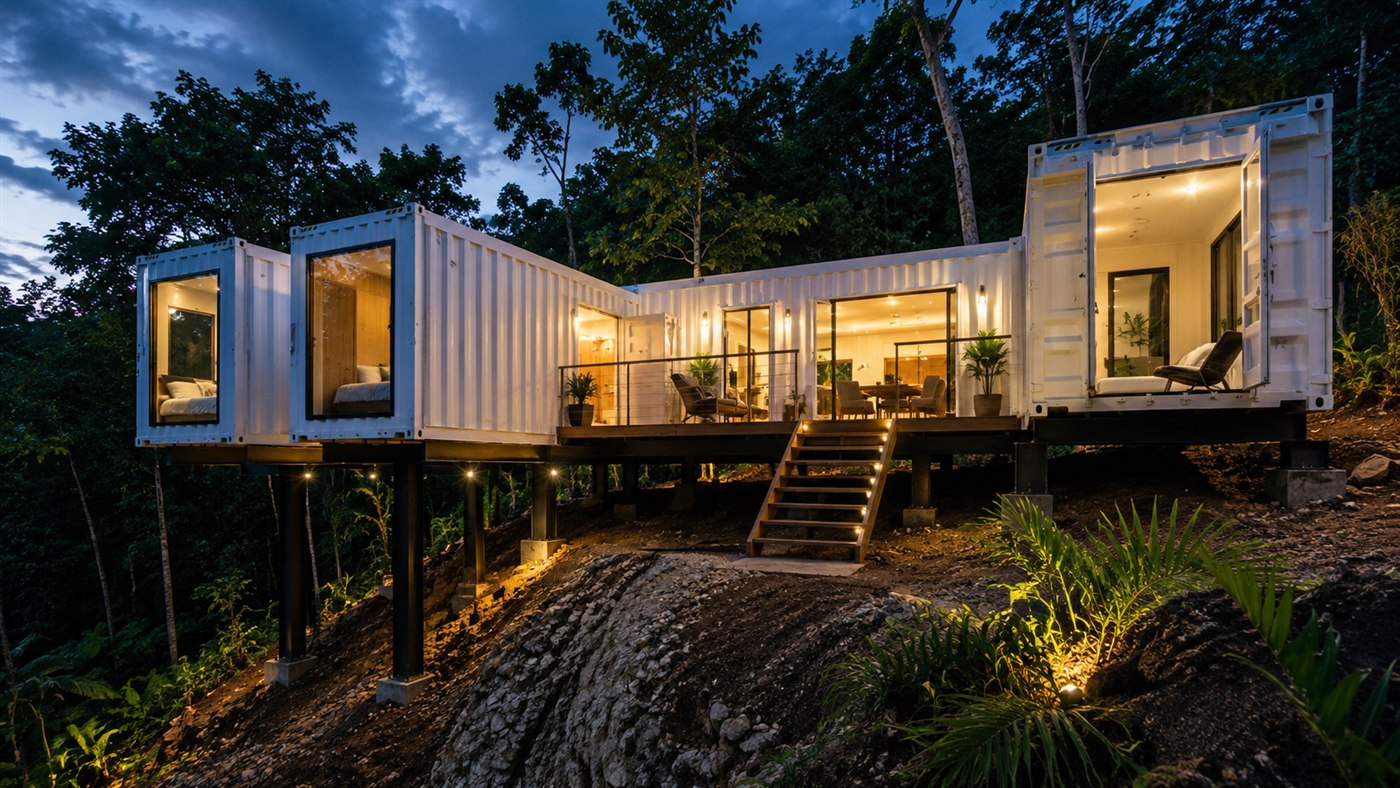
After a long search, the family found a 3,123 square meter plot in a quiet region of Belgium. The area was purchased for € 225,000 and served as the basis for a project quite different from traditional residential models.
In an interview with the Belgian newspaper Het Laatste Nieuws, cited by Focus, the owners reported the difficulties of the search. “For two years, we searched daily on real estate sites, without success. When we were starting to get a bit tired, this property appeared in an online ad,” they explained.
Container House
Instead of using conventional materials from the start, the family took advantage of two shipping containers that were no longer useful for cargo transport.
The marks left by previous use, such as dents and wear, were not seen as a problem. On the contrary. These points served as a reference for the creation of the architectural project, which incorporated large windows into the originally damaged spaces.
According to the residents, the final result surprises those who visit the place. “It really looks like a normal apartment,” they say.
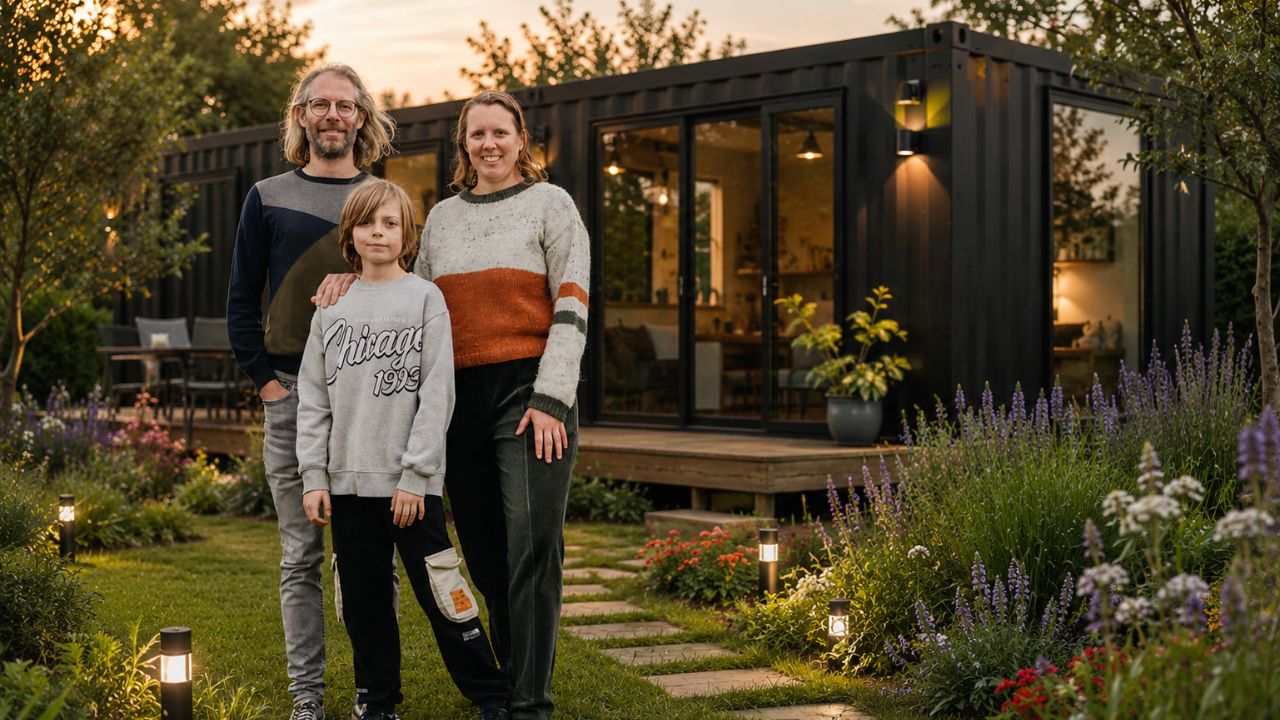
Couple invested less in the house than in the land
The numbers help explain why the project sparked interest. While the land cost € 225,000, the construction of the residence required an investment of € 167,000.
According to the owners, a good part of this amount was directed towards preparing the area and installing water and electricity connections.
The dwelling has only 62 square meters but includes features aimed at energy efficiency and the use of reused materials.
Among the features mentioned by the family are:
- Solar energy system;
- Reinforced thermal insulation;
- Use of recycled materials;
- Structure formed by two repurposed containers.
The Belgian family’s experience comes at a time of expansion of container-based constructions in the European continent.
The model has attracted interest for different reasons, including quick execution, reduced costs, and energy efficiency. Additionally, the reuse of structures reduces the need for materials traditionally used in civil construction.
Italian entrepreneur Vincenzo Russi, who works in this segment, highlights an important characteristic of the material used in these projects. According to him, the containers are made with Corten steel, described as a material “virtually immune to atmospheric corrosion.”
Russi also states that the reuse of these structures can significantly reduce concrete consumption. According to the expert, savings can reach up to 90% compared to conventional construction.
Beyond the Walls
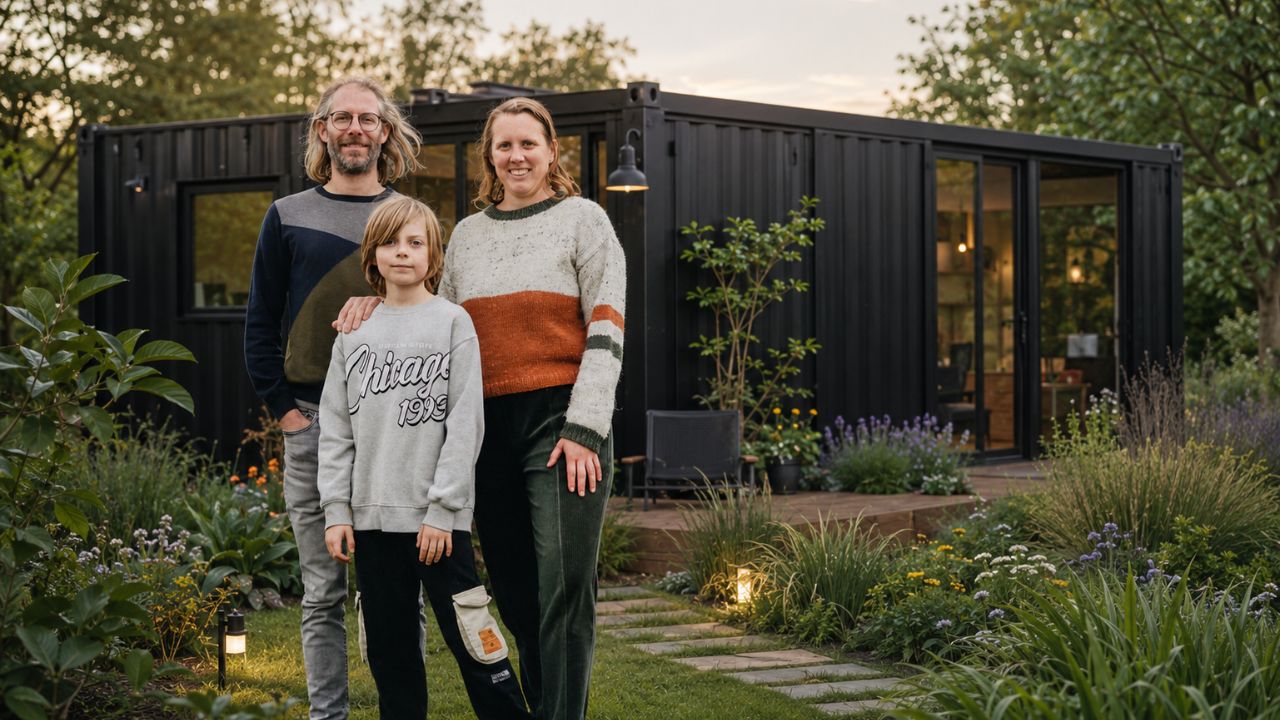
For Bert and Evi, the main transformation is not related to the size of the residence, but to the lifestyle achieved after the change. The family reports that they started growing food, raising animals, and closely observing the natural changes throughout the year.
“This greatly improved our quality of life. We eat our own vegetables, fruits, and eggs, have animals, and see how nature changes each season,” they explain. The case shows that, for some residents, the concept of comfort is not necessarily linked to expanding the built area.
With housing becoming increasingly expensive, this Belgian couple’s experience demonstrates that a smaller house can represent a significant change in the way of living, especially when the goal is to prioritize outdoor space, sustainability, and daily contact with nature.


