Portuguese
  Spanish


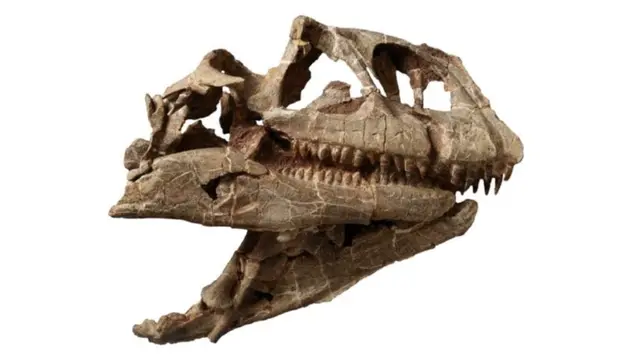


A Jurassic Skull Over 200 Million Years Old Was Found in China, and the Revelation Promises to Change What We Know About Dinosaurs.
A dinosaur skull fossil, extremely well-preserved, was discovered in China. The new species, named Lishulong wangi, was found in the Lufeng Formation in Yunnan province, a region famous for its Jurassic Lower fossils.
Dating back over 200 million years, this dinosaur is an ancient relative of the giant sauropods. With a length of up to 10 meters, the Lishulong wangi was an imposing herbivore that lived during a time of intense transformation in the animal world.
The species belongs to the sauropodomorph group, which includes big names like Brontosaurus and Diplodocus. However, the Lishulong wangi is not considered a true sauropod. It is a key piece in understanding how the first herbivorous dinosaurs evolved to become the giants we know today.
-
A Japanese governor single-handedly stalled the construction of the world’s fastest train for nine years, and only now has he agreed to allow a tunnel excavated at a depth of 1,400 meters.

-
Almost 1 billion euros, two gigafactories, and a million-dollar public investment, Chinese company aims to turn Spanish city into Europe’s new battery hub.

-
Advancement in the industry: Brazilian company creates ultralight material comparable to steel and paves the way for hydrogen cylinders up to 70% lighter, with a direct impact on logistics, the energy industry, and national competitiveness – learn about Forza Composites

-
In Brazil’s backyard: Tesla, by Elon Musk, announces official operations in Uruguay, where electric vehicles already make up 20% of new cars but still leaves out the largest market in the region.





Rare And Intriguing Preservation
The discovery is based on a partial skeleton, consisting of a skull and nine neck vertebrae. The exceptional preservation of these bones is rare, especially for sauropodomorphs, whose skulls are usually fragile and difficult to find intact.
The sediment of the Lufeng Formation, formed by ancient lakes and rivers, seems to have protected the fossil from erosion. Over time, minerals infiltrated the bones, replacing the organic material and aiding in the fossilization process.
According to paleontologists, the skull exhibits unique characteristics, such as a differentiated cranial structure and robust cervical vertebrae. This distinguishes it from other dinosaurs found in the same geological formation.
Herbivore And Possible Biped
During the Lower Jurassic, non-sauropod dinosaurs like the Lishulong wangi dominated as large herbivores. They fed on plants such as ferns, cycads, and conifers, which were abundant at the time.
Although the discovered fossil does not include the legs or the complete body, researchers suggest it could have been bipedal or even capable of moving on both two and four legs. This is based on studies of other closely related sauropodomorphs, like the Yunnanosaurus.
Importance Of The Discovery
This new species is likely the largest non-sauropod sauropodomorph ever identified in the Lufeng Formation. Its discovery contributes to the understanding of the diversity and evolution of primitive dinosaurs.
China, one of the richest countries in dinosaur fossils, continues to reveal secrets of the past. With each new discovery, scientists expand knowledge about the creatures that dominated the planet millions of years before humanity emerged.