






 Portuguese
  Spanish


São Carlos brings together universities, industry, startups, and research centers in an ecosystem that explains its national recognition as a technological hub. In the interior of São Paulo, the city combines scientific production, innovative companies, and the urban routine of a medium-sized municipality, attracting students, researchers, and professionals connected to innovation.
São Carlos, in the interior of São Paulo, concentrates public universities, research centers, industry, and technology-based companies in a network that supports the title of National Capital of Technology, granted by federal law in 2011.
About 230 km from the capital of São Paulo, the municipality articulates scientific production, the training of qualified professionals, and a business park focused on innovation, without losing the characteristics of a medium-sized city in the interior.
With a HDI of 0.805, according to the Human Development Atlas series consulted by IBGE, the city reached an estimated population of 266,427 inhabitants in 2025.
-
Elderly Man in His 70s Spends Nearly 30 Years Digging 3 km Canal to Transform Arid Land into Farmland in Rural India

-
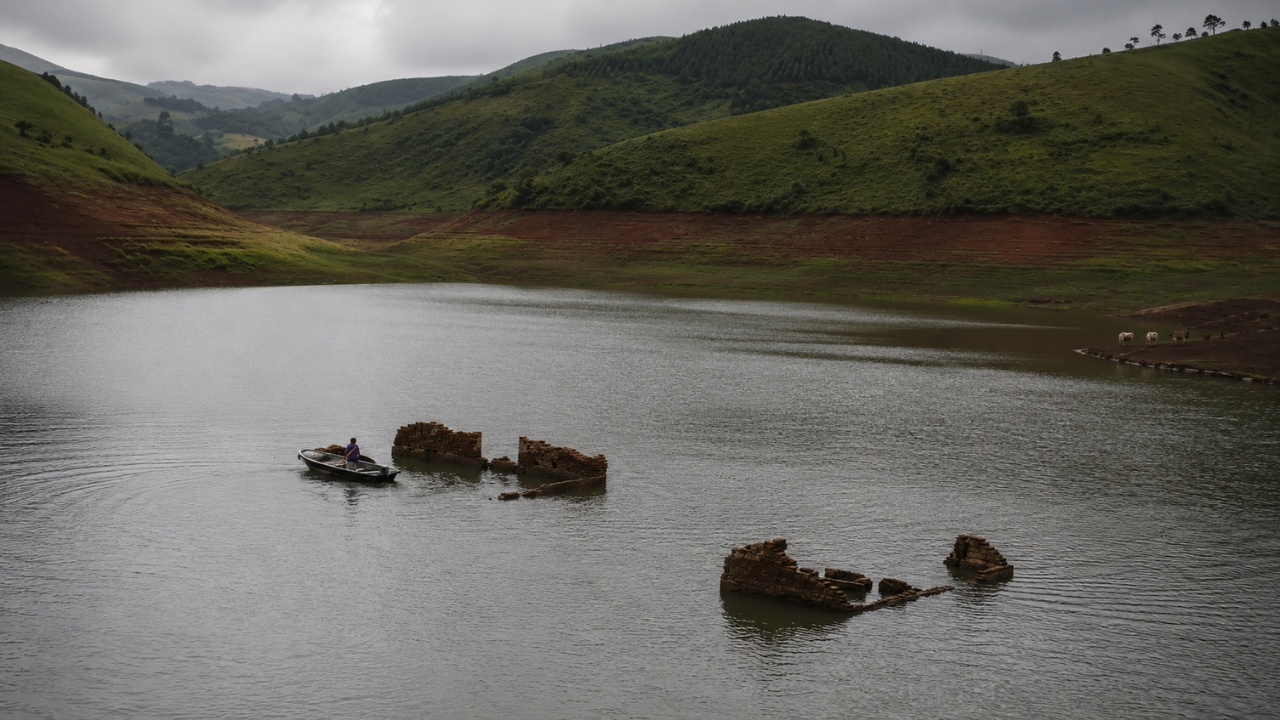
Submerged Town Reemerges in São Paulo as Reservoir Levels Drop, Revealing Ruins and Memories of Displaced Families
-
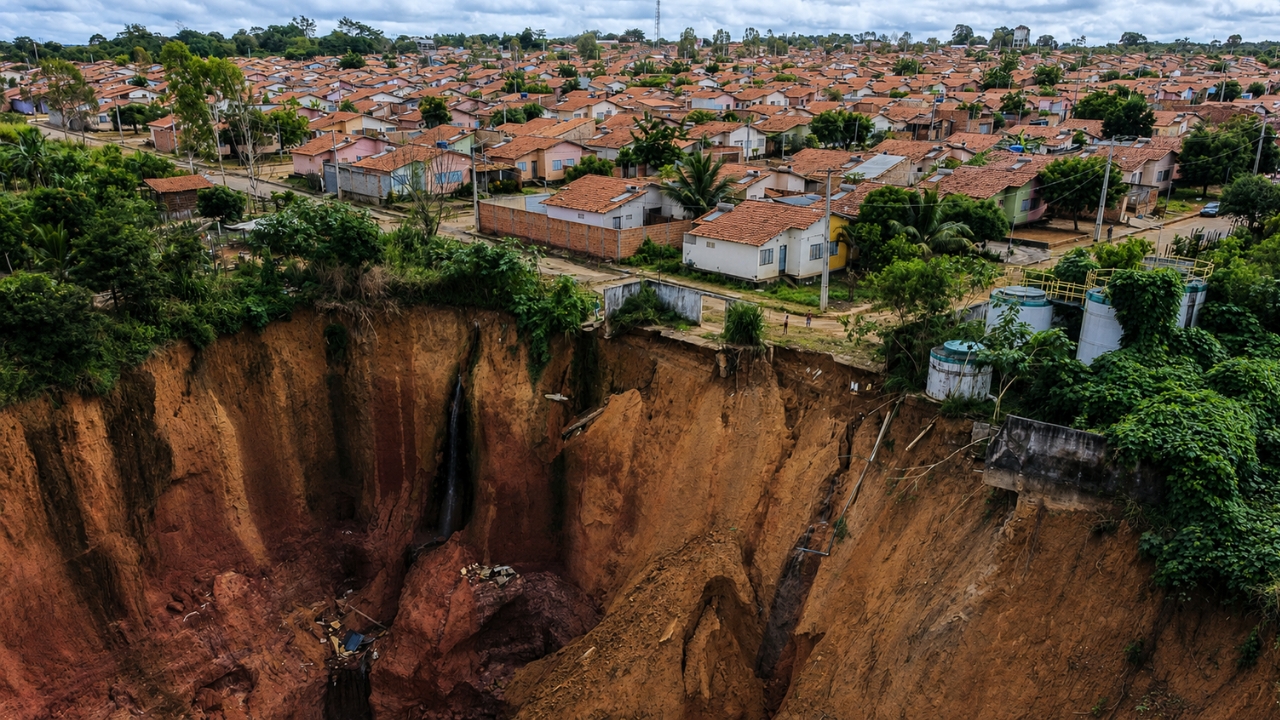
In Northeastern Brazil, 1,200 Residents Face a Silent Nightmare as Giant Sinkholes Threaten Entire Neighborhoods
-
Astronauts Returning from Space Show Altered Gut Bacteria and Loss of Protective Microbes, Highlighting Potential Risks for Mars Missions



This urban size favors a routine marked by universities, services, commerce, tree-lined residential areas, and less complex commutes than those faced in the metropolitan region of São Paulo.
Why São Carlos received the title of Capital of Technology
More than a tourism promotion brand, the national recognition of São Carlos is linked to the academic, scientific, and industrial structure built in the municipality over decades.
The Law No. 12,504, sanctioned on October 11, 2011, officially granted the city the title of National Capital of Technology, after congressional proceedings based on the relevance of this ecosystem.
In the analysis of the project, the Chamber of Deputies highlighted the presence of USP, UFSCar, and the ParqTec Foundation as factors linked to the high density of PhDs and local technological production.
The same survey pointed out 14.5 patents per 100,000 inhabitants per year in the municipality, an index almost five times higher than the national average of 3.2 registered as a reference.
The formation of this environment dates back to a trajectory before technology, as São Carlos was founded in 1857 and initially grew under the direct influence of the coffee cycle.
With the arrival of the railway in 1884, the flow of production gained strength, and the city began to attract European and Middle Eastern immigrants, who helped shape its economic and cultural base.

After the 1929 crisis, the decline of coffee opened the way for an industrial transition that later found new momentum in higher education and applied research.
In this process, the establishment of structures of USP, UFSCar, Embrapa, and technology parks consolidated a profile change that brought industry, science, and professional training closer together.
Universities and researchers boost the economy of São Carlos
On the São Carlos campus, UFSCar reports maintaining an area of 645 hectares, with more than 10,000 undergraduate students, 4,000 postgraduate students, over 300 laboratories, and about 40 courses.
The university itself records that the municipality hosts more than 200 technology-based companies and four multinationals, including Volkswagen, Faber-Castell, Tecumseh, and Electrolux.
Within this knowledge network, USP also plays a strategic role by training professionals, maintaining research laboratories, and connecting academic production to industrial and technological demands.
In 2019, a survey released by the São Carlos campus indicated that at least one person per 100 inhabitants had a doctorate, a figure associated with the high Brazilian concentration of researchers per population.
The ParqTec Foundation complements this environment by acting as a bridge between research and the market, especially in structuring innovative companies and supporting technology-based projects.
Created in December 1984, the institution is presented as the first technology incubator in Latin America and remains linked to the formation of innovative businesses in the municipality.
From the classroom to the laboratory, and from the laboratory to the company, the knowledge produced in São Carlos circulates through different spaces and fuels the regional economy.
Many technology-based businesses were born from former students, researchers, and professionals trained in the city, keeping part of the innovation generated locally within the territory itself.
Startups, industry, and applied technology in the interior of São Paulo
The scientific production of São Carlos gains scale with the presence of large companies, which expand the opportunities for practical application of the knowledge developed in universities and research centers.
Since 1996, Volkswagen has maintained an engine factory in the city considered one of the brand’s main plants in the country, while Faber-Castell, Electrolux, Tecumseh, and Husqvarna reinforce the local industrial base.
Regarding Embraer, the connection with São Carlos appears more associated with the regional technology and professional training ecosystem than with the existence of a company factory within the municipality.

The company has a unit in Gavião Peixoto, a nearby city, and maintains academic connections with São Carlos institutions, such as the donation of a fuselage for educational use at the São Carlos School of Engineering at USP.
In addition to traditional factories, innovation spaces and coworking bring startups, digital businesses, and corporate projects closer, strengthening a technological scene that interacts with different productive sectors.
This scenario reinforces São Carlos’s vocation as a hub of applied technology, especially in areas such as engineering, materials, automation, information technology, biotechnology, and specialized services.
In 2023, the City Hall reported that São Carlos had 235 technology companies and startups, updating the generic reference to more than 200 innovative businesses.
With this cut, the size of the local ecosystem becomes more precise, without altering the central idea that the city gathers a significant business base linked to innovation.
Quality of life in São Carlos and university routine
The urban routine of São Carlos reflects the constant presence of students, teachers, researchers, and industry professionals, who drive services, housing, culture, and daily consumption.
Cafes, libraries, restaurants, academic events, and cultural spaces accompany this university profile, while the city preserves characteristics common to medium-sized municipalities in the interior of São Paulo.
In neighborhoods like Cidade Jardim, Santa Mônica, and areas near the campuses, housing, commerce, and services are concentrated for those studying or working in the technology sector.
The local dynamics also rely on wide avenues, road access via Washington Luís, and quick connections with important interior cities, such as Araraquara and Ribeirão Preto.
In the Social Progress Index, São Carlos appeared in 3rd place in the national ranking of 2024, in results released by the IPS Brazil platform and echoed by the City Hall.
As the 2026 edition has already been released, the safest reference is to treat this performance as a position recorded in 2024, without presenting the data as a permanent current ranking.
Parks, Heritage, and Leisure in the Technology Capital
Even with a strong technological identity, São Carlos also brings together green areas, historical heritage, and cultural facilities that help diversify the city’s use by residents and visitors.
Among the most well-known spaces, the São Carlos Ecological Park works with environmental education and species conservation, while the Horto Florestal offers trails and contact with native vegetation.
The Fazenda do Pinhal preserves part of the memory of the coffee cycle and helps explain the historical transition of the municipality from a rural economy to industry and knowledge.
The Prof. Mário Tolentino Science Museum directly dialogues with the city’s scientific identity, bringing experiments and concepts of physics, chemistry, and technology closer to the visiting public.
In the cultural agenda, the Alderico Vieira Perdigão Municipal Theater, squares, clubs, restaurants, and university events expand leisure and social options throughout the year.
As the circulation of students and researchers is intense, part of the cultural life follows the academic calendar and connects to educational institutions and public spaces.
How to Get to São Carlos from the Interior of São Paulo
By road network, the main access to São Carlos is via the Washington Luís, SP-310, an axis that connects the municipality to the capital of São Paulo and strategic cities in the interior.
The trip from São Paulo is about 230 km, while Araraquara is approximately 40 km away and Ribeirão Preto about 100 km.
For air travel, residents and visitors usually resort to regional airports, such as Ribeirão Preto, in addition to options in larger cities depending on the origin of the trip.
There is also a local aerodrome in São Carlos, mainly used for specific operations, such as charter flights and executive aviation, according to regional demand.
With universities, technology-based companies, a diversified industry, and urban quality, São Carlos maintains a prominent position in the interior of São Paulo and on the Brazilian map of innovation.
The official title summarizes a network formed over decades, in which research, professional training, and economic application of knowledge remain connected to the city’s daily life.


