Portuguese
  Spanish


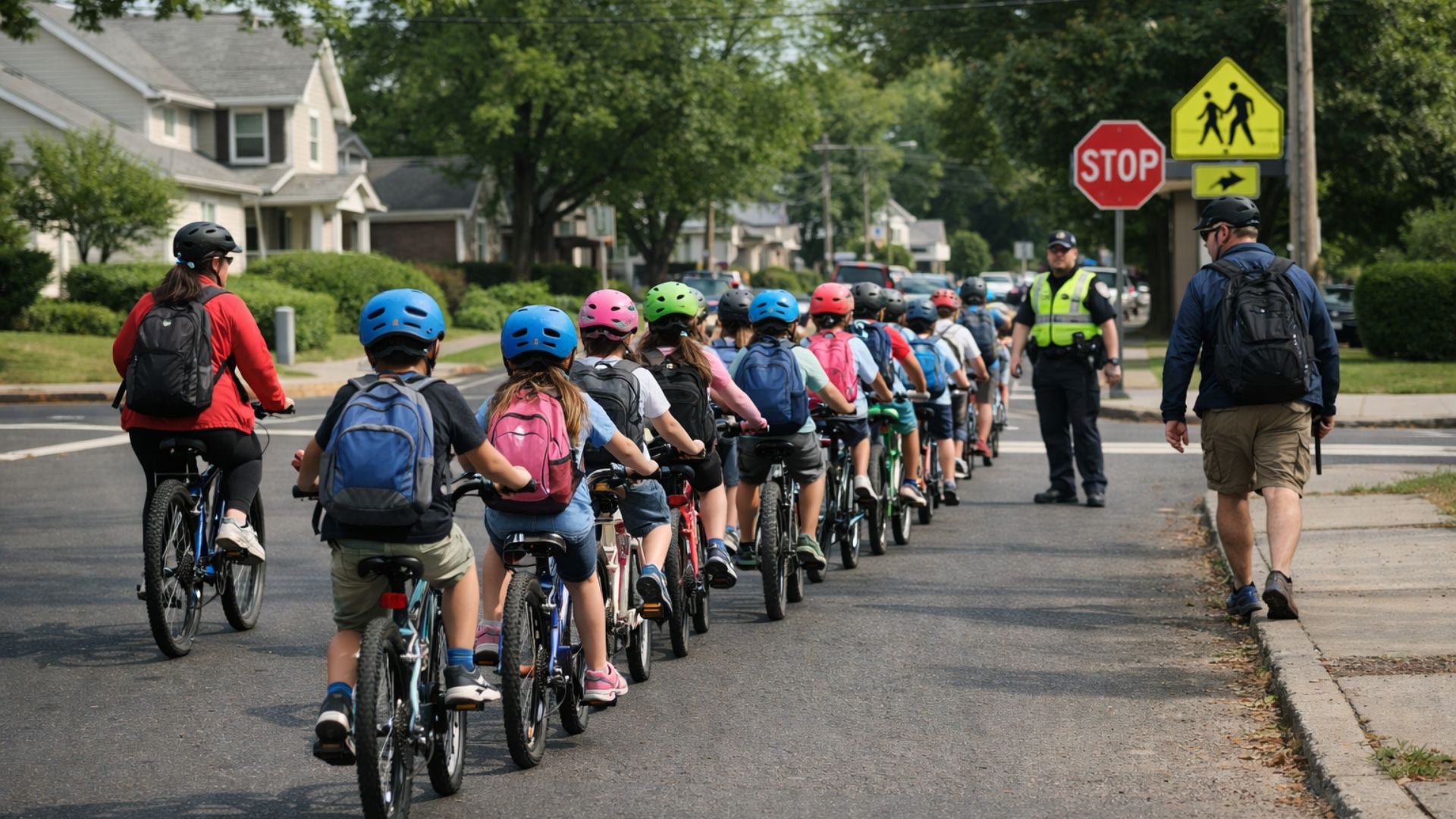


Children Transform The Path To School Into A Collective Journey On Two Wheels, With Designated Stops, Adults Escorting, And Safety Rules Before Departure. Community Experience Gains Ground In Cities And Revives The Debate On Traffic, Childhood Autonomy, And Car Reduction.
A group of students from a public school in East Hartford, Connecticut, in the United States, began going to class on a “bus” without an engine: bicycles in line, scheduled departure, stops for “boarding” classmates, and continuous monitoring by adults, with support from police in more sensitive segments of the route.
The journey covered about 1.2 miles, equivalent to 1.9 km, and gathered approximately 35 students from third to fifth grade.
The initiative, known as “Bike Bus”, gained visibility by transforming a common commute into a planned collective journey, with helmet checks, safety guidelines, and route organization.
-
Mother discovers she may have won £12 million in the lottery but faces an agonizing wait after the shopkeeper threw the ticket in the trash.

-
A couple bought a house in Sheffield and, when removing the carpet from the hallway, found a trapdoor leading to a secret 23 m² basement with a 2-meter ceiling height, a discovery that eliminated the need for an expensive extension and, according to them, added £70,000 to the property’s value.

-
A nurse bought for 20,000 a 1955 house abandoned by a hoarder in Texas, and months later, rain revealed a buried pool in the backyard valued at $160,000, which he restored himself for about $10,000, a fraction of the cost of building a new one.
-
The United Kingdom is transforming dog feces left on trails into gas to light a streetlamp through an unlikely and surprising project that shows how even one of the most rejected wastes in cities can generate energy.



In practice, the format seeks to reduce car dependency around schools and increase the safety of children on shared roads with vehicles.
How The Bike Bus Works On The Way To School

The model operates with simple and predictable rules.
Instead of each student leaving alone or relying on rides, the group meets at a designated point, follows a defined route, and makes stops along the way for other children to join the journey, like a bus line, only powered by pedaling.
The presence of adults is not just a detail; it’s a structure.
Volunteers and guardians accompany the front and the back of the line, maintain a suitable pace for children, and alert to intersections and turns.
Meanwhile, the group stays united to minimize risks and prevent anyone from being left behind.
Before departure, the organization usually includes basic equipment checks, verifying bicycles and helmets.
The logic is to reduce easily avoidable flaws, such as misaligned brakes, loose chains, or poorly fitted helmets, while reinforcing signals and circulation rules that will be used during the journey.
East Hartford, Connecticut: Short Route, Immediate Effect
In East Hartford, the first edition of the “Bike Bus” started from a residential complex, the Summerfield Townhouses, and traveled through neighborhood streets to the Silver Lane Elementary School.
The route was designed to be short, about 1.9 km, and to allow the line to stay organized without prioritizing speed or performance.
The initiative took shape in a context where many students live relatively close to the school but do not have access to traditional school bus routes.
In this reality, the daily choices often lie between walking or driving, a choice that, in various neighborhoods, increases vehicle circulation precisely at school entry and exit times.
By placing dozens of bicycles on the same route and at the same time, the “Bike Bus” aims to change the dynamics of the surroundings.
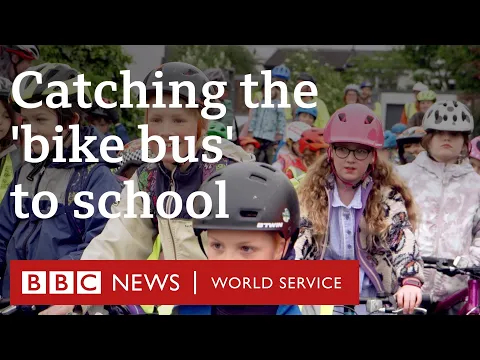
A large group tends to be more visible to drivers than a lone child, and the predictability of the route reduces improvisation in critical sections, such as crossings and intersections with higher traffic.
Adult Escort, Police Support, and Helmet Checks
The escort structure goes beyond just “companionship.”
In actions like the one in East Hartford, the school participates in planning and mobilizing families, while volunteers assist in organizing the group and in pre-departure check-ins, including helmet and bicycle verification.
Police support, in turn, usually has an operational function.
Officers can control traffic at crossing points, reinforce driver compliance, and enhance the confidence of parents and guardians who hesitate to allow children to ride bicycles on roads with cars.
In many communities, this sense of protection is what separates the idea from the effective start of the initiative.
There was also participation from the “Safe Routes to School” program, aimed at encouraging students to walk or bike more safely between home and school.
The proposal generally includes traffic safety training and educational actions, which helps prepare children for real street situations, such as crossings, signage, and sharing space with vehicles.
How The Idea Emerged And Why The Initiative Spreads
The East Hartford edition was organized from the interest of a physical education teacher, Leigha Knapp.
According to the account associated with the event, she sought to better understand the movement after seeing a video of children biking to school in another U.S. state, in a scene marked by community participation and a celebratory atmosphere.
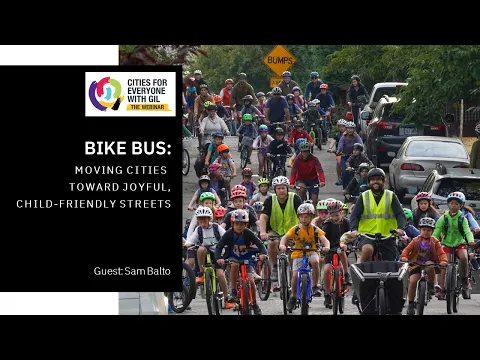
This path of inspiration explains why the “Bike Bus” has multiplied in different cities.
The format does not rely on complex technology or large immediate constructions to exist, although road infrastructure quality directly influences safety levels and the route’s reach.
At the same time, replication requires coordination.
Even on short routes, the organization needs to ensure timing, trajectory, enough volunteers, and clear guidelines so that the experience does not become just an improvised outing.
Continuity is also important, as maintaining regular events requires engagement from families, school staff, and the community.
Short Distance Does Not Always Mean Safe Route
The case highlights a recurring point in school mobility: living nearby is not synonymous with easy access.
Streets with heavy traffic, dangerous intersections, lack of adequate sidewalks, and a sense of insecurity can push families into cars, increasing congestion and amplifying risks around the school.
By transforming the commute into a collective activity, the “Bike Bus” tries to break this cycle.
With more children out of cars, there is potential to reduce lines of vehicles at the school entrance.
Additionally, the group creates a circulation pattern that tends to be more respected and observed, both by drivers and by residents who see the movement repeat.
Another aspect noted in such initiatives is the inclusion of children who do not have bicycles in good condition.
In East Hartford, some students used donated bicycles, which allowed for broader participation and reinforced the community character of the proposal.
From Walking Bus To Bicycle Bus
While it catches attention for the sight of a line of bicycles, the concept is similar to initiatives already known in some school networks, such as the “walking bus”, where adults lead a group of children on foot along a defined route with designated stops.
By adapting the logic for bicycles, the commute gains speed and range, but also requires helmets, greater attention to rules, and consistent supervision.
In East Hartford, the first edition showed signs of continuity.
The school reported the intention to organize more outings on later dates, with the expectation of turning the experience into a recurring practice, not an isolated event.
If an organized group managed to replace rides with pedaling on a route of 1.9 km safely and with community support, what is stopping other schools from adopting collective routes and reducing the number of cars in the areas where children circulate every day?