Portuguese
  Spanish


Discover How Renewable Energy Courses Can Transform Your Career, Promote Savings and Sustainability in Your Life, and Propel Your Business Into the Future.
Today, the search for sustainable energy sources has become an urgent necessity.
The constant rise in global demand for electricity, coupled with the depletion of fossil fuels and climate change, has forced humanity to seek cleaner and more efficient solutions.
For this reason, renewable energy courses have gained prominence in training professionals and transforming careers and businesses.
-
Brazilian scientists are simultaneously advancing two research projects on clean hydrogen and driving solutions that could transform the energy matrix, enhance industrial competitiveness, and accelerate large-scale emission reduction targets.

-
Advancement in renewable energy: A R$ 150 million project launched by Petrobras and Finep aims to create state-of-the-art electrolyzers for green hydrogen, strengthening national research and preparing Brazil to compete in a billion-dollar energy market.
-
Illiterate or semi-literate grandmothers were trained to repair solar systems, open rural workshops, and light up homes that still depended on kerosene.
-
The world has bet on green hydrogen as the fuel of the future, but now faces the side effect: producing 1 kilogram requires about 9 liters of ultrapure water, and the largest projects on the planet are precisely in the driest regions of the Earth, where water is already scarce for people.




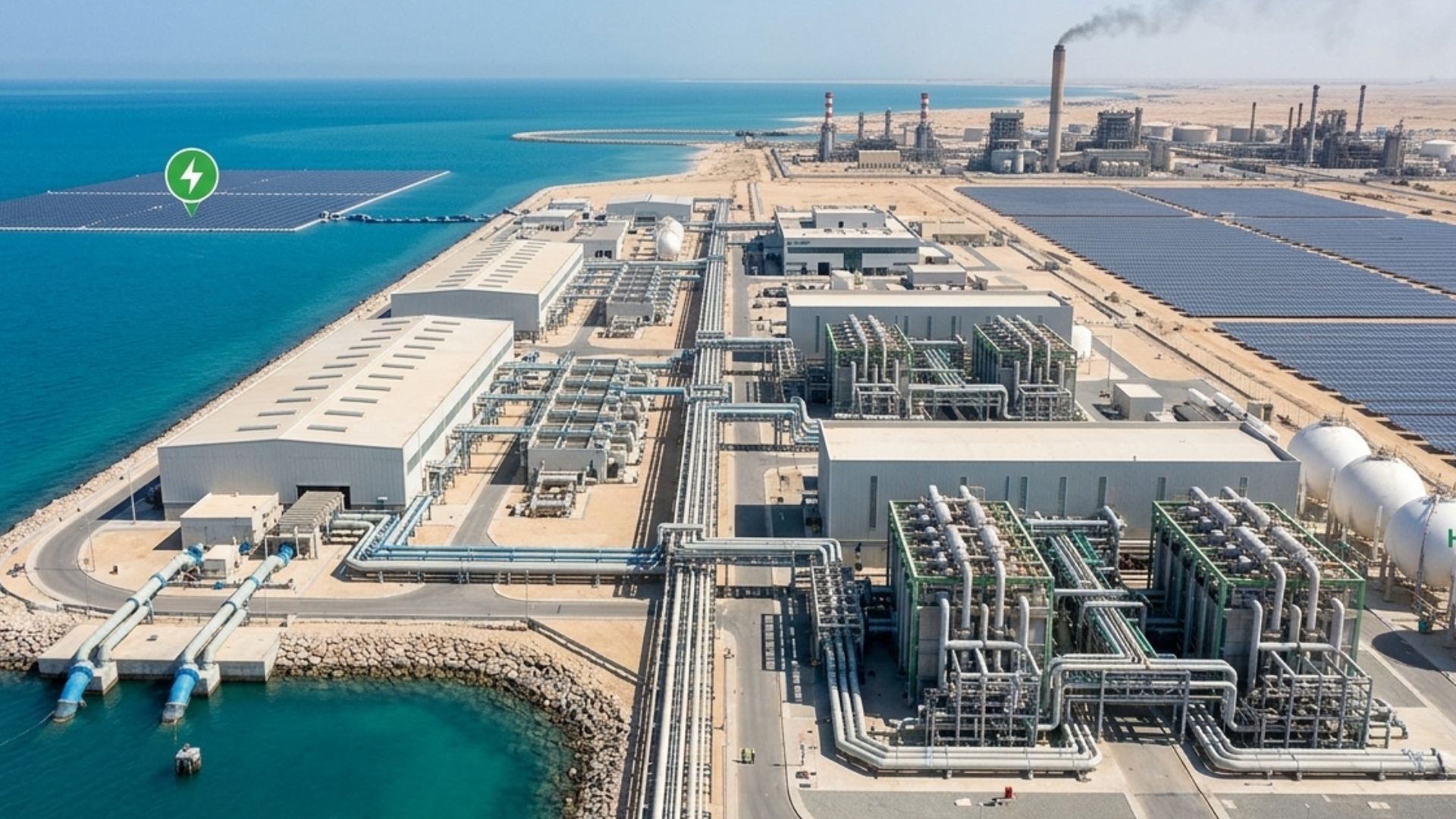
Historically, since the Industrial Revolution of the 18th Century, which began in England, society has heavily relied on non-renewable sources like coal, oil, and natural gas.
This period marked the beginning of the massive use of these sources to power factories, transportation, and cities.
However, the economic growth driven by these fuels has brought serious environmental consequences, such as air pollution, water contamination, and increased greenhouse gas emissions, phenomena associated with global warming.
The Intergovernmental Panel on Climate Change (IPCC), an organization established by the World Meteorological Organization and the United Nations Environment Programme, highlighted in its 2021 report that:
Emissions from burning fossil fuels are the primary cause of global warming in recent decades.
As a result, from the second half of the 20th century onward, governments and researchers began investing in renewable energy sources such as solar, wind, biomass, and hydroelectric.
The International Renewable Energy Agency (IRENA), founded in 2009, shows that global growth in these sources has been exponential since the 2000s, increasing installed capacity by over 10% per year.
These advancements have driven the development of renewable energy courses that prepare professionals to work in an expanding market, promoting a more sustainable economic model.
What You Learn in Renewable Energy Courses
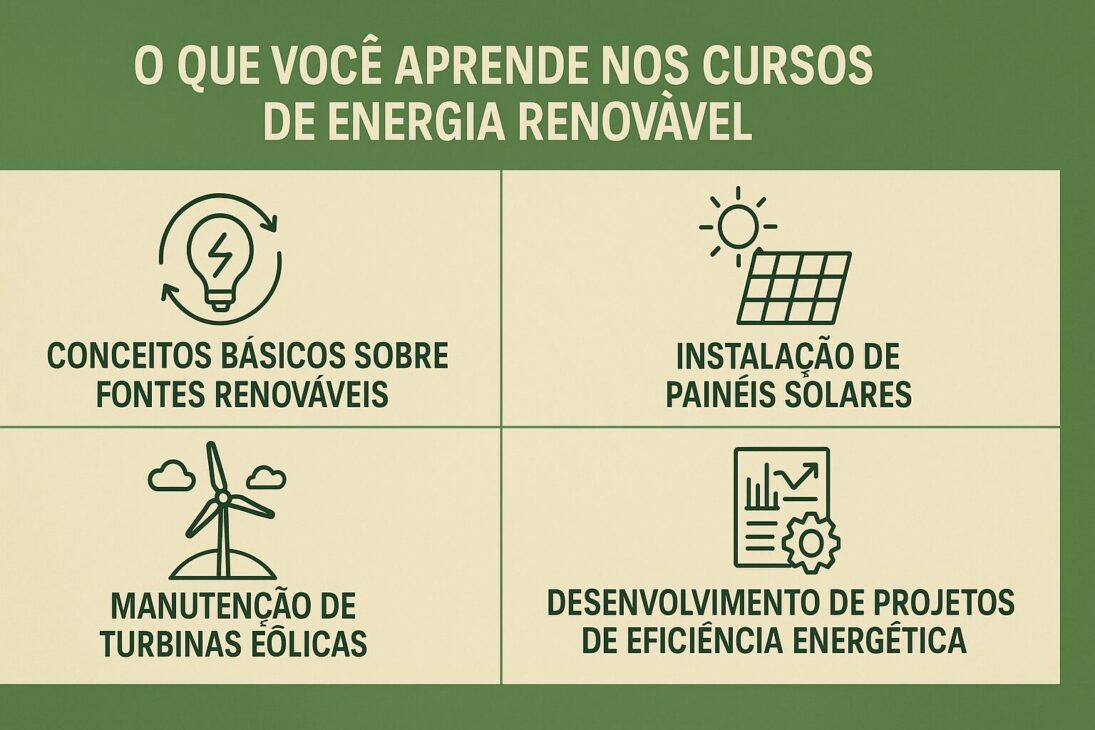
Currently, renewable energy courses offer diverse training, from quick technical courses to specialized postgraduate programs in clean energy.
In classes, students learn everything from basic concepts about renewable sources to techniques for installing solar panels, maintaining wind turbines, and developing energy efficiency projects.
But how does this affect your personal life and business?
The answer lies in the profound transformation that these new energy forms are causing.
By qualifying in this area, professionals gain valuable skills across various sectors, such as engineering, architecture, agribusiness, industry, and public administration.
More and more, companies and governments are adopting ESG (Environmental, Social, and Governance) practices, seeking to reduce environmental impacts.
According to the Ministry of Mines and Energy of Brazil, in 2023 renewable sources accounted for over 45% of the national electricity matrix, driving demand for skilled professionals.
How Courses Impact Businesses and Careers
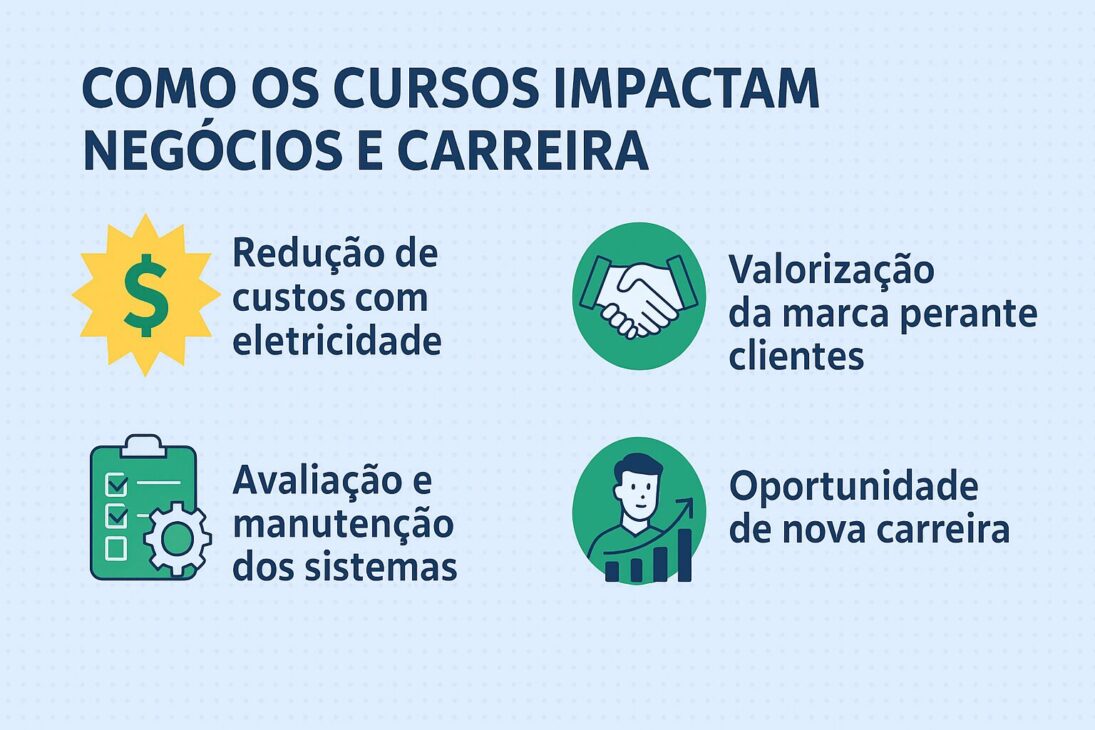
If you are an entrepreneur, understanding renewable energy can be the differentiator for your company.
Imagine reducing electricity costs by installing a solar energy system in your business. This not only reduces expenses, but also enhances your brand with customers who are conscious about sustainability.
With the knowledge from a renewable energy course, you can assess market options, select suitable suppliers, and maintain systems independently.
For those looking to change fields or start a career, this is a real opportunity. Solar energy technicians, photovoltaic system designers, and environmental engineers are among the most sought-after professionals.
Furthermore, the demand is not limited to major urban centers. Rural areas, where the conventional power grid is limited, present great opportunities for renewable solutions.
The World Economic Forum, in its 2024 report, states that the renewable energy sector is growing rapidly and could generate up to 12% more annual jobs by 2030.
Incentives and Policies That Favor the Sector
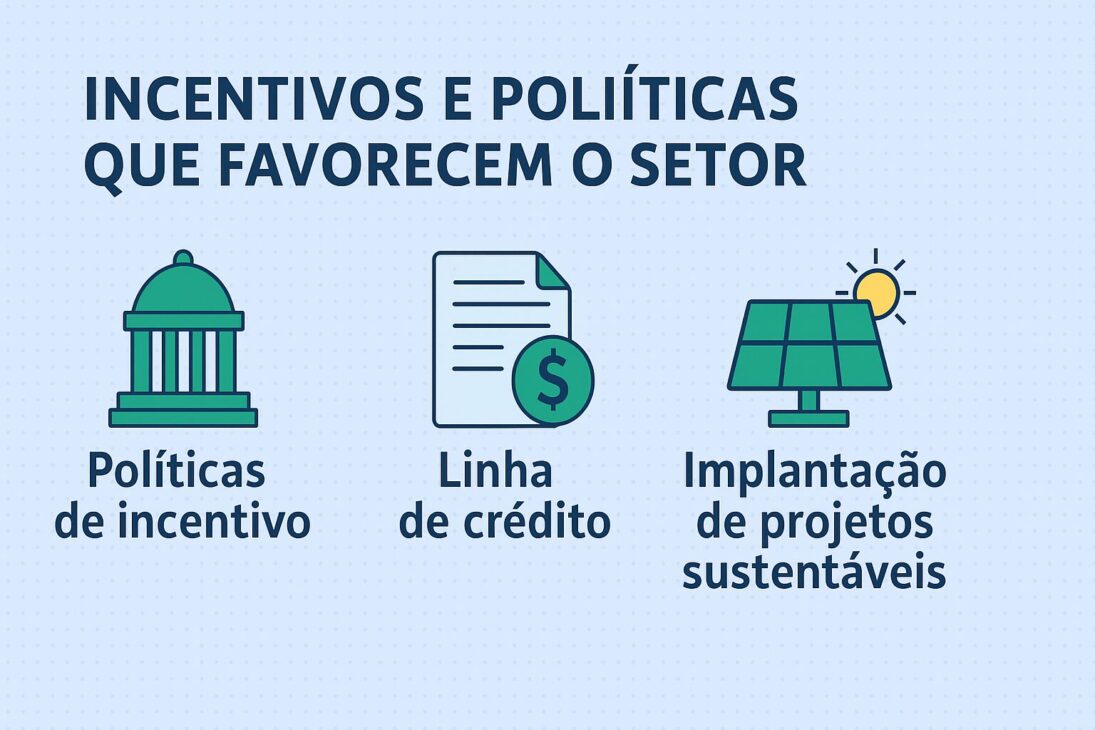
Governments also play a fundamental role. Public policies for incentives and lines of credit facilitate the implementation of sustainable projects.
In Brazil, federal and state government programs offer financing for solar and wind energy systems.
Therefore, mastering the technical and managerial knowledge of renewable sources increases the chances of success in businesses and projects.
Additionally, the United Nations Environment Programme (UNEP) emphasizes that the transition to renewable sources is vital to meet the goals of the Paris Agreement, signed in 2015, which seeks to limit global temperature rise.
Practical Applications and Real Opportunities
Solar energy stands out in Brazil due to its high solar incidence, making it an accessible option for many individuals and companies.
Wind energy, on the other hand, is primarily growing in the Northeast, generating jobs in various segments, from manufacturing to wind analysis.
With this expansion, every professional trained in renewable energy becomes an agent of change.
Well-executed projects mean not only savings, but also a direct contribution to a more sustainable future.
Facilitated Access and Promising Future
Currently, renewable energy courses are more accessible, with in-person and online offerings, including recognized certificates.
Renowned institutions, such as the National Institute of Clean Energy (INEL), offer training that includes theory and practice.
If you wish to invest in a rapidly growing area with social impact, this may be the right choice.
The future of energy is renewable and your transformation begins with solid knowledge.