






 Portuguese
  Spanish


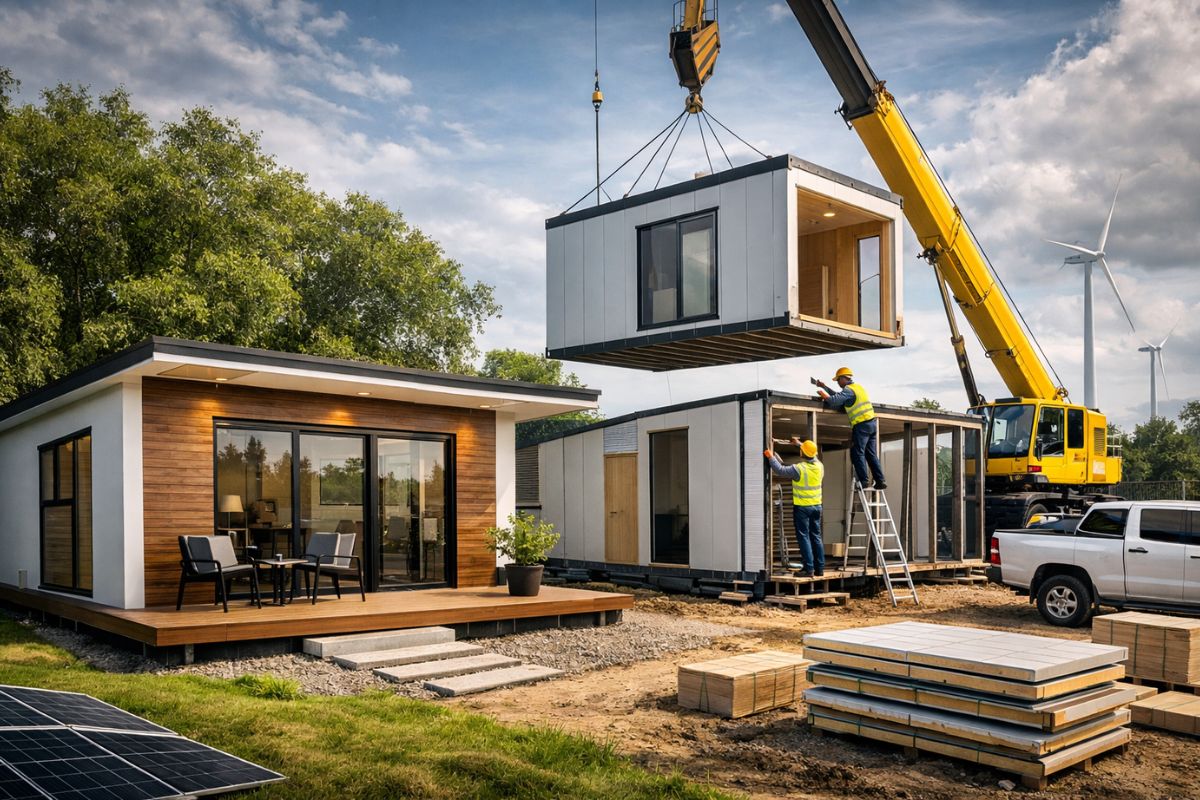


With Initial Prices Around R$ 80 Thousand and Accelerated Assembly, Prefabricated Houses Advance as a Housing Alternative for Families Seeking Predictability, Less Material Waste, and the Ability to Adapt Finishes, Layout, and Energy Efficiency Without Bearing the Weight of a Traditional Financing for Years After Buying a Home.
Prefabricated houses have entered the radar of those wanting to leave rental housing without relying on a long financing cycle. With initial prices starting at R$ 80 thousand, a ceiling of up to R$ 90 thousand for entry-level models, and delivery times that can reach 90 days, this format repositions the conversation about access to housing in Brazil.
More than speed, the industrialized modular model gains ground by combining customization, less material waste, and a proposal for energy efficiency, including integration for solar panels. What once seemed like a niche solution is now competing for attention with conventional construction, especially among families prioritizing cost and time predictability.
How Much It Costs, Who It Makes Sense For, and What Changes in the Final Bill
At the starting point, the appeal is direct: prefabricated houses with entry prices around R$ 80 thousand and options below R$ 90 thousand. In a market where housing is usually associated with long financial commitments, the possibility of buying a house for a price comparable to that of a popular car changes the perception of viability for those outside the traditional property market.
-
While the World Opens New Airports and High-Speed Trains, Brazil Rushes to Complete Projects Stalled for 40 Years

-
Brazil Invests in Massive Waterway to Transport Soybeans by Barge, Reducing Costly Truck Reliance
-
Bridge Rebuilt in Just One Year Reconnects Two Brazilian States
-
Custom Furniture Costs in Brazil Expected to Range from $350 to Over $1,450 per Square Meter by 2026, with Kitchens, Closets, and Laundries Highlighting the Impact of Premium Features


Those most interested in this path are profiles that see the opportunity cost of time: families paying rent, couples in the process of building wealth, and buyers who do not want to spend years navigating credit approval, slow construction, and successive adjustments. The differential is not just the advertised number, but the package of predictability: a defined project, clear stages, and a short delivery horizon.
Still, a responsible approach to investment requires attention to the contracted scope. The entry price communicates access to the model, but the final result depends on the choices of customization and the standard of finishing. The clearer the project definition from the beginning, the lower the chance of surprises and the greater the adherence to the family’s real budget.
Where Prefabricated Houses Are Advancing in Brazil and Why They Are Gaining Traction
Prefabricated houses are gaining space in Brazil against a backdrop of simultaneous pressure for cost, timeline, and housing quality. This advancement appears in the real estate market as a response to a concrete problem: many people need housing solutions now, not years from now. When the format delivers speed with industrial standards, it ceases to be a peripheral alternative and becomes a central decision option.
Growth is also favored by a cultural shift among consumers. More and more buyers accept construction methods different from the traditional model, as long as there is performance, safety, and the possibility of customization. Resistance to the “new” diminishes when the benefit is tangible in terms of savings and timelines.
Another point is the effect of comparison. When comparing the time of conventional construction with the modular assembly time measured in weeks on-site, the difference in pace is significant. For those facing the urgency of housing, the factor “when will I move in” is just as important as “how much will I pay”. It is at this intersection between timeline and cost that the segment finds fertile ground to keep advancing.
Why the Industrialized Modular System Reduces Waste and Accelerates Delivery
The technical core of prefabricated houses lies in the industrial production of modules. Instead of concentrating almost all execution on-site, a significant part of the structure is produced in advance and then assembled on-site. This reduces improvisation, improves standardization, and decreases material losses. Less waste of cement, sand, and other materials is not just an environmental argument; it is also a more efficient resource management.
On-site assembly occurs in weeks because a large part of the process is already completed in the factory. This flow shortens stages and reduces the exposure of the construction to common interruptions seen in conventional models. The total timeframe of up to 90 days is made possible precisely by the combination of industrialization and installation logistics, something that benefits those needing predictability to plan moves and expenses.
There is also an important functional gain: many projects already include preparation for solar energy systems. This simplifies later implementation and avoids structural rework. When energy efficiency is considered from the initial design, savings stop being just a purchase promise and start to integrate into the daily use of the house.
Complete Customization with a Sustainable Proposal and Focus on the Long Term
One of the most valued aspects of the segment is design flexibility. Prefabricated houses allow for the adaptation of layout, finishes, and aesthetic language to the buyer’s profile, without losing the industrial logic that ensures timelines and productivity. Practically, this brings the product closer to an authored project: the base is modular, but the final experience can reflect user preferences, routine, and style.
This space for customization helps explain why the format attracts both first-time homebuyers and those seeking a housing transition with more cost control. It is not just about choosing a plan, but building a functional solution for daily life, with a more rational internal distribution and potential for energy efficiency.
From an environmental perspective, the central argument combines low impact and constructive rationality. The reduction of waste, integration with energy solutions, and optimization of the assembly process form a coherent tripod aligned with the search for practical sustainability, without disconnecting from economic viability. The result is a proposal where better living does not necessarily depend on extending debts for decades.
Prefabricated houses consolidate a shift in logic in the Brazilian housing market: less waiting, more predictability, and a concrete possibility of sustainable customization. The growing interest does not stem from marketing, but from the convergence of four objective factors: accessible entry price, short timeframe, industrialized method, and efficient resource use.
If you were deciding today, what would weigh more in your choice: paying rent for more years or prioritizing a model with delivery in up to 90 days? And, looking at your reality, which stage of the decision still generates the most doubt: total cost, finishing standard, trust in the construction method, or monthly savings after moving?





Parabéns pelo texto: claro e explicativo. Seria ainda mais útil se o artigo indicasse as empresas que estão produzindo essas casas aqui no Brasil. Não seria uma publicidade, mas, uma informação muito importante para quem quer construir a sua casa e ter a oportunidade de consultar empresas que executam esse tipo obra.
Deviam mostrar também as empresas que trabalham com o produto, se elas já fazem o projeto, quais estados já possuem fábricas etc, etc…
Em Pernambuco tem alguma empresa que faz isso?