Portuguese
  Spanish


When accessing the internet, watching movies on streaming, or using artificial intelligence, millions of servers in data centers work nonstop and generate heat. This heat is largely wasted in the air. Researchers from Rice University decided to tackle this challenge with a simple and bold idea: turn loss into advantage.
When streaming a movie, saving a photo in the cloud, or interacting with artificial intelligence tools, there is always a data center working intensively. This effort results in heat, and cooling these facilities already consumes a large part of the electricity used.
The most important thing is that almost half of this energy becomes low-temperature heat, usually released into the air without any utilization.
A study from Rice University shows how this loss can be reversed. Researchers propose a system that transforms wasted heat into clean electricity, enhancing the sustainability of the sector.
-
Scientists Develop Method to Store Wind and Solar Energy by Liquefying Air for On-Demand Power Generation

-
Brazilian Engineer Who Grew Up Without Electricity Develops Software, Expands AltoQi to 67,000 Clients, Aiming for $21 Million by Digitizing Brazil’s Construction Industry

-
Spain Launches World’s Largest Floating Dry Dock: 56-Meter Giant Produces Massive Concrete Structures in A Coruña Using Technology Proven in Brazil

-
AI-powered toys that talk, recognize faces, and collect data face scrutiny from Brazilian government over children’s privacy concerns

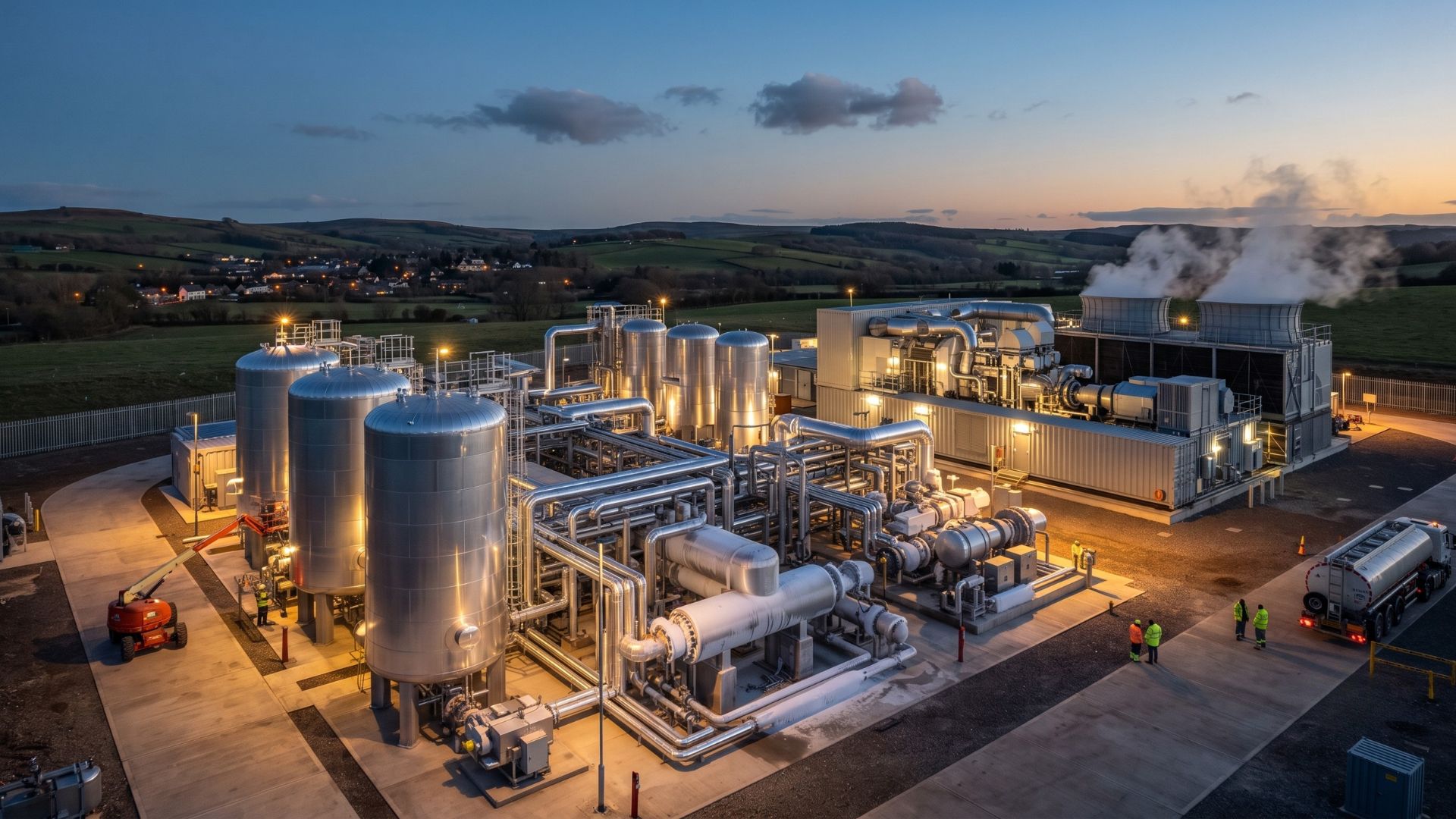



The Researchers’ Proposal
The idea is simple: harness solar energy to raise the temperature of this waste heat and thus generate electricity efficiently.
“There is an invisible river of warm air coming out of the data centers,” explained Laura Schaefer, a mechanical engineering professor and co-author of the paper. According to her, the central question was whether it would be possible to raise this heat with sunlight and convert it into electricity.
The answer was positive. Moreover, the tests indicated economic viability for the solution.
The Functioning of the System
The study, published in the journal Solar Energy, presents a new Organic Rankine Cycle (ORC). This compact system uses a safe fluid to convert heat into electrical energy.
The innovation lies in adding flat and inexpensive solar collectors on the roofs of data centers. These collectors heat the refrigerant flow before it reaches the ORC, ensuring that the low temperature of the waste heat does not limit generation.
Therefore, the system combines two sources: the heat already generated by the servers and the additional impact of sunlight.
The Pressure of Growing Consumption
Data centers consume hundreds of terawatt-hours per year, equivalent to the demand of a medium-sized country.
And the growth of artificial intelligence accelerates this consumption even further. “Efficiency gains are being outpaced by demand,” said Kashif Liaqat, a graduate student and co-author of the study.
Recovering some of the wasted energy is therefore viewed as essential for the sustainability of the digital economy.
Comparison with Other Solutions
Traditionally, attempts have been made to raise the temperature of waste heat with electric heat pumps. But this practice consumes so much energy that it nullifies the benefits.
The thermal solar solution, on the other hand, provides a temperature increase without overloading the electrical grid. “It’s a cleaner and simpler path,” emphasized Schaefer.
Test Results
Schaefer and Liaqat created detailed models to check performance in two large data centers in the United States: Ashburn, Virginia, and Los Angeles.
The results showed recovery of 60% to 80% more electricity from the same waste heat. In Ashburn, the gain was 60%, while in Los Angeles it reached 80%.
Additionally, the efficiency of the ORC increased by more than 8% during sunny hours. The cost of recovered electricity fell by 5.5% in Ashburn and 16.5% in Los Angeles.
“Los Angeles performed better due to the strength of solar resources,” commented Liaqat. Even in Ashburn, where winters are colder, production increased significantly.
An Unexpected Point
Interestingly, the system works better under the most common conditions today in data centers. Many modern servers are cooled with liquid systems that do not heat up very much.
“A weakness turned into strength with solar energy,” said Liaqat.
This aspect broadens the chances of application in current installations without the need for major changes.
Accessible and Ready Technology
The project was designed to use simple solar collectors, the type used in water heating. Mounted on roofs, they connect to the cooling system of the data center.
As the ORC operates on the side of waste heat, the recovered electricity directly replaces part of the grid consumption.
“It’s like adding a clean generator behind the meter, which gets stronger when the sun is shining — exactly when cooling demand is highest,” explained Schaefer.
Next Steps
The researchers now want to test the system in real operation and explore the use of thermal storage. The idea is to store solar heat during the day to enhance energy recovery at night.
They also plan to evaluate other types of collectors for colder climates.
“We are not saying that this replaces improvements in servers or cooling, which are also crucial,” concluded Schaefer. “But it’s a new tool — one that turns disadvantage into advantage.”