






 Portuguese
  Spanish




From Supply Crises to Synergy with Turbo Engines, Ethanol Reinvented. Understand How This National Fuel Became a Green and High-Performance Solution
Ethanol occupies a unique place in Brazil’s energy history. Its trajectory is marked by great ambitions, crises of confidence, and a remarkable ability to overcome challenges. Once seen as a “problematic fuel”, associated with supply instability, ethanol is now experiencing a renaissance.
Driven by technological innovations such as Flex Fuel engines and, more recently, by its perfect synergy with direct-injection turbo engines, ethanol is consolidating itself as a “green” and high-performance solution.
The Crises That Transformed Ethanol into a Problematic Fuel
The negative image of ethanol was primarily forged by severe supply crises in the late 1980s and early 1990s. Launched in 1975, the National Alcohol Program (Proálcool) was a visionary response to the oil crisis, but the lack of long-term planning undermined its sustainability.
-
Award-Winning Japanese Restaurant Reveals It Has Preserved Part of the Same Frying Oil for 66 Years

-
American Youth Transforms from Severe Obesity to U.S. Air Force Enlistment, Losing 90 Kilograms in Two Years
-
11-Year-Old Entrepreneur Sells 60 Homemade Sweets Daily, Mastering Cost Calculation, Social Media Promotion, and Client Negotiation Since Age 7

-
Peruvian Mountain’s 5,200 Aligned Holes May Unveil Ancient Indigenous Market for Corn and Cotton


Ethanol production competed with sugar production, and sugarcane was often diverted to the more profitable product in the international market. Added to this, the government’s gasoline price control to curb inflation reduced ethanol’s competitiveness. The consequence was a shortage of fuel at the pumps, long lines, and a massive loss of consumer confidence, which shifted back to gasoline vehicles.
Flex Fuel Engines and the Reconquest of the Fuel Market
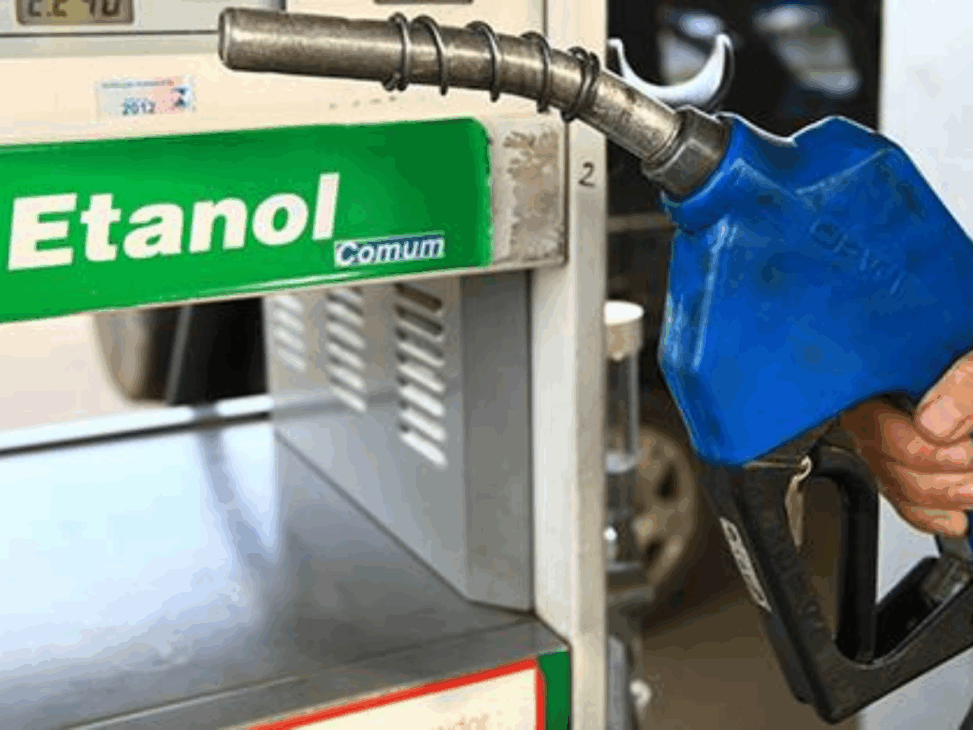
Amidst an atmosphere of distrust, the introduction of Flex Fuel technology in 2003, with the launch of the Volkswagen Gol 1.6 Total Flex, was a turning point. Developed in Brazil, this innovation allowed engines to operate with any mixture of ethanol and gasoline.
The system uses sensors, such as the lambda sensor, and sophisticated software to identify the proportion of fuels and automatically adjust engine parameters. The main advantage for consumers was the regaining of freedom of choice, allowing them to refuel with the most advantageous fuel. This eliminated the fear of supply shortages, restored confidence in ethanol, and revitalized the entire sugar-alcohol sector.
The Ideal Combination with Modern Turbo GDI Engines
The recent wave of turbo engines with direct injection (GDI) has opened a new chapter for ethanol. Its physicochemical properties have proven ideal to extract more performance and efficiency from these technologies.
High Octane Rating: Ethanol has a higher octane rating than gasoline, giving it greater resistance to detonation (“knocking”). This allows engineers to design turbo engines with higher compression ratios, resulting in more power and torque.
Cylinder Cooling: Ethanol has a higher latent heat of vaporization. When it evaporates inside the cylinder, it absorbs more heat than gasoline, cooling the air/fuel mixture. This effect is beneficial in turbo engines, which operate under increased thermal stress.
Manufacturers like Stellantis, with its T270 engine, are already designing their Flex turbo engines to deliver superior performance when fueled with ethanol.
A Green Fuel? The Sustainability of Sugarcane Ethanol Under Analysis
Brazilian sugarcane ethanol is recognized for its potential to significantly reduce greenhouse gas (GHG) emissions compared to gasoline, in a life cycle analysis “from field to wheel”. It is estimated that since 2003, the use of ethanol in Brazil has prevented the emission of over 620 million tons of CO₂.
However, production is not without environmental challenges. The expansion of sugarcane over areas of native vegetation, the use of water resources, and the management of effluents (vinasse) and pesticides are concerns that need to be rigorously managed. The sustainability of ethanol as a “green” fuel depends on the continuous adoption of better agricultural and industrial practices.
The Future of Ethanol, Innovations That Secure Supply and Expand Frontiers
To consolidate its renaissance and ensure stable supply, the ethanol sector has been advancing on multiple fronts.
Corn Ethanol: The production of ethanol from the second-crop corn (“safrinha”) has grown exponentially. Corn can be stored and processed year-round, complementing sugarcane production in the off-season and stabilizing supply.
Second-Generation Ethanol (E2G): Cellulosic ethanol, produced from sugarcane bagasse and straw, has the potential to increase production by up to 50% without expanding planted area. Companies like Raízen are already heavily investing in new E2G plants.
Logistics: The modernization of infrastructure, with the development of ethanol pipelines like that of Logum Logística, reduces costs and increases the safety and reliability of transportation.
New Applications: Ethanol positions itself as a key fuel in the energy transition, whether in flex hybrid vehicles (the most pragmatic solution for Brazil according to the industry), in ethanol fuel cells (SOFC) to generate hydrogen on board, or as a precursor for sustainable aviation fuels (SAF) and green hydrogen.
The renaissance of ethanol is not just the story of a fuel, but the consolidation of a Brazilian paradigm for sustainable mobility, valuing endogenous solutions and integrating agribusiness with the high-technology industry.


