Portuguese
  Spanish


In Magé, Tires, PET Bottles, and Styrofoam Became the Base for a 25-Meter Artificial Waterfall, Integrating Tourism, Environmental Preservation, and Sustainable Reforestation
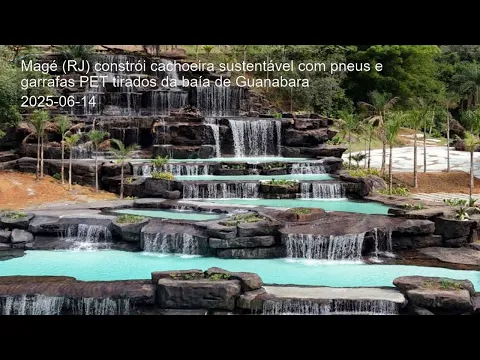
A scenario that once represented pollution and neglect has transformed into a symbol of innovation and sustainability in Magé, in the Metropolitan Region of Rio. Tires, PET bottles, and other waste that accumulated in the mangrove of Guanabara Bay now support a 25-meter artificial waterfall within the Environmental Protection Area (APA) of Petrópolis, one of the oldest in the country.
The initiative combines tourism, environmental education, and reforestation in a single space.
The idea arose in response to an old problem. The waste scattered throughout the bay compromised marine life and harmed local fishermen.
-
Brazilian Construction Worker Moves to France, Earns Up to €2,500 Monthly with Home Renovations, Gains Social Media Attention

-
US Navy Sinks USS Oriskany with 230 kg of C-4, Creating World’s Largest Artificial Reef in 37 Minutes

-
U.S. Dumped Tanks, Jeeps, and Coca-Cola into the Pacific in 1945 After British and French Lowball Offer, Creating “Million Dollar Point”
-
WHO Warns of Unnecessary Interventions in Natural Births Worldwide, Advocates for More Human-Centered Care, Reigniting Debate on Medicalization




Today, what seemed like mere disposal has transformed into a structure for a venture that attracts visitors and reinforces preservation practices.

Waste Collection
The process began with artisanal fishermen from Magé, in partnership with the Águas da Guanabara project.
They started a routine of collecting tons of materials that previously accumulated in the mangrove. The work occurs up to three times a week and has already removed around 40 tons of waste.
“Fishermen here in Magé collect this waste three times a week, each boat goes out with two fishermen. They collect ten bags of 200 liters of the waste they find in the mangrove. We find all sorts of materials in this bay,” reports Elaine Cristina, president of the Fishermen’s Colony of Magé.
Reuse and Structure Construction
With the waste in hand, businessman André Marinho de Moraes envisioned the Eco Resort Castelinho. He transformed tires, PETs, and Styrofoam into artificial stones that support the waterfall.
“I hadn’t been here in over 10 years. I arrived and saw it very neglected. It has sentimental value because I was born and played here. I thought of doing something new, and this waterfall emerged, the venture came about,” said André.
Rainwater Supply
The water flowing down the fall does not come from springs. An internal system captures and treats rainwater, pumping the filtered liquid to the top of the waterfall.
Thus, in addition to repurposing waste, the project also reduces pressure on the region’s natural resources.
The Eco Resort obtained licensing with technical support, complying with federal and municipal regulations. Additionally, it was registered with Ibama as a wildlife release area.
The APA Petrópolis, managed by ICMBio, monitors the activities.
This collaboration shows that the transformation did not occur haphazardly, but within legal and environmental parameters.
Reforestation and Area Transformation
Once occupied solely by grass, the land has begun to receive 12,000 seedlings of native and fruit species. The reforestation enhances the recovery of the Atlantic Forest, reinforcing the sustainable nature of the space.
Furthermore, the initiative proves that waste can gain a new function. What was once trash now helps compose a tourist and educational landscape, merging preservation with income generation.
The artificial waterfall in Magé has thus become an example of how old problems can transform into creative solutions.
The project rehabilitates an abandoned space, restores life to the mangrove, and demonstrates that sustainability can be built from what once seemed worthless.
With information from G1.