






 Portuguese
  Spanish


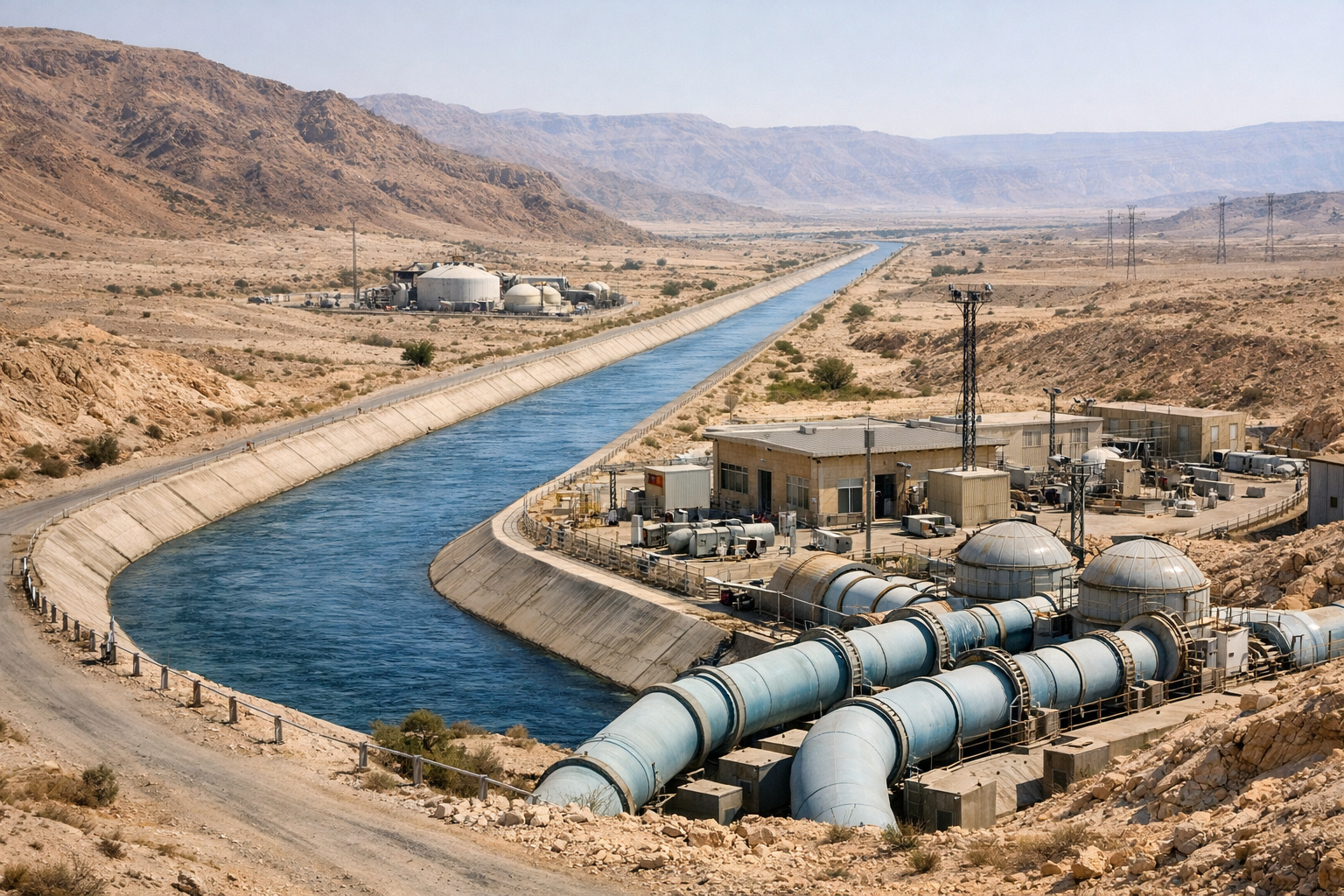


Water scarcity is one of the most urgent global challenges of the 21st century. Furthermore, population growth and climate change intensify this pressure on water resources. In this context, Israel stands out as a rare success story. Since its founding in 1948, the country has faced a chronic water shortage. However, in a remarkable turnaround, Israel now produces 20% more water than it needs.
The information was disclosed by “Global Mega Engineering,” based on historical and technical data about the Israeli water system. According to the survey, the country not only solved its own water crisis but also started exporting technology to various nations.
To achieve this result, Israel structured one of the most ambitious water infrastructure projects in the world. Consequently, the so-called “Water Highway” became a symbol of innovation and resilience.
-
Scientists Discover Antidepressants in Hammerhead Sharks, Revealing Hidden Path of Pharmaceuticals to Brazilian Waters

-
Warm water hidden deep in the ocean has been moving towards Antarctica for 20 years, potentially accelerating glacier melting from below.
-
U.S. Offers Nearly $200,000 to Combat Invasive Mussels Threatening Waterways and Hydroelectric Plants
-
Cigarette Butts Pollute Brazilian Beaches, Sparking Debate on Coastal Environmental Protection Measures


The National Water Canal and the Engineering That Raised Water Over 200 Meters
First, we must go back to the 1950s. During that time, scarcity was already threatening agriculture and urban development. Additionally, waves of immigration increased the population and strained natural resources.
Although the original idea emerged in 1937, when British engineer Walter Clay Lowdermilk proposed diverting water from the Jordan River to the Negev Desert, the plan only advanced after independence in 1948. Thus, Israel launched the National Water Canal.
The system spans 130 km and integrates canals, tunnels, pipelines, reservoirs, and pumping stations. Construction began in 1953 under the responsibility of Mekorot. Furthermore, engineers needed to install powerful pumps capable of raising water over 200 m above sea level.
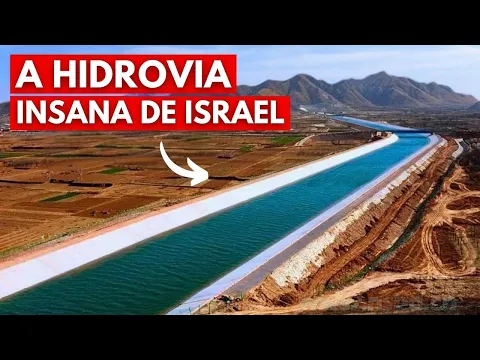

One of the milestones was the Eshkol Tunnel, which was 17 km long—the longest in the world at the time. After passing through the Eshkol reservoir, the water flowed south, supplying cities, villages, and agricultural areas until reaching the Negev Desert.
The project was completed in June 1964, at a cost of 420 million Israeli lira or 112 million dollars—equivalent to about 1.1 billion dollars today. Initially, 80% of the water served agriculture, and 20% for human consumption. However, by the 1990s, the canal was already supplying half of Israel’s drinking water.
Additionally, as part of the 1994 peace agreement, Israel began supplying 25 million cubic meters per year to Jordan. Later, in 2021, the volume doubled to 50 million cubic meters annually.
Desalination, 600 Million m³ Per Year, and the Unprecedented Project to Replenish the Sea of Galilee
However, after five years of drought, in 2017, the levels of the Sea of Galilee reached historically low levels. Therefore, Israel intensified investments in desalination.
Desalination removes salts from Mediterranean water through reverse osmosis. While research has existed since the 1960s, the major breakthrough occurred in the 2000s with the Ashkelon plant, one of the largest in the world at the time.
Today, five plants along the coast produce approximately 600 million cubic meters of drinking water per year, supplying about 80% of the country’s domestic needs.
In 2022, Israel did something unprecedented: it pumped desalinated water into the Sea of Galilee. It was the first time in the world that desalinated water replenished a natural lake. To facilitate this, Mekorot built a 13 km underground pipe connecting the lake to the plant infrastructure.
Additionally, a second phase of the project plans new plants to expand capacity. At the same time, Israel invests in water reuse: over 90% of wastewater undergoes treatment and returns primarily to agriculture.
The Shafdan station, near Tel Aviv, plays a central role in this system. Afterwards, the treated water is directed to the Negev Desert.
Meanwhile, drip irrigation ensures maximum efficiency. This method allows plants to absorb 95% of the applied water, reducing losses due to evaporation. Consequently, agricultural production remains high even in arid regions.
Companies like IDE Technologies, Netafim, and Mekorot share this expertise with India, China, Australia, and the United States. Still, challenges persist. Climate change may intensify droughts in the Middle East, while geopolitical tensions surrounding the Jordan River require constant attention.
For this reason, Israel continues to invest in solar energy, atmospheric water generation, and advanced treatment technologies.
In light of this model, an inevitable reflection arises: if a predominantly desert country can produce 20% more water than it consumes, what prevents other nations from following a similar path?
Source: Billion-Dollar Constructions







Nenhum pais é tão grande quanto essa pequena nação. Israel, sempre Israel no meu coração português sefardita.
Israel is successful because this is God’s chosen land and chosen people. The article is superb
De estos señores solo veo cosas sorprendentes y buenas, está es una más y así suma y sigue.