Portuguese
  Spanish


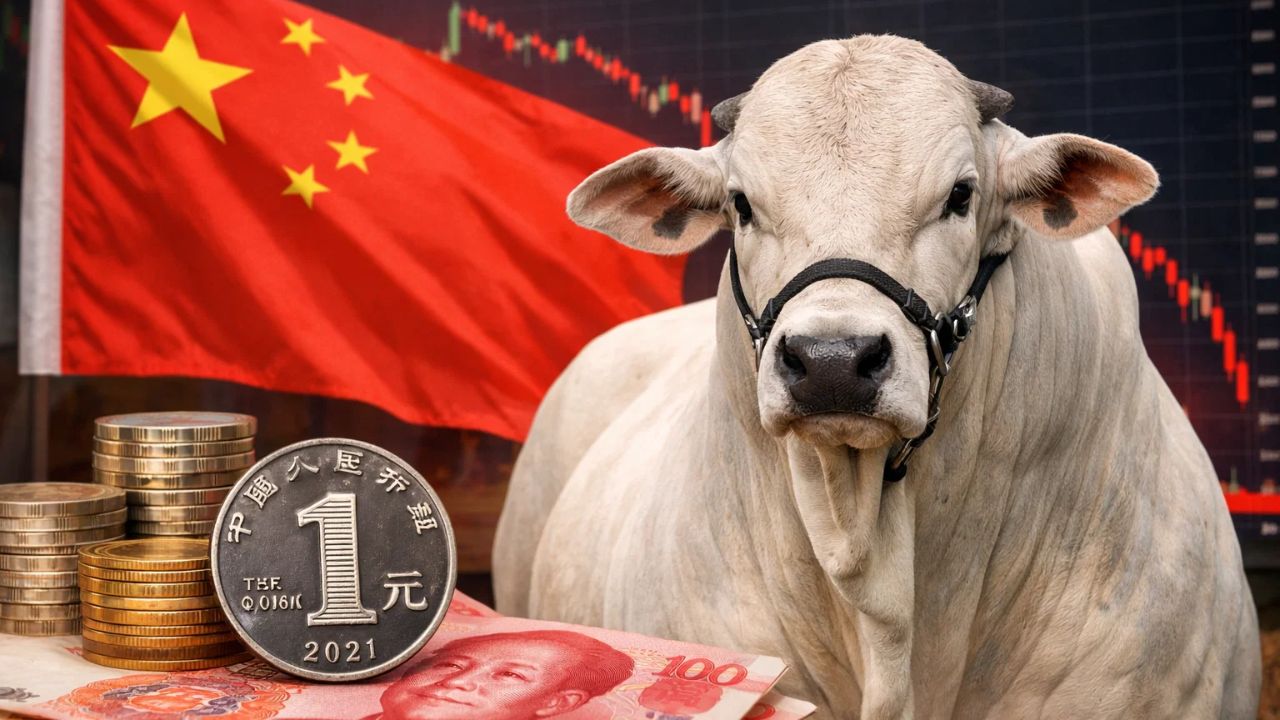


Cattle Price Reacts at the Start of the Year, but China’s Decision Raises Alerts in the Livestock Market.
The beginning of January brought some relief to the physical market for cattle, with prices stable to slightly higher in the main producing regions of the country. This movement, observed throughout the week, was sustained by a firmer action from smaller slaughterhouses, which face tighter slaughter scales.
Despite this, the prevailing view among analysts is that this behavior does not represent a structural turn and tends to lose strength throughout the year, especially in light of changes imposed by China on the international beef trade.
Although recent negotiations have favored ranchers in some markets, the market remains attentive to external developments.
-
Brazilian Farmer Invents Low-Cost Tractor Using Motorcycle Parts, Efficiently Working 2 Acres on 1 Liter of Diesel

-
Regenerative Farmers Use Keyline Plow to Improve Pasture Hydration, Storing 1 Gallon of Water Every 30 Centimeters

-
Bicolor Pumpkin Resembling Hand-Painted Art Discovered by Brazilian Researchers in the Capital Due to “Spontaneous Mutation”

-
In China, a 26-story building produces 1.2 million pigs annually, revolutionizing livestock farming with tube feeding and AI surveillance.




The Chinese decision to limit imported volumes and impose additional tariffs is already influencing the industry’s planning in Brazil and, consequently, the price formation of the cattle price.
Cattle Market: External Pressure Precedes Internal Adjustments
Even before any significant change in domestic consumption, the Brazilian market began to price in a new scenario for exports.
China, the main destination for national beef, set tariffs and quotas that restrict purchases throughout the year.
Fernando Henrique Iglesias, an analyst at Safras & Mercado, states that the market is still trying to adjust after China defined tariffs and quotas, a measure that limited Brazilian exports this year by 1.1 million tons, with excess tariffs applied above this volume.
This signal changed the stance of part of the slaughterhouse industry, which began to review purchasing and slaughter strategies, anticipating a different pace of production flow over the coming months.
Targeted Actions Support Prices in the Short Term
Even with this more cautious backdrop, prices reacted in the short term.
According to Iglesias, the recent support observed did not result from strong demand, but from specific operational needs, as smaller slaughterhouses acted more forcefully in purchasing cattle due to tighter slaughter scales, which ultimately contributed to price increases in some regions.
This factor, however, is seen as circumstantial. With the recomposition of scales and the adaptation of industrial plants to the new export environment, the trend is for greater selectivity in purchases.
Cattle Price May Face a More Pressured Scenario
The medium-term outlook is more conservative.
According to Iglesias, the Chinese decision tends to result in greater idle capacity in processing plants, which limits more consistent advances in prices paid to producers.
Since the measure is expected to bring a more bearish outlook for cattle prices, making sustained price increases more difficult and leaving the market more pressured by industry price behavior, which tends to reduce slaughter rates.
According to the analyst, this redirection is unlikely to be punctual. The change in consumption pace by the Asian giant is expected to influence the market throughout the year.
Cattle Prices Reflect Temporary Equilibrium in the Markets
Even in the face of expectations of greater pressure throughout the year, the physical cattle market showed stability in most of the country.
Negotiations occurred without sharp movements, indicating caution among producers and slaughterhouses. On January 8, the cattle price was quoted at R$ 323 in São Paulo, up 0.94%.
In Goiás, the price reached R$ 315, an increase of 0.64%. Minas Gerais and Mato Grosso do Sul also recorded R$ 315, both without variation.
In Mato Grosso, the price remained at R$ 300, while Rondônia stayed at R$ 280.
The combination of these prices reinforces the perception of a market still in the adjustment phase and seeking references in light of the new scenario.
Wholesale Market Shows Deceleration After Holidays and Changes Demand Profile
The wholesale beef market has entered a typical post-holiday accommodation period. With family budgets tighter at the beginning of the year, the demand for higher-value cuts weakens, which limits upward movements in wholesale.
Fernando Henrique Iglesias notes that this behavior was already expected for the period and explains that consumers tend to seek cheaper alternatives to maintain their daily animal protein consumption, prioritizing more accessible products, such as cuts from the front of the beef, chicken, eggs, and processed meats in general.
In this context, prices remained stable on a weekly comparison. The hindquarter was traded at R$ 25.40 per kilo, while the forequarter maintained the price of R$ 17.85, reflecting a more cautious market with less room for adjustments in the short term.
Record Exports Contrast with Future Uncertainties
The cautious scenario contrasts with the historical performance of Brazilian exports in 2025.
According to data from MDIC, compiled by Abiec, Brazil shipped 3.50 million tons of beef, an increase of 20.9% compared to 2024, with revenue of US$ 18.03 billion.
The in natura beef led shipments, and the Brazilian product reached over 170 countries.
Still, China’s new stance reinforces the need for strategic adjustments and keeps the market attuned to the behavior of the cattle price throughout 2026.
Source: Safras e Mercado.