






 Portuguese
  Spanish


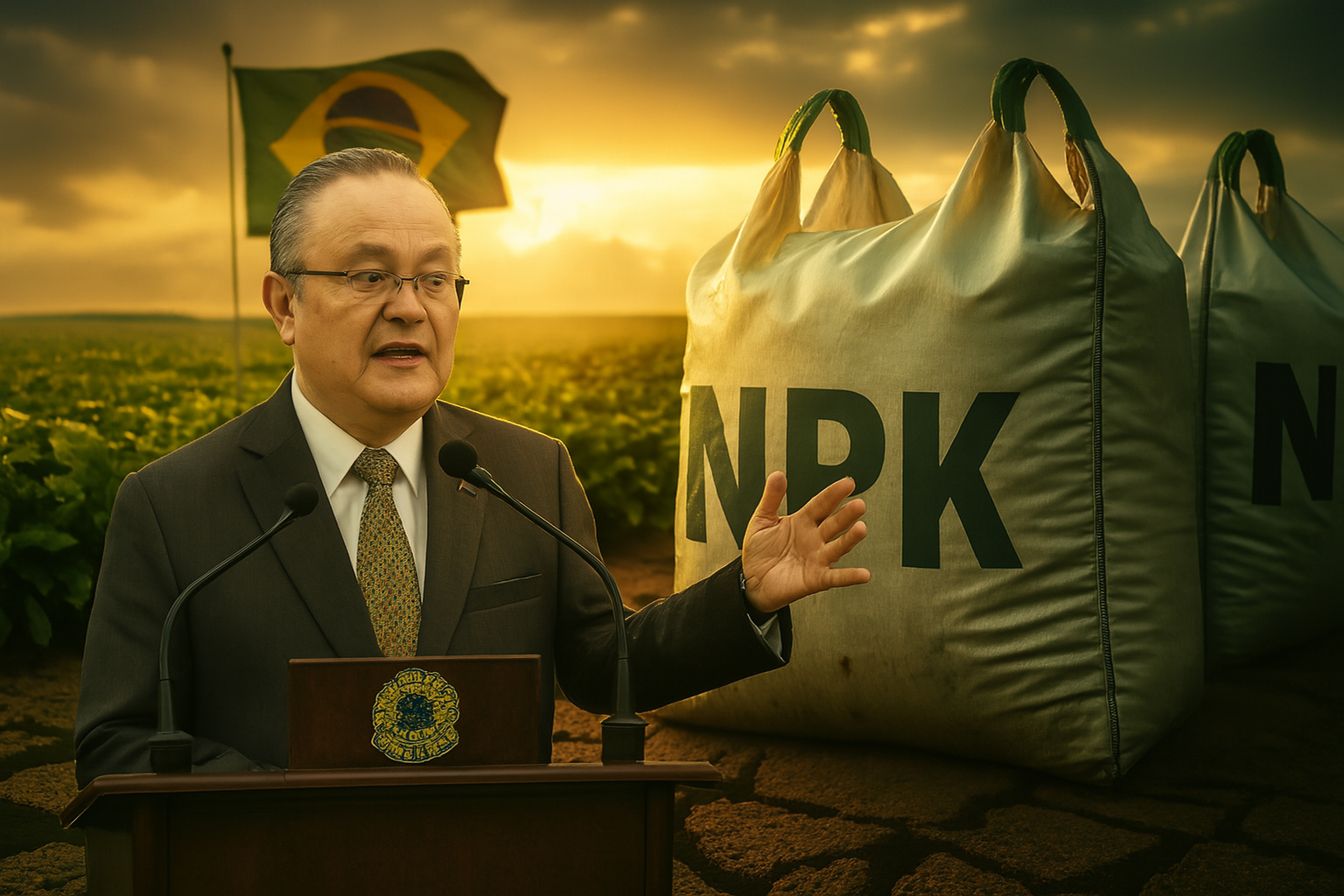

Brazil Depends On Up To 95% Of Imported Potassium To Sustain Agriculture. Senator Zequinha Marinho Warns: “If The World Wants To Stop The Country, Just Hold The NPK.”
Brazil has established itself as a global powerhouse in food production, responsible for about 27% of Gross Domestic Product (GDP) when considering the entire agribusiness sector. But behind this strength that drives billions in exports and sustains the trade balance, there is a fragile point that threatens national sovereignty: the near-total dependence on imported fertilizers.
During a speech on national security, Senator Zequinha Marinho (PA) was direct: “If the world wants to stop Brazil, just hold the import of NPK”. The warning reflects the structural vulnerability of Brazilian agriculture: although it has mineral reserves, the country imports about 85% of all fertilizers consumed — and in the case of potassium, dependence reaches 95%.
The Weight Of Agriculture In The Brazilian Economy
Agriculture is the engine of Brazil. The country is a global leader in the export of soybeans, coffee, beef, sugar, and corn, supplying markets in over 150 countries.
-
Producer receives news and had to cull almost the entire herd, bounced back with the help of compensation, and is now producing 450 liters of milk per day in SC.

-
Quail Eggs Reveal a “Secret Code” on Their Shells Explaining Unique Patterns and Colors

-
Rare Tropical Fruit Canistel, with Egg Yolk Color and Caramel Flavor, Gains Interest from Researchers and Small Producers in Brazil
-
Brazilian Farmers Develop Wheeled Metal Lever to Ease Cassava Harvesting Without Heavy Machinery


In 2024, the sector accounted for nearly one-third of national wealth and supported the surplus of the trade balance amid global turbulence.
But this prominence is only possible thanks to the intensive use of fertilizers. In nutrient-poor tropical soils, inputs are essential to maintain high productivity. Without them, production would fall drastically, affecting not only domestic supply but also global food security.
The Vulnerability Of NPK: External Dependence
NPK — an acronym for Nitrogen, Phosphorus, and Potassium — is the foundation of modern agriculture. In Brazil, it is used in essential crops such as soybeans, corn, wheat, and coffee.
- Potassium (K): 95% imported, mainly from Russia, Belarus, and Canada.
- Nitrogen (N): 80% imported, with dependence on suppliers from the US and the Middle East.
- Phosphorus (P): 55% imported, concentrated in countries in North Africa, such as Morocco and Tunisia.
This scenario places Brazil in a vulnerable position to external crises. The sanctions against Russia following the war in Ukraine have already shown how fertilizer prices can spike suddenly, raising production costs and pressuring inflation.
National Reserves Exist, But Remain Untouched
Senator Zequinha Marinho reminded that Brazil has significant mineral reserves capable of reducing external dependence. Estimates indicate that potassium mines located in the Amazon region could supply up to one-third of national demand.
The hurdle, however, lies in regulatory and environmental issues. A large portion of the reserves is located in indigenous and environmental protection areas, where exploration is prohibited.
“We buy potassium from indigenous communities in Canada, but we cannot allow our indigenous people to do the same here. This needs to be reviewed. The market is already ours; we just need to provide production conditions within the country,” said the senator.
National Security At Stake
Brazil’s dependence on foreign potassium is not just an economic problem: it is a matter of national security. If imports are blocked due to diplomatic crises, conflicts, or political decisions, the entire agribusiness production chain could collapse.
The consequences would be severe:
- Food Inflation: prices of rice, beans, coffee, meat, and other basic items would soar.
- Decline in Production: without fertilizers, field productivity would immediately drop.
- Impact on Foreign Trade: the country would lose competitiveness and space in global markets.
Overview Of NPK Dependence
| Nutrient | Import Dependence | Main Suppliers | Situation In Brazil |
|---|---|---|---|
| Nitrogen (N) | 80% | USA, Middle East | Limited domestic production |
| Phosphorus (P) | 55% | Morocco, Tunisia | Reserves partially explored |
| Potassium (K) | 95% | Russia, Belarus, Canada | Large reserves, but in restricted areas |
Paths To Reduce Vulnerability
Experts point to three central strategies for Brazil to escape this trap:
- Diversification of Suppliers: reduce dependence on a few countries and seek new trade partners.
- Research On Alternative Fertilizers: invest in bioinputs and technologies that reduce the need for NPK.
- Sustainable Exploration of National Reserves: create regulatory models that reconcile environmental protection and economic development.
The Brazilian agribusiness feeds millions of people worldwide, but it may become hostage to a strategic bottleneck. Senator Zequinha Marinho’s statement exposes a paradox: Brazil is a giant in food production but small when it comes to producing the inputs that sustain this wealth.
The country needs to decide whether it will remain dependent and vulnerable or invest in autonomy and sovereignty to maintain its position as a global agricultural powerhouse.








