Portuguese
  Spanish


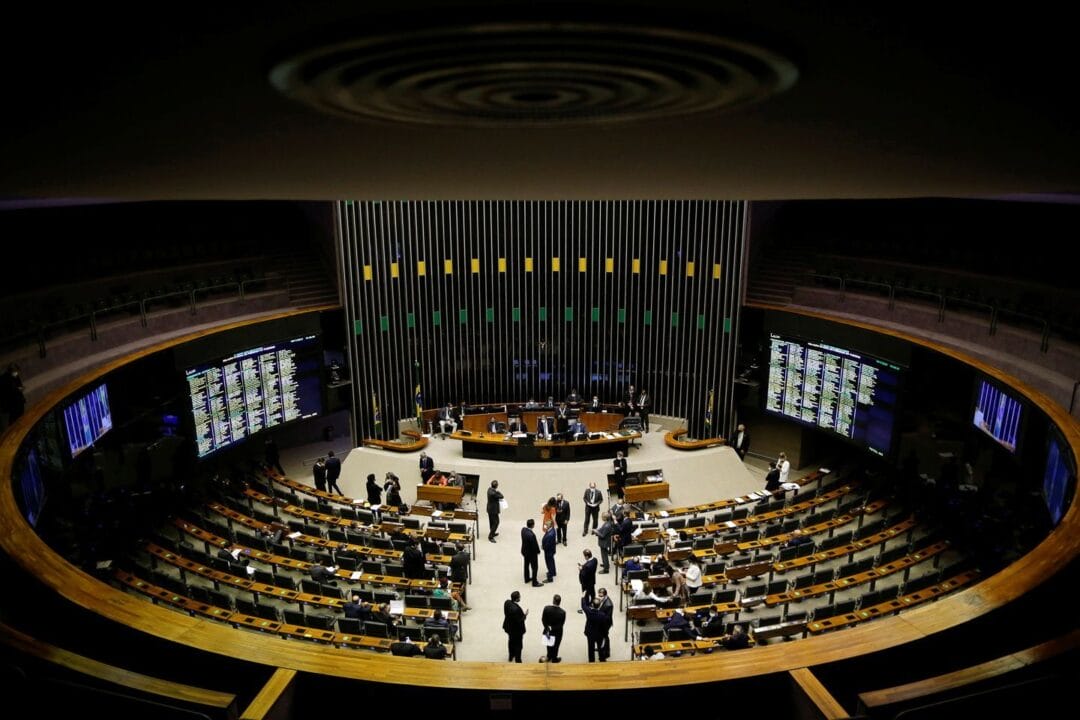

Eight Parliamentary Fronts Join Forces to Promote Changes in the Brazilian Economy and Relevant Sectors, with Parliamentary Support and Highlight on the Selective Tax.
The joint mobilization of eight parliamentary fronts in the Chamber of Deputies is gaining momentum to reverse one of the main changes made by the Senate in the tax reform, which is the collection of the selective tax on the extraction of minerals and oil. The coordination aims to seek support from different parties for the exclusion of this tax, which has a rate of up to 1%.
According to reports made to CNN, the exclusion of the selective tax on the extraction of minerals and oil has the support of different parties and could occur through a suppressive amendment or an advancement after the voting of the main text in the Chamber of Deputies. However, it is not ruled out that the change may already appear in the report of the rapporteur Aguinaldo Ribeiro (PP-PB), demonstrating the relevance of Congress in making important decisions for the country.
Opposition to the Collection of the Selective Tax in the Chamber of Deputies
Eight parliamentary fronts have already spoken out in favor of removing mining and the oil and gas industry from the selective tax.
-
Petrobras Approves $1.2 Billion Refinery in Brazil to Produce Aviation Fuel and Diesel from Plants

-
Petrobras Secures $2.2 Billion Contract to Build and Operate Four Support Vessels for Brazil’s Offshore Oil Fields
-
Oil production grows in Rio, but reserve replacement raises a warning sign

-
Petrobras is expected to complete the drilling of the Morpho well in the Foz do Amazonas in August 2026, the first well in the Equatorial Margin, an oil frontier that the ANP estimates at more than 30 billion barrels and could redraw the map of Brazil.




- Parliamentary Front for Entrepreneurship
- Parliamentary Front for Agriculture
- Parliamentary Front for Free Market
- Parliamentary Front for Fuels
- Parliamentary Front for Sustainable Mining
- Parliamentary Front for Natural Resources and Energy
- Parliamentary Front in Support of Oil, Gas, and Energy
- Parliamentary Front for the Development of Oil and Renewable Energies
Impact of the Selective Tax and Repercussions in the Brazilian Economy
The selective tax was introduced in the tax reform as a way to discourage the consumption of goods harmful to health and the environment, without detailing. The only sectors mentioned — based on a new wording given by the Senate — are the extraction of minerals and oil and gas. A maximum rate of 1% on revenues is anticipated.
Positioning of the Chamber of Deputies and Arguments Against the Collection
The president of the Brazilian Mining Institute (Ibram), Raul Jungmann, told CNN that the collection is a global exception, a ‘jabuticaba’, because no other country, among 53 that implement the selective tax, taxes the sector. When asked about the latest steps in the advancement of the reform and any changes to the text, however, he preferred not to comment.
A recent study was commissioned by Ibram, along with LCA Consultores, to assess possible effects of the collection. One finding was that, among 53 countries where the selective tax is applied, none taxes mining.
Economic Impact of the Collection and Challenges for the Brazilian Economy
‘The selective tax on mining goes against the principle of not taxing exports. It also goes against the economy of energy transition, which needs minerals from Brazil to carry forward the decarbonization process’, said Jungmann.
The LCA study identified a series of productive chains — steelmaking, automotive industry, capital goods, construction, among others — that will be impacted with the rise in the cost of minerals used as inputs.
‘An undesirable consequence of the measure would affect the economic activity of a number of sectors relevant to the Brazilian economy, which combined represent an average of 9.3% of all product generated in the economy between 2015 and 2020, increasing the sale price of their products in the external market and establishing a non-equitable competition with imports’, says the study.
‘
Source: CNN Brazil