Portuguese
  Spanish


Change approved by Gaucho deputies targets an annual charge linked to the digital vehicle document and may alter the cost of regularization for drivers in Rio Grande do Sul, but the application of the new rule still depends on a decision by the state government.
The Legislative Assembly of Rio Grande do Sul approved, on Tuesday (02), Bill 599/2023, which ends the charge for issuing the Vehicle Registration and Licensing Certificate fee.
Authored by state deputy Rodrigo Lorenzoni (PP), the proposal still needs to be reviewed by Governor Eduardo Leite (PSD), who is responsible for sanctioning or vetoing the text approved by the Gaucho Parliament.
The measure amends Law No. 8,109, of December 19, 1985, which deals with the Miscellaneous Services Fee in the state and includes charges related to public services provided by the state government.
-
Abandoned Building in Brazil to Become Biotechnology Unit with $10 Million Investment, Bridging Science, Industry, and Public Health

-
Company Offering “Stones to Diamonds” Scheme Sells Ruined Italian Homes to Brazilians for 1 Euro, Disappears with Promised Renovations, Leaving Buyers in Debt to Italian Tax Authorities Until 2028 Without Property

-
Plastic Packaging Drives Santa Catarina Industry to 230% Growth, Aiming for R$ 500 Million by 2030 Amid Sector Crisis, with New Gearless Line Expanding in Southern Brazil to Compete in South America

-
Flamengo Star Invests in Brazilian Coastal Luxury Real Estate as Itapema Surpasses Balneário Camboriú in High-End Market Growth


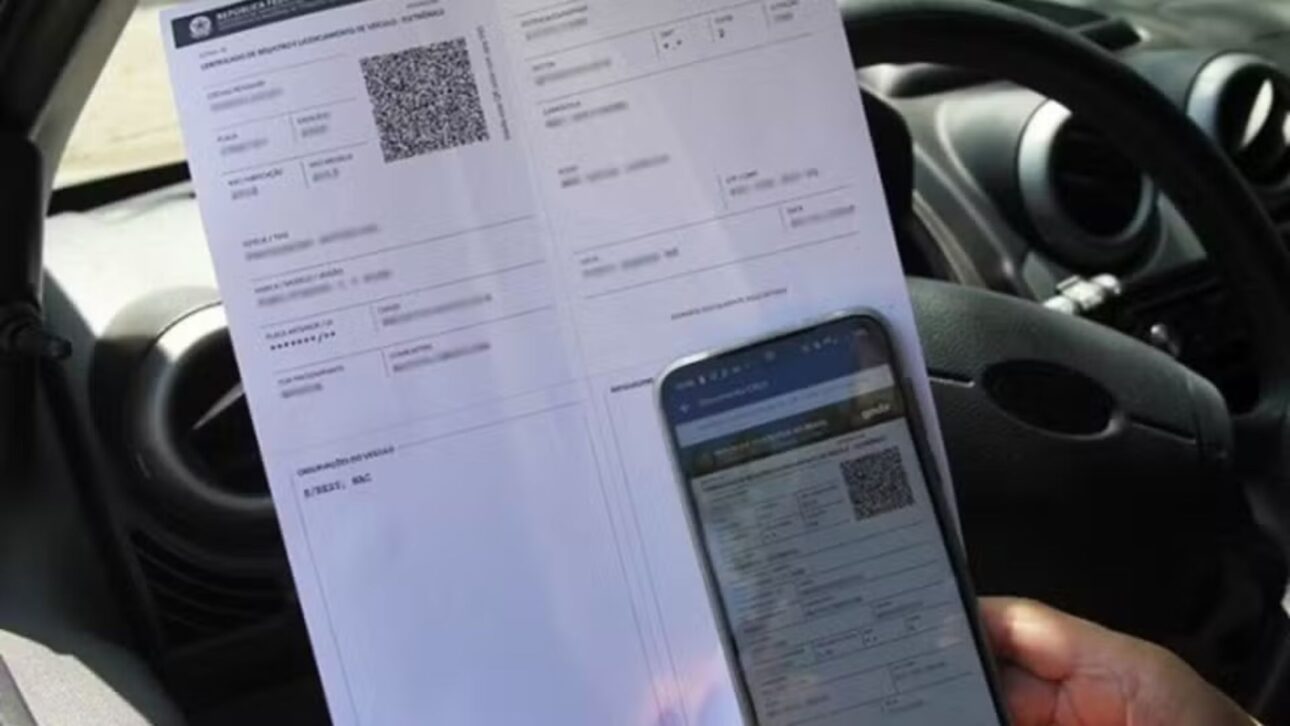
In the case of vehicles, the project affects the annual charge associated with the CRLV, a document that proves the regularity of the vehicle and has been made available in digital format to owners.
According to the official record of the proposal in the Legislative Assembly, the PL 599/2023 appears as approved after a vote in an ordinary session held on June 2, 2026.
The legislative page reports 47 votes in favor and none against, although the record itself shows a discrepancy by displaying “total votes: 46” and “total yes: 47”.
Licensing fee in RS may no longer be charged
If sanctioned by the state Executive, the project eliminates the fee charged for the issuance of the CRLV, currently linked to the annual vehicle regularization process in Rio Grande do Sul.
The approved text does not eliminate the obligation to license the vehicle, but removes the specific charge related to the issuance of the document, currently available in electronic version to owners.
In 2026, DetranRS reports that the annual licensing fee is R$ 114.09, an amount charged in the state’s vehicle regularization calendar.
Also according to the agency, the deadline for regularizing the licensing for the 2026 exercise ends on July 31, 2026, a date that remains valid while the new rule is not in effect.
Until the governmental sanction and the definition of the legal effects of the measure, the charge remains provided for in the current rules of the annual licensing in the state.
For this reason, vehicle owners registered in Rio Grande do Sul must still observe the current payment calendar and other administrative requirements associated with regular circulation.
The proposal also reaches car owners exempt from the Motor Vehicle Property Tax, who remain subject to the fee while there is no effective legal change.
Even in cases of IPVA exemption, the licensing fee continues to be required in the current model, as it is linked to the issuance of the document and not to the state tax.
Digitalization of the CRLV motivated discussion in the Assembly
The justification presented by Rodrigo Lorenzoni is that the fee was created at a time when the State had expenses with printing, special paper, and physical delivery of the document to the owners.
With the adoption of the digital CRLV, the deputy states that the structure that justified the charge ceased to exist, as the document began to be accessed electronically.
Defending the project, Lorenzoni stated that the fee arose when the Detran needed to “acquire the security paper” and bear the cost of printing and sending the physical document to drivers.
The statement was used by the parliamentarian to argue that the charge lost its relation to the originally provided service, since the CRLV-e started being accessed electronically.
Even so, the annual fee remained within the vehicle regularization process, even after the replacement of the physical document with the digital version.
The proposal approved in the Legislative Assembly seeks to remove only this charge, without altering other legal obligations related to the registration, ownership, and circulation of vehicles in the state.
The project does not address fines, IPVA, mandatory insurance, or other debts potentially linked to the vehicle, nor does it exempt the owner from other regularization requirements.
The central point of the change is the removal of the document issuance fee for licensing, maintaining the rules that require the vehicle to be regular to circulate.
Charge still depends on the governor’s sanction
Although it was approved in plenary, the project is not yet in effect and needs to be reviewed by Governor Eduardo Leite before producing legal effects.
According to the legislative process, the head of the state Executive can sanction the proposal, allowing it to become law, or veto the text, which would return the discussion to the Legislative Assembly.
Until there is a sanction, veto, or official publication about the new rule, DetranRS maintains the current guidelines for licensing regarding the 2026 exercise.
In this scenario, the licensing service remains associated with the payment of the annual fee of R$ 114.09 and other amounts that may vary according to the situation of each vehicle.
The Executive’s decision will also be crucial to confirm when the charge will cease for vehicle owners registered in Rio Grande do Sul.
The forecast indicated in the proposal is that the change will take effect from 2027, but the concrete application depends on the conclusion of the legislative process and the publication of the corresponding regulation.
Since the fee is annual, any change in the charge modifies the recurring cost of regularization for owners covered by the state licensing rules.
The change, however, does not automatically alter the current calendar for 2026, which remains the official reference for those who need to regularize their vehicle in this exercise.
Annual vehicle licensing remains mandatory
The approval of the project does not authorize the circulation of vehicles without licensing, as the annual procedure is still required to prove the vehicle’s regularity.
The licensing checks the vehicle’s status in the state system, including debts, restrictions, and other obligations linked to the registration, according to the rules applied by traffic authorities.
What may cease to exist, if the project is sanctioned, is the specific charge for the issuance of the CRLV, the document that proves the vehicle’s regularity.
The distinction is relevant because the approved proposal addresses the document’s fee, not the complete extinction of the annual licensing required from owners.
In digital or physical format, the CRLV remains the proof used to demonstrate that the vehicle is fit to circulate under traffic rules.
Without annual regularization, the owner may face administrative impediments and problems during inspections, according to the norms applied to vehicle licensing.
The approved change focuses on the charge associated with the document’s issuance, especially after the adoption of the digital version of the CRLV in the regularization process.
In the project’s justification, the author states that the electronic model reduced the costs linked to the production and sending of the printed document to drivers.
Drivers should follow official publication
The processing remains under the responsibility of the Gaucho Executive, which needs to decide whether to sanction or veto the text approved by the Legislative Assembly of Rio Grande do Sul.
With the sanction, the state will have a new rule for charging the CRLV issuance fee, with effects expected for the following fiscal years.
In case of a veto, the Legislative Assembly may review the governor’s decision, according to the procedure provided for proposals approved by the state Parliament.
Until this process is concluded, the charge remains as provided in the licensing rules in effect for 2026 and should be considered by owners in the annual calendar.
For those who have a vehicle registered in Rio Grande do Sul, the official reference continues to be the publication of state government acts and the guidelines issued by DetranRS.
The payment related to the 2026 licensing remains due on July 31, according to the calendar provided by the state traffic authority.