






 Portuguese
  Spanish


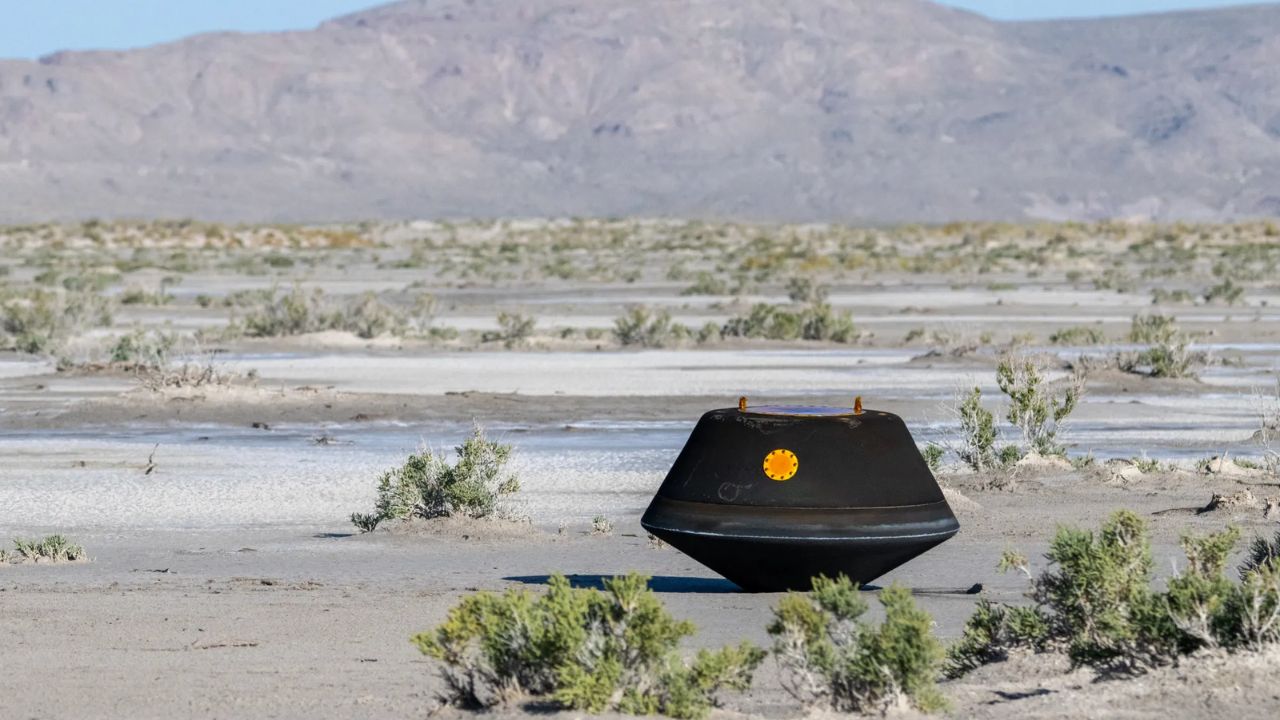


The Sample From Asteroid Bennu, Brought Back by the OSIRIS-REx Mission in September 2023, Revealed Essential Elements for Life, Such as Amino Acids, Nucleobases, and Evaporitic Minerals. This Reinforces the Idea That the Ingredients for Life Were Spread Throughout the Primitive Solar System. Are We Closer to Understanding How It All Began? The Study of Bennu Could Revolutionize Our Understanding of the Origin of Life on Earth and Even Raise New Questions About the Possibility of Life on Other Planets.
A sample from asteroid Bennu has just turned upside down what we know about life in the Solar System. The OSIRIS-REx mission from NASA brought a sample of this space rock to Earth in September 2023, and the first studies have already revealed impressive data. Scientists discovered amino acids, nucleobases, and minerals called evaporites – basic ingredients of life.
This doesn’t mean that they found life on Bennu, but it suggests that the fundamental elements for life to emerge were more spread out in space than we imagined. Could life have begun elsewhere and traveled to Earth?
What Is Asteroid Bennu and Its Origin?

Bennu may be small, but its story is huge: it dates back 4.5 billion years! It was part of a mega-asteroid about 100 km wide, which formed in the far reaches of the Solar System, beyond Jupiter’s orbit. At some point, this colossal body broke apart, and one of the pieces wandered through space until it became the Bennu we know today.
-
China Develops Custom 140-Ton Electric Mining Truck with 770 kWh Swappable Battery, Deploys 290 Units in Xinjiang’s Largest Zinc Mine

-
Meta to Launch Arena, a New Prediction App Targeting 3.56 Billion Users, Competing with Polymarket and Kalshi

-
Scientist Challenges Famous Human Evolution Theory, Argues Homo Sapiens Evolved Gradually Over Thousands of Years
-
15-Year-Old American Builds Ocean Generator with PVC Pipe and 3D-Printed Propeller for $12, Wins National Prize, Presents at White House, and Makes Forbes 30 Under 30 List




The OSIRIS-REx mission was launched in 2016 to collect an intact sample of this asteroid and help better understand the early chapters of our Solar System’s history. On September 24, 2023, a sample of 4.3 ounces (about 121 grams) was successfully brought back to Earth – and that’s when the discoveries started popping up.
Bennu Sample: What Did Scientists Discover?
The first studies showed that Bennu is a true time capsule, holding fundamental secrets for life. Among the elements found are:
Amino Acids: compounds that make up proteins, essential for any living being.
Nucleobases: components of DNA and RNA, responsible for storing and transmitting genetic information.
Evaporitic Minerals: formed when water containing dissolved salts evaporates, suggesting that Bennu has already been in contact with liquid water.
NASA confirmed that the sample contained 14 of the 20 amino acids found on Earth, all five nucleobases used in terrestrial life, and high levels of ammonia, a key ingredient for forming amino acids.
What Does This Mean for the Search for Life in Space?
If these building blocks of life have been floating around the Solar System for billions of years, then it is possible that life had many chances to start in other places beyond Earth. Bennu may be just one among many asteroids that spread these ingredients throughout the cosmos.
This also raises an intriguing question: could life on Earth itself have received a boost from asteroids? Perhaps essential compounds arrived in the primitive oceans via meteorites, aiding the emergence of the first forms of life.









Creio que essa teoria esteja certa, faz total sentido! Vale a pena continuar buscando por vidas, inclusive nas luas contendo oceanos.