





 Portuguese
  English
  Spanish
  2 min of reading
  0 comments


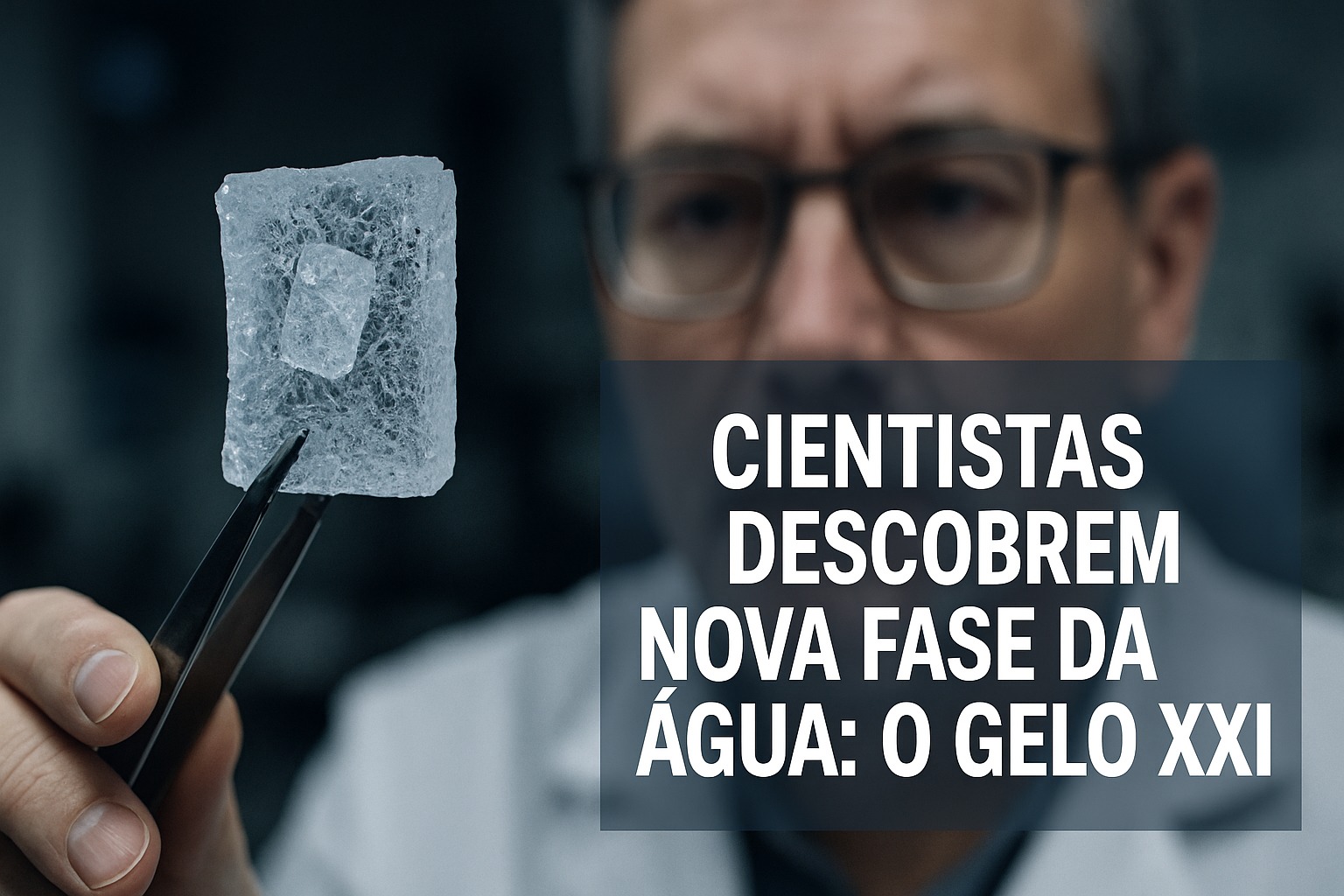
Discovery Made at European XFEL Reveals “Ice XXI,” a New Phase of Water Composed of 152 Molecules and Formed Under 1.6 Gigapascals of Pressure, Enhancing Understanding of Icy Planets and Advanced Materials
In Germany, scientists identified a new phase of water, dubbed “Ice XXI.” The study, published on October 10 in the journal Nature Materials, revealed an unprecedented structure composed of 152 water molecules, organized in a body-centered tetragonal formation. This formation surprises researchers because it completely differs from the common ice found on Earth.
“Ice XXI” only forms under extreme pressures, about 1.6 gigapascals — equivalent to 16,000 times the atmospheric pressure at sea level.
This condition makes any attempt to reproduce it in domestic environments unfeasible.
-
A satellite from NASA and the French agency captured from space the largest wave ever measured in the open sea, a wall of water nearly 20 meters high generated by Storm Eddie in the North Pacific in December 2024, as tall as a six-story building.

-
Forget the common mining dust: BHP combines 150,000 native plants, windbreak curtains, and real-time monitoring to reduce particles in Port Hedland, where iron ore stockpiles face strong winds and even cyclone-ready systems during port operations.

-
Scientists discover that tires are releasing invisible microplastics into city air, raising concerns about what we breathe every day.

-
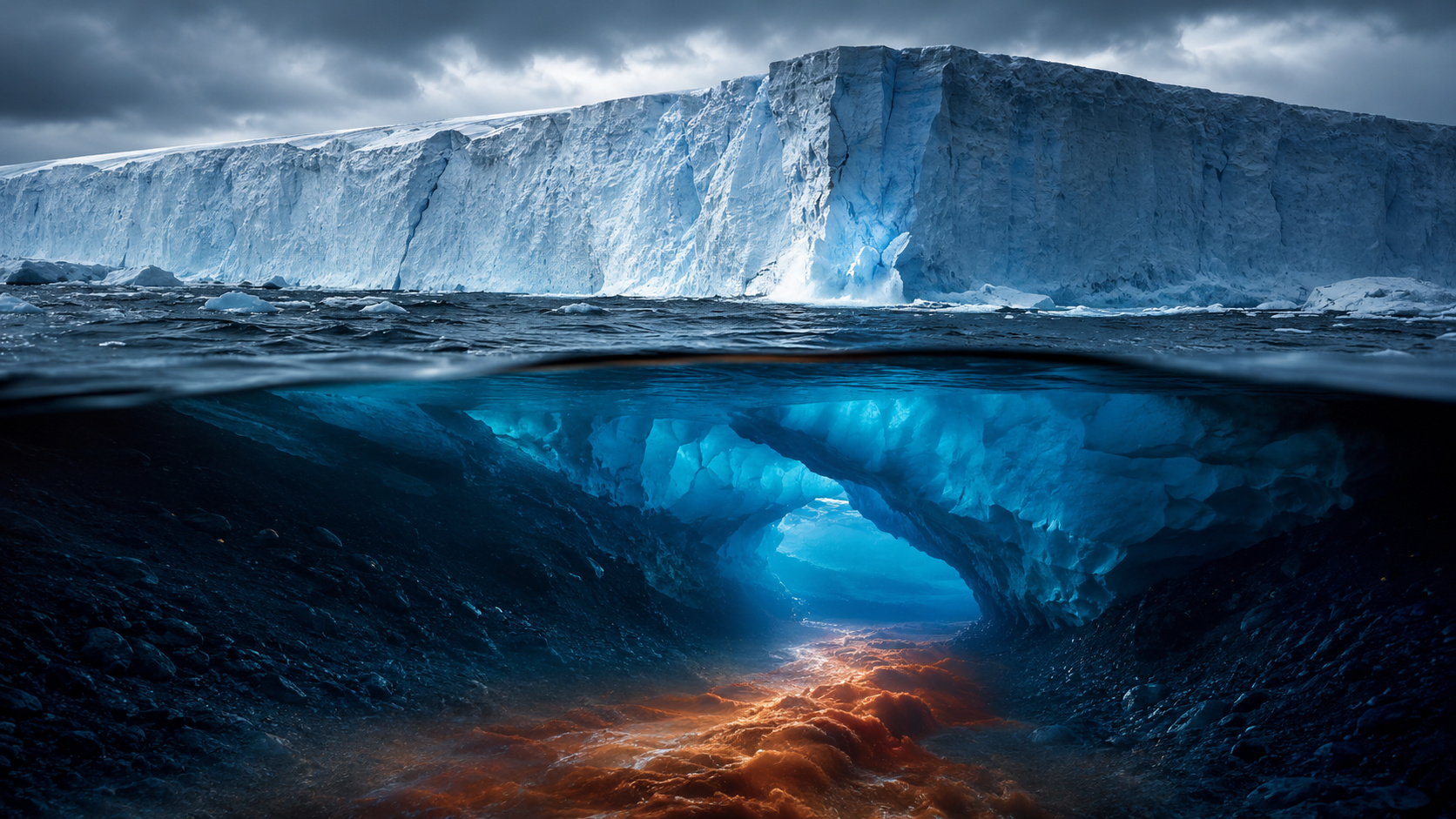
Scientists have discovered a hidden underwater “portal” beneath the largest glacier in East Antarctica, capable of carrying warm water to the ice base; Totten drains a colossal basin with the potential to raise sea levels by more than 3.5 meters.



How the Discovery Was Made
The research was conducted by scientists from the Korea Research Institute of Standards and Science, led by Geun Woo Lee, and involved collaboration with international teams.
The experiments took place at the European XFEL, located in Germany, where water was compressed and decompressed over a thousand times until the new phase formed.
According to Lee, the X-ray pulses emitted by the XFEL allowed for the identification of multiple crystallization pathways of water.
In addition to “Ice XXI,” other already known forms, such as Ice VI and Ice VII, were also confirmed, reinforcing the vast potential for molecular variation of the most studied substance on the planet.
Scientific and Planetary Implications
According to researchers, the discovery goes beyond scientific curiosity as it enhances understanding of water behavior under extreme conditions.
The presence of new phases could occur on icy planets and moons, such as Neptune, revealing unprecedented information about their internal structures.
Even if “Ice XXI” never appears in a regular freezer, its impact is profound for materials science.
The study could improve atomic models of water and drive the development of new functional materials.
Moreover, scientists believe that the discovery opens promising pathways for advances in biology, planetary science, and cutting-edge technologies.
With information from Aventuras na História.





-

1 person reacted to this.