Portuguese
  Spanish


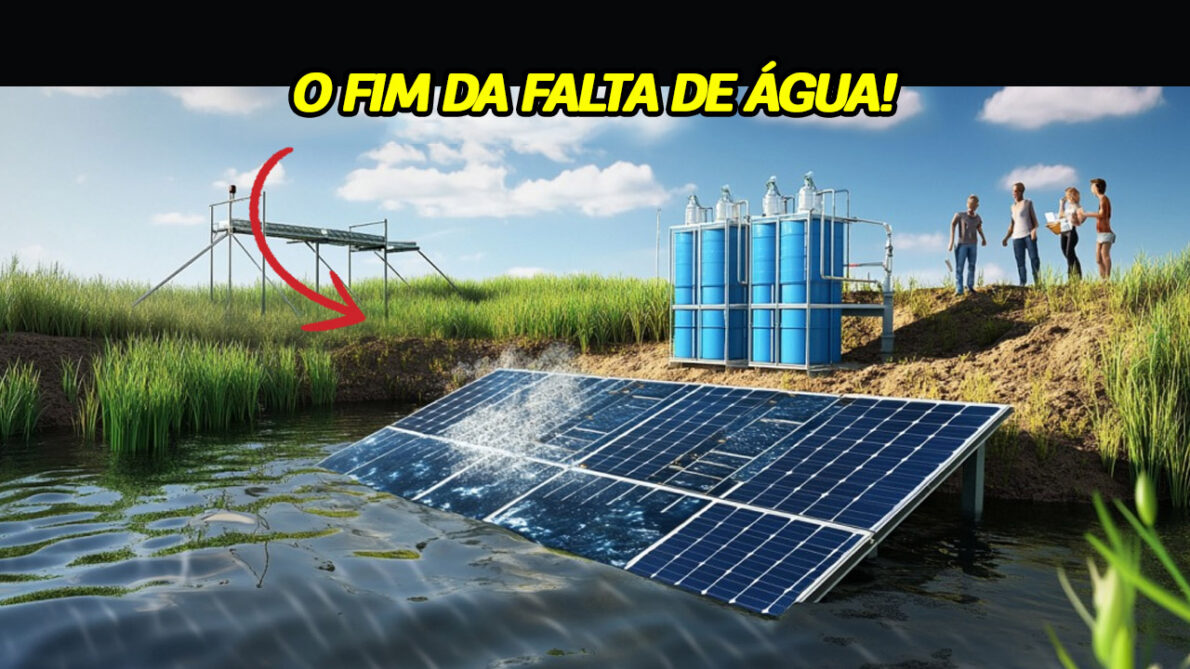

New Invention by MIT Uses Solar Light to Desalinate Salt Water, Producing Up to Five Thousand Liters of Drinking Water Per Day. The Technology Promises to Benefit Three Thousand People, Optimizing Production and Reducing Costs. The System Could Be the Solution to the Growing Scarcity of Drinking Water in Various Regions of the World.
Water scarcity is a global problem affecting millions of people every day.
While many solutions have been attempted, a surprising invention promises to revolutionize access to drinking water by utilizing an abundant and free source: sunlight.
Developed by a team at MIT, this desalination system can transform salt water into drinking water without the need for batteries or electric power.
-
The Trap of Modern Technology: How Screen Overload and Digital Connections Can Impact Your Mental Health and Well-being

-
Wyoming Couple Grows Tropical Fruits Year-Round in -40°C Using Geothermal Greenhouse, Demonstrating Earth’s Heat Can Produce Oranges and Lemons in Snow Without Traditional Heating

-
Ship Returns from Brazilian Coast with Thirty Newly Discovered Life Forms
-
Nigerian Professor Invents Electricity-Free Refrigerator Using Clay Pots and Wet Sand, Extending Shelf Life of Vegetables to 27 Days; 7,000 Units Distributed in Energy-Deprived Villages



With it, it is possible to produce up to five thousand liters of clean water per day, enough to supply about three thousand people.
The great innovation of this system lies in its ability to adapt to available sunlight. Throughout the day, as the intensity of the light increases, the rate of desalination also intensifies.
And when conditions change, such as on cloudy days or at night, water production automatically decreases.
This means that the efficiency of the system is optimized, eliminating the need for energy storage devices common in other desalination models.
Promising Tests
The researchers conducted tests on a prototype of the system in New Mexico, USA, for six months, evaluating different climatic conditions and types of water.
The results were promising: the system harnessed about 94% of the solar energy generated by the solar panels to produce up to five thousand liters daily, even in the face of climatic variations.
According to Amos Winter, one of the authors of the study published in the journal Nature Water, the challenge of generating drinking water with renewable energy has always been complex. However, the team succeeded, and expectations are high.
A Solution for Brackish Water
The main focus of the research is to use this system to desalinate brackish groundwater, which is an abundant yet often overlooked source.
As fresh water reserves are depleted, brackish water becomes a viable alternative.
The researchers view these sources as potential suppliers of drinking water, especially in areas where fresh water sources are overloaded.
Moreover, the invention can significantly reduce desalination costs, especially in areas where access to electricity is limited.
The system is particularly useful in regions far from the sea, where conventional desalination solutions are not applicable.
Innovation, Evolution, and Invention
The current system is an evolution of a previous project by the team. In the initial version, the system’s response rate and sunlight utilization were not meeting expectations, leading researchers to refine the technology.
The result was a system that adapts its desalination rate between three and five times per second, allowing for an efficient response to variations in sunlight.
The main components of the system, such as the solar panels, are crucial for adaptation. The ability to monitor the generated energy indicates the amount of available sunlight, allowing immediate adjustments to the water production rate.
The Future of Desalination
The researchers believe that the innovation can not only help solve the problem of water scarcity but also create a new approach to desalination that is sustainable and accessible.
As the demand for drinking water grows, innovative solutions like this become increasingly necessary.
With the success of the tests and the potential for large-scale application, the MIT team is optimistic about the impact that this technology could have on communities around the world.
You may also wonder: will this innovation finally solve the water scarcity problems? Expectations are high, but only time will tell.