Portuguese
  Spanish


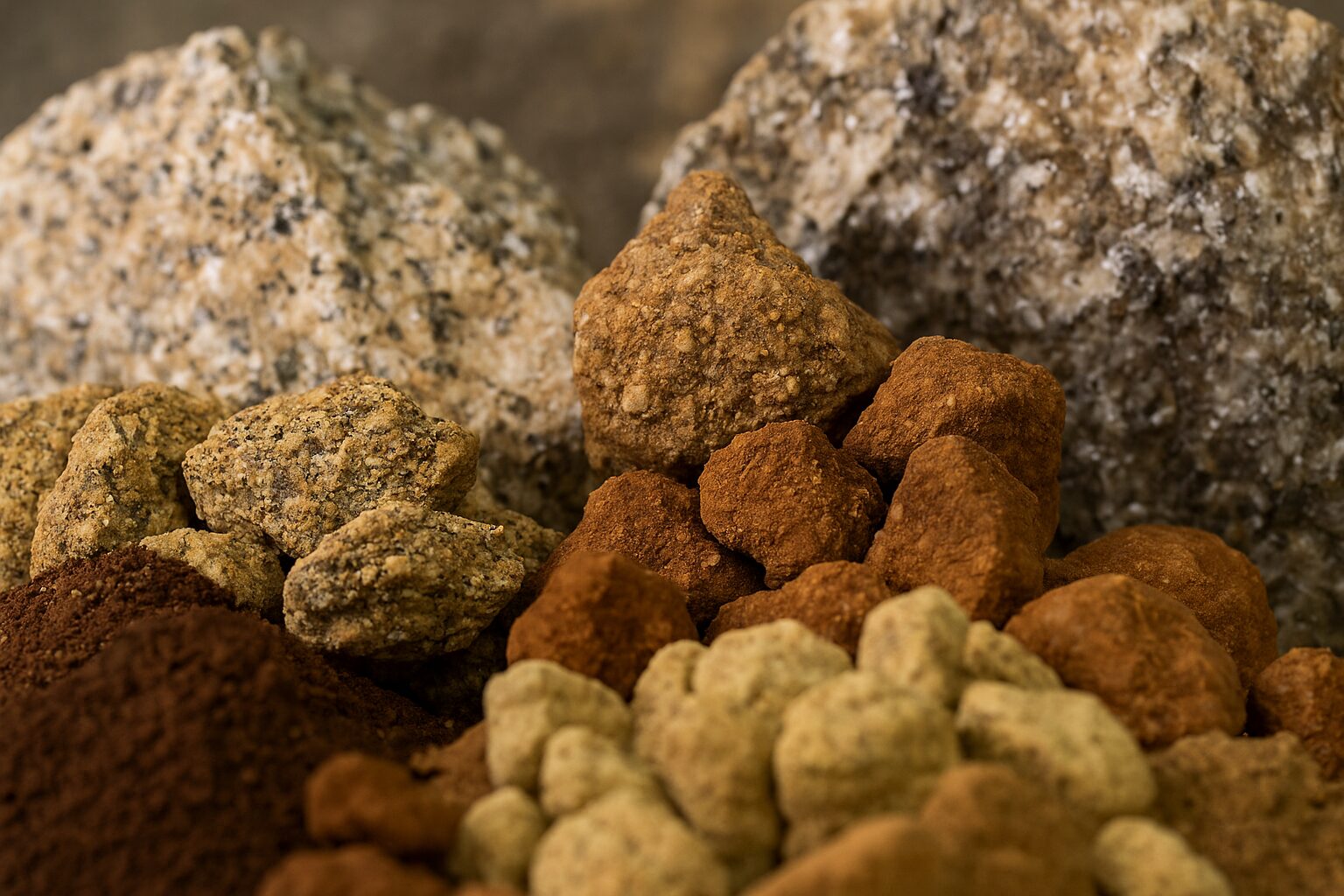

Discovery Of Rare Earth Deposit In Kazakhstan: Country Now Has The Third Largest Rare Earth Deposit In The World. Understand The Importance Of The Discovery For The Global Market.
A recent discovery is shaking up the behind-the-scenes workings of the energy, technology, and geopolitical sectors: Kazakhstan announced the identification of a new rare earth deposit, which may be the third largest in the world in total reserves. The information was disclosed by authorities in May 2025 and confirmed by the specialized website Earth, causing excitement in European and Asian countries that heavily depend on the import of these critical minerals.
The Importance Of The New Rare Earth Deposit
According to the Ministry of Industry and Construction of Kazakhstan, the new deposit is located in Karagandy, in the center of the country, and has four promising areas, totaling 935,400 tons of rare earth elements. Informally dubbed “New Kazakhstan,” the site could transform the country into a strategic player in the supply of essential minerals, critical for the energy transition and global technological production.
Elements such as lanthanum, cerium, neodymium, and yttrium are crucial for the manufacturing of wind turbines, electric car motors, smartphones, digital cameras, batteries, and military technologies. This discovery is seen as an opportunity to diversify supply chains that are currently highly concentrated in China, the current global leader.
-
France Revamps 530 Social Housing Units with Large Balconies and Glass Facades Without Demolishing Existing Buildings

-
10-Year-Old Max Makes History with Paris Fashion Show, Launches Own Brand, Hires Staff, and Sets World Record as Youngest Runway Designer

-
Bolivian Female Construction Workers Form Association to Combat Discrimination and 38% Pay Gap in the Industry
-
Near Amsterdam, residents buy land and discover they must also build streets, manage drainage, handle waste, and grow food on half their plot.




According to Georgiy Freiman, chairman of the executive committee of the Association of Independent Mining Specialists, detailed studies on the soil composition are still necessary before officially confirming the deposit status. Nevertheless, analysts point out that, if the numbers are confirmed, Kazakhstan would only be behind China and Brazil in total rare earth reserves.
International Interest And Logistical Challenges
The discovery occurs at a strategic moment, just before a summit between the European Union and Central Asian countries, reinforcing Kazakhstan’s intention to attract foreign investment and partnerships. According to Aleska Simec, the European Union ambassador to the country, the discovery enhances Kazakhstan’s relevance in the global discussion about critical raw material supply security.
However, turning potential into real production requires significant investments and adequate infrastructure. The country still relies on refining technology, often dominated by other countries like China. It will also be necessary to develop transportation, logistics infrastructure, and environmental standards to ensure that extraction occurs sustainably.
The government reported that a detailed development plan is expected to be presented in the coming months, including the exploration timeline and criteria for forming international consortiums. If it goes ahead, the country could establish itself as one of the largest global suppliers of these elements, essential for the economy of the future.
Brazil In The Race For Rare Earths
Brazil has also been standing out in the global race for strategic minerals. According to the government of Minas Gerais, over R$ 4.6 billion in investments are planned for three major projects located in the state. One of them is the megaproject by Meteoric Resources Mining, which will receive R$ 1 billion in Caldas (MG). The region has also attracted Viridis Mining and Minerals, which acquired exploration rights and plans to invest R$ 1.2 billion.
Other investments include R$ 2.4 billion from Terra Brasil and R$ 800 million from Mineração Serra Verde. The Brazilian projects promise to transform the country into a production hub that is more profitable than China. According to industry specialists, the extraction ratio in Brazil is significantly more advantageous: while in China, 800g to 1 kg of rare earths are extracted per ton of clay, in Brazil this proportion reaches 2.5 kg to 3 kg per ton.
This efficiency in exploration could put Brazil in a position of global leadership, especially if it can add value through local refining and the industrialization of products based on these elements.
With the confirmation of the third largest rare earth deposit in the world, Kazakhstan enters the radar of global tech powers. At the same time, Brazil advances with billion-dollar projects and superior efficiency in exploration, increasing its competitiveness in the sector.
The competition for strategic minerals such as neodymium and lanthanum is one of the central themes of the new green and digital economy. The coming years will be decisive in determining which countries will control the supply chains of elements that are as essential as they are scarce.
If you wish, I can generate an image for Discover highlighting the map of the deposit in Kazakhstan and the comparison with Brazil and China. Would you like to proceed with that?