Portuguese
  Spanish


African Electric Motorcycle Travels 6,000 Km Solely on Solar Power – An Innovation That Can Transform Sustainable Mobility
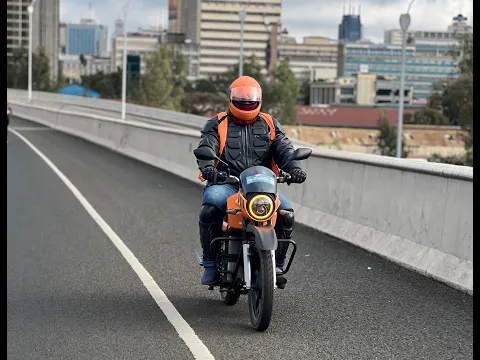
Electric mobility is increasingly present in everyday life, proving that long-distance journeys with electric vehicles are a practical and sustainable reality. This time, the setting is the African continent, where an electric motorcycle covered an impressive 6,000 km, powered exclusively by solar energy. This achievement not only highlights technological advancement but also reinforces Africa’s innovative potential in the sector.
Electric Motorcycle Roam Air
Developed by Roam, an emerging African company in the electric vehicle sector, the protagonist of this journey is the electric motorcycle Roam Air. Designed specifically to tackle the challenging conditions of countries like Kenya, Tanzania, and Zambia, the electric motorcycle uses solar energy as its primary source of recharge.
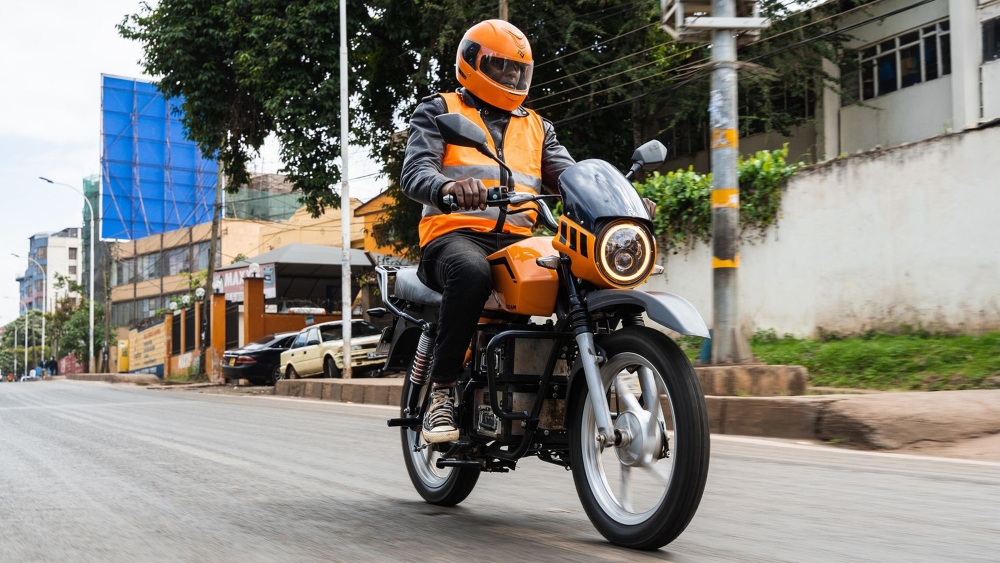
The journey began on September 29, departing from Nairobi, Kenya, to Stellenbosch, South Africa. Over the course of 17 days, the Roam Air crossed borders, faced difficult terrains, and demonstrated resilience, recharging its batteries exclusively with solar energy.
-
Does a Flag on Your Car’s Hood Overheat the Engine? Expert Reveals the Overlooked Danger for Drivers

-
How to Identify and Remove Superficial Scratches Before Spending on Car Bodywork

-
Electric Car with Extended Range: Company Patents Hybrid Transmission System Using Gasoline Engine for Backup
-
GM Developed the Chevette to Rival the Beetle, Launched it in Brazil Before Europe, Sold 1.6 Million Units, and Left a Generation with Gas Station Trauma


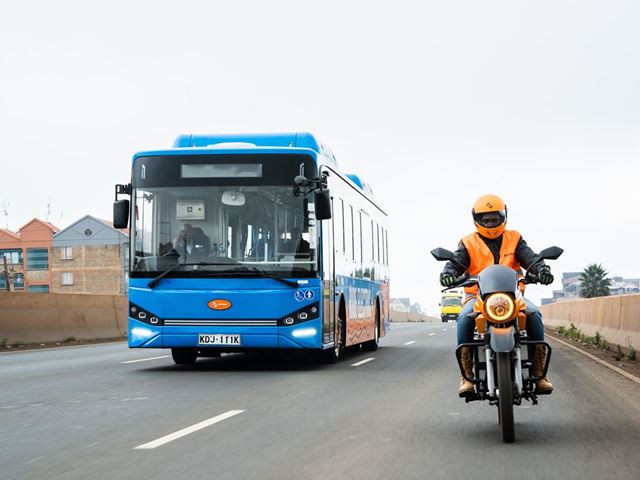
This journey highlighted not only the durability of the vehicle but also the viability of sustainable mobility solutions in regions with limited infrastructure.
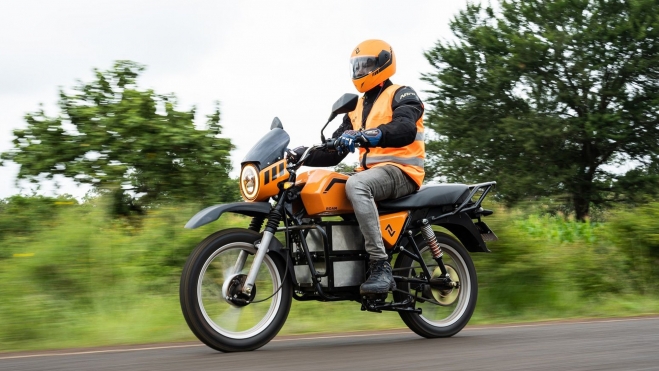
A Motorcycle Made to Overcome Challenges
The Roam Air features specifications designed for efficiency and versatility. The electric motorcycle reaches a maximum speed of 90 km/h and covers an average of 75 km per battery module. It is equipped with two batteries of 3.24 kWh each, which can be easily swapped during the journey.
This functionality was crucial for completing the long journey, allowing the motorcycle to travel up to 100 km between recharges.
In one of the most remarkable moments of the expedition, the Roam Air achieved an impressive range of 1,000 km in 18 hours, thanks to the use of additional batteries. This performance not only reinforces the vehicle’s technical capabilities but also demonstrates the potential of solar energy as a sustainable alternative for transportation.
Reactions and Impacts of the Journey
Finally, the conclusion of this epic journey was celebrated by both the Roam team and the local communities that witnessed the route. Masa Kituyi, Head of Product at Roam, emphasized the social and technological impact of the project:
“Completing this route is a historic milestone for the Roam Air. It shows that African innovation can not only compete but thrive in the global arena. The warm receptions from communities along the way prove the enthusiasm of people for electric mobility developed right here in Africa.“
Thinus Booysen, professor and founder of the Electric Mobility Laboratory at Stellenbosch University, reinforced the importance of the achievement:
“This ambitious project represents a significant step in demonstrating the potential of sustainable electric mobility on the continent. Despite technical and climatic challenges, the team’s determination and the efficiency of the Roam Air showed the power of innovation and collaboration.“
Sustainable Mobility
In conclusion, the journey of the Roam Air is not just a technical feat; it symbolizes the potential for social and environmental transformation that electric mobility can bring to the African continent.
Solar energy provides a practical and accessible solution in regions with limited access to conventional infrastructure.
With the capacity to carry up to 220 kg and an acceleration from 0 to 60 km/h in 6.9 seconds, the Roam Air proves that innovation and functionality can coexist. More importantly, it signals the beginning of a new era where Africa not only adopts global technologies but also leads them.