Portuguese
  Spanish




Device Created by Teenager to Protect Grandmother with Alzheimer Wins Million-Dollar Prize from Samsung, Moves Towards Industrialization and Inaugurates a New Generation of Technologies for Elderly Care.
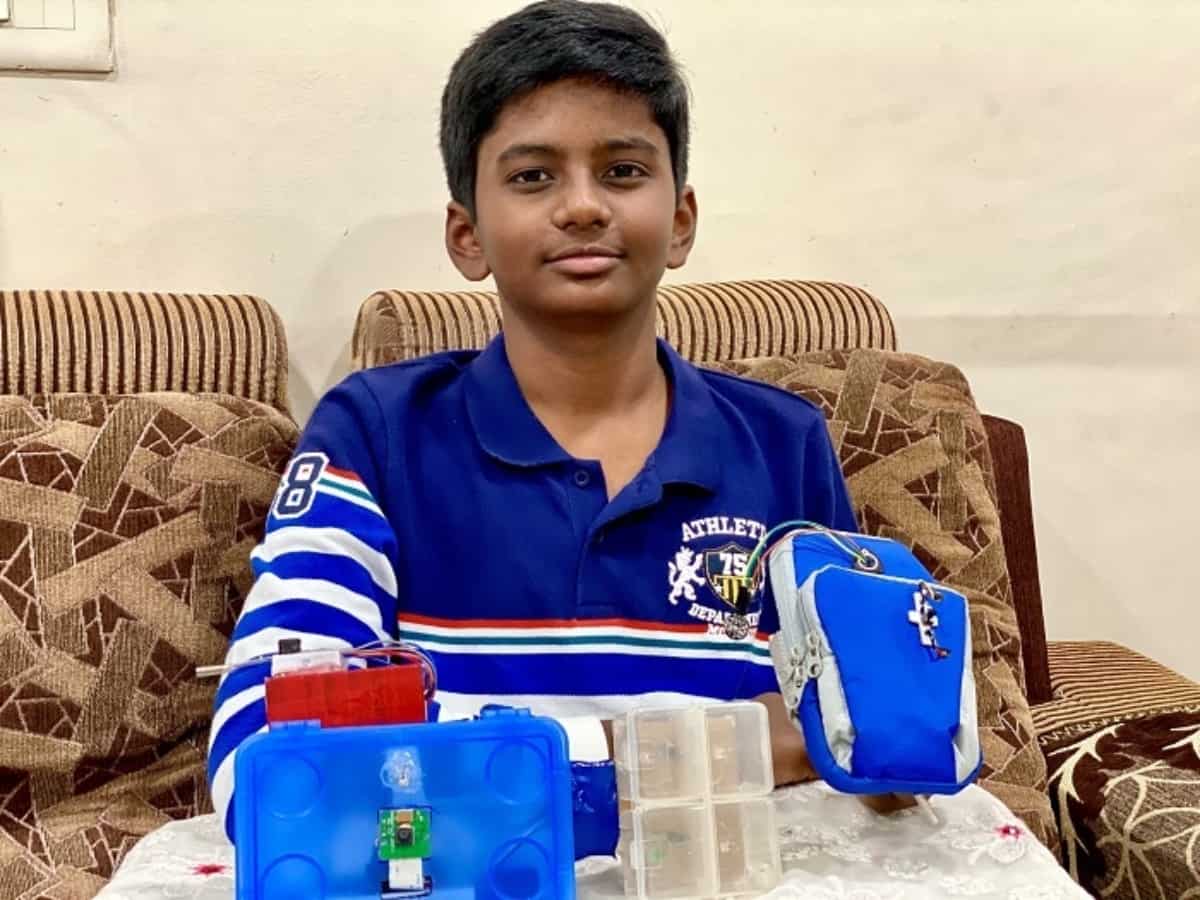
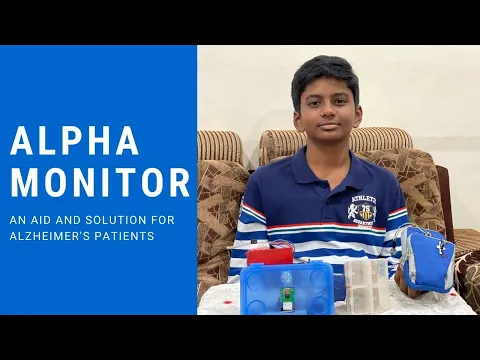
In 2020, India witnessed the emergence of one of the most impactful innovations in elderly care in years. The young Hemesh Chadalavada, then just 14 years old, presented a device created to protect his grandmother, diagnosed with Alzheimer’s, to the national program Samsung Solve for Tomorrow. The disease was in an advanced stage and had already caused episodes of wandering, disorientation, and real fall risks — situations common among dementia patients but often overlooked by the assistive technology market. It was from this family drama that the Alpha Monitor was born, a lightweight and low-cost wearable designed to detect abnormal movements, sudden falls, and departure from a safe environment, sending instant alerts to caregivers.
The story, widely reported by the Indian press and confirmed by Samsung itself on July 14, 2024, represents a milestone in the development of youth technologies with immediate applications in public health. Hemesh won the national competition — one of the largest in the country — receiving a prize of 10 million rupees (approximately US$ 600 thousand) and direct access to Samsung Research engineers to improve the device. This gave the Alpha Monitor a development pathway rarely achieved by inventions created by teenagers: a real possibility of industrialization and large-scale use.
Simple Technology, Low Cost and Direct Impact on Elderly Care
The Alpha Monitor was born with a clear ambition: to offer real security to vulnerable patients without relying on expensive and inaccessible technologies. The device works like a small wearable plate, which can be placed on a shirt, wristband, or badge.
-
Engineers Develop Fridge-Sized Machine to Produce 95-Octane Synthetic Fuel from Air and Water, Aiming to Sustain Combustion Engines Without Oil

-
Two-Armed Robot Uses AI to Reassemble Destroyed Pompeii Frescoes, Solving an “Impossible” Puzzle
-
New Law in Brazil Requires Breaks for Type 1 Diabetes Management at Work, School, and Public Exams

-
Scientists Confirm “Greening” of Antarctica: Ice on the World’s Coldest Continent Turns Green as Mosses Multiply Over Tenfold in Four Decades




The choice of multiple formats is part of the young inventor’s strategy: Alzheimer patients often reject invasive devices, remove wristbands and are bothered by large accessories. Something discreet and practical was necessary.
According to documents presented at Solve for Tomorrow and in a report from Times of India, the wearable includes:
- accelerometer and gyroscope to accurately identify falls;
- embedded AI to distinguish normal walking from escape or disorientation movements;
- low-power GPS that monitors unusual departures;
- automatic alerts sent to the caregiver’s cell phone;
- long-lasting battery for continuous use, an essential feature for elderly people living alone.
The system stands out for operating autonomously: it does not require intervention from the elderly, does not depend on pressing buttons, and works even when the patient is confused or unable to ask for help. This gives the Alpha Monitor an advantage over traditional emergency bracelets, which fail just when the elderly person needs it most.
The Family Motivation Transformed into Impactful Innovation
Hemesh’s grandmother, diagnosed with Alzheimer’s, had gotten lost several times while leaving home alone. In one of the occurrences, she was found hours later on a distant street, weak and disoriented. According to the inventor himself, this moment was decisive.
He was studying motion sensors and decided to apply the knowledge to something that could prevent new episodes.
The World Health Organization estimates that 55 million people live with dementia, a number that could double by 2050.
In populous countries like India, where many families care for the elderly at home and access to specialized homes is limited, the risk of falls and disappearances is especially high. An analysis of the India Ageing Report 2023 shows that more than 40% of elderly people with dementia have faced at least one episode of wandering or loss of orientation.
This is exactly the type of problem that the Alpha Monitor aims to solve.
International Recognition and the Leap Towards Industry
By winning the Samsung Solve for Tomorrow, Hemesh received not only the financial prize. Samsung offered:
- mentorship from biomedical engineering and AI experts;
- access to professional laboratories to enhance sensors;
- support for field testing;
- startup incubation opportunities.
This support transforms the Alpha Monitor into something much larger than a school project: it becomes part of the assistive technology pipeline with the endorsement of one of the largest electronics companies in the world.
Reports from the Hindustan Times indicate that public health teams have already shown interest in evaluating the device for use in programs aimed at elderly people with neurodegenerative diseases. For a country that will exceed 200 million elderly people by 2050, according to UN projections, low-cost solutions like this could become strategic tools.
Why the Alpha Monitor is Different from Existing Technologies
The global market for fall detection devices has grown significantly in recent years, driven by the aging population. However, many of the products available have limitations:
- they are expensive;
- they rely on robust Wi-Fi networks;
- they require the elderly to carry a smartphone;
- they ask users to press buttons or activate apps;
- they have low precision in home environments.
Hemesh’s innovation breaks this pattern by combining:
- Indian low cost,
- embedded AI,
- simplified usability,
- automatic alerts,
- formats adaptable to the patient.
The technical simplicity and functional depth make the Alpha Monitor a strong candidate for adoption in public health contexts, especially in middle-income countries.
The Future of the Alpha Monitor and the Transformation of Elderly Care
Samsung confirmed that the project will proceed to phases of enhancement and expanded testing throughout 2025. The expectation is to integrate the Alpha Monitor into a care ecosystem involving family members, caregivers, hospitals, and community centers.
If the device achieves large-scale production, experts say it can:
- reduce hospitalizations due to falls;
- decrease episodes of wandering;
- facilitate remote monitoring;
- integrate telemedicine networks;
- generate relevant data for Alzheimer studies.
Hemesh’s story reveals something larger than a simple invention: it shows how family pain can transform into social technology. When a 14-year-old can do what technology giants often fail to do — create something effective, affordable, and patient-centered — it sets a precedent that inspires millions of families worldwide.
The Alpha Monitor represents more than a youthful invention: it is a reflection of a future where innovation, empathy, and artificial intelligence intersect to protect those who can no longer protect themselves. And it all started with a grandson trying to prevent his grandmother from getting lost again.