






 Portuguese
  Spanish


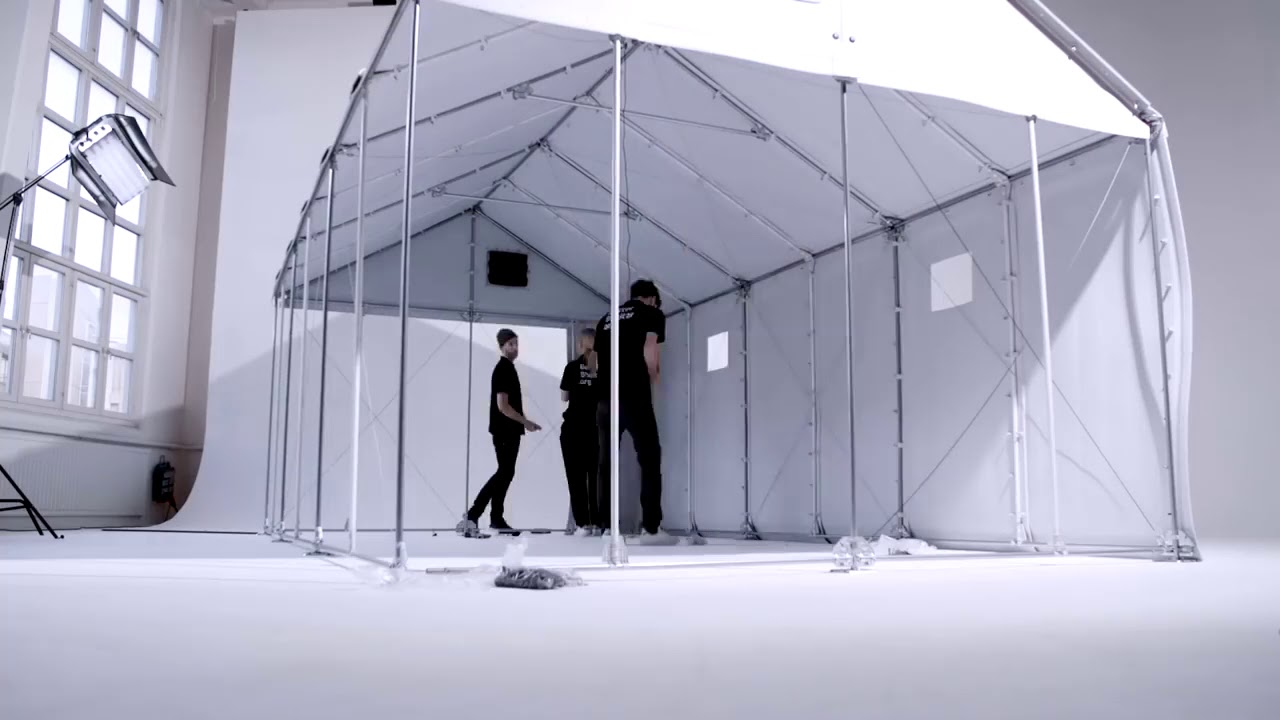


In 2010, a young designer recently graduated looked at the tents that housed millions of refugees and wondered, “Why do displacement camps look exactly like they did a hundred years ago?” The answer to that question became a silent revolution that has already changed the lives of 90 thousand families in 80 countries without the need for engineers, special tools, or even a complicated manual.
Johan Karlsson, a recent industrial design graduate, questioned whether it was possible to create a safer and more dignified shelter for refugees that would still remain accessible to humanitarian organizations. Karlsson began developing the concept of Better Shelter as a freelance designer in 2010 when a small aid project asked him to improve the design of their disaster relief tents.
“I was impressed by how outdated and fragile they were, considering they were supposed to offer a home to refugees. Those tents simply were not designed to last that long. So I started thinking about alternatives,” he recalls.
While working on the project, Karlsson came across a statistic that made him stop: the average time spent in displacement was already over 17 years. These were not temporary shelters. People were raising children in them, aging in them.
-
Brazilian Fishing Couple Spends 4 Years Building Solar-Powered Floating Home on the Paraguay River, Now a Navy-Approved Vessel with Leisure Area and Tour Demand

-
While the World Opens New Airports and High-Speed Trains, Brazil Rushes to Complete Projects Stalled for 40 Years
-
Brazil Invests in Massive Waterway to Transport Soybeans by Barge, Reducing Costly Truck Reliance
-
Bridge Rebuilt in Just One Year Reconnects Two Brazilian States


“And there I was, adjusting the seams of a military-style tent that, if lucky, would last six months. There was a disconnect between humanitarian practice and modern design and manufacturing tools. I could no longer ignore it,” he said.
The Solution Came From An Unlikely Place
The flat-pack system from IKEA immediately came to mind. “IKEA has long had the know-how of how to create modularized constructions, packaging, and materials. Reaching out to them for support seemed like the obvious thing to do,” he said.
So Karlsson contacted the IKEA Foundation (the philanthropic arm of the Swedish flat-pack furniture giant) and asked if they would help close this gap. They agreed.

Together, they brought in the UN Refugee Agency (UNHCR) to ensure they were solving the right problem, not just what they thought they were seeing.
Seeing an opportunity for collaboration between two distinct entities, a global UN agency with vast emergency response experience, the UNHCR, and a nimble Swedish design team capable of quickly turning ideas into prototypes — they organized a meeting, outlined a plan, and began the partnership.
Built With Those Who Really Understand
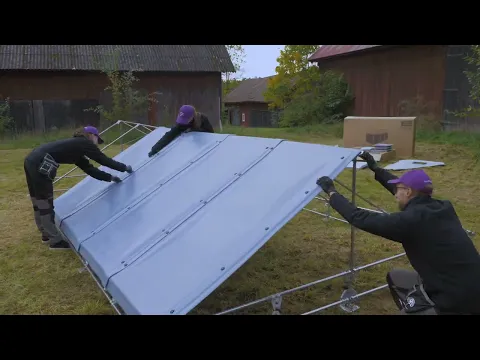
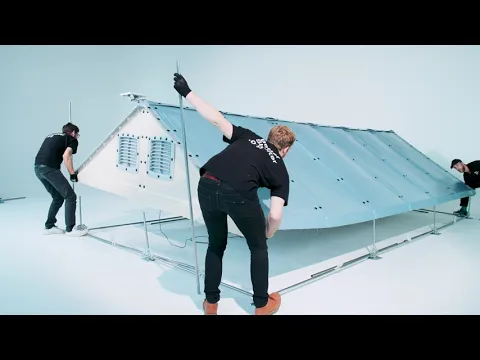
The idea was simple, perhaps even naive: what if displaced families could build a shelter the same way you assemble a Billy bookshelf? Flat-pack, no special tools, no engineers needed.
A shelter that could be deployed quickly in an emergency but built to last — durable, adaptable, and upgradable over time. But the design did not come from a drawing board in Stockholm.
40 families of refugees in Iraq and Ethiopia tested and improved the prototype. The Better Shelter team also spent time in a UN refugee camp in Iran and conducted interviews with Somali refugees in northern Kenya before completing their first shelters.
“Trusting feedback from the people is essential. Every person and situation is different, but if there is no dialogue with those on the ground, you will never create a successful prototype,” says Karlsson.
A common request from refugees was for more privacy, the ability to simply close their doors. Another was that damage to their new homes should be easy to repair.
The Shelter That Works Like LEGO
The end result is a shining example of functional design:
TECHNICAL SPECIFICATIONS:
- Area of 17.5 square meters
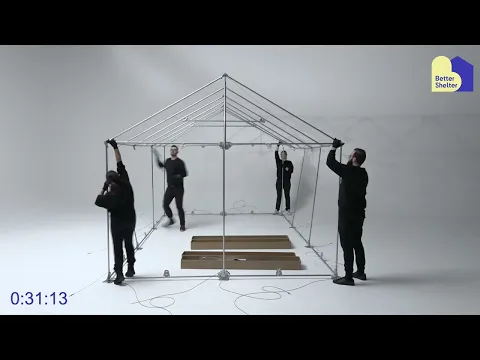
- Assembly in 4 hours with 4 people
- 68 interlocking pieces
- Comes in two flat boxes of 80 kg each
- Capacity for 5 inhabitants
- Lifetime of 3 years
- 48 units fit in a 40-foot container
SAFETY FEATURES:
- Metal sheet structure with knife-resistant polypropylene facades
- Slows fire spread in case of fire
- Lockable door (from inside or outside)
- 4 windows
INNOVATIONS:
- Solar panel on the roof that charges LED lamp and has USB input for mobile phones
- Modular structure that allows adapting the door position
- Can be disassembled and reused
These original 17.5 m² modules could be assembled, without tools, in four hours. They could accommodate up to five people and had a projected lifespan of three years, although Karlsson states that many were still standing after five.
The Cost Of Dignity
The Better Shelters cost about US$ 1,150, roughly double the value of the improvised canvas tents that come to mind when talking about refugee camps.
“Although the initial price is double that of an emergency tent, the solution is still more cost-effective considering its longevity,” explains Johan Karlsson. “We are working hard to bring it down to less than US$ 1,000, and we see good potential to achieve this in the next two years.”
The math is simple: a canvas tent lasts six months. The Better Shelter lasts three years — six times longer. And offers a lockable door, waterproof walls, interior lighting, and a solid foundation.
The Numbers That Impress
GLOBAL IMPACT:
- 90,000 shelters have already helped people in 80 countries
- Goal of helping 1 million people by 2030
- 10,000 units ordered by UNHCR in 2015
- 6,600 shelters for Turkey and Syria in 2023, housing over 30,000 people
- Used in Greece, Iraq, Djibouti, Chad, Serbia
INVESTMENT:
- More than 15 companies and 3 universities in 5 countries involved in development
- IKEA Foundation contributed more than US$ 2 million
Global Recognition
In 2016, the project won the Beazley Design of the Year Award from the Design Museum in London, beating out buildings like the Tate Modern and 57 West.
The MoMA (Museum of Modern Art in New York) displayed a shelter until January 2017 and included it in its permanent collection.
TIME magazine listed the shelter as one of the best inventions of the year.
More Than a Shelter — A Temporary Home
“Although our houses are temporary until a new permanent home is found, many people live in them for several years. It becomes clear to us, from the people we meet in our work, that the possibility of being able to settle is important for some sense of normalcy and that aesthetics and the need to create a cozy home is something we all share, no matter how unthinkable and crazy day-to-day life may be,” says Johan Karlsson.
The Better Shelter allows partners on the ground to decide which local materials are most suitable to complete the homes. The choices vary depending on the environment, climate, local construction techniques, and available resources.
In Assam, India, most are reinforced with bamboo and plastered with clay; in Afghanistan, wood panels protect against freezing winters; and in Rwanda, thatched mats on the roof provide better insulation.
“Working with what is available in each context not only drives the local economy but also makes maintenance and repairs much easier. We are interfering as little as possible,” explains Karlsson.
The Stories Of Those Who Live Inside
After losing her home in the devastating floods in Assam last year, Girindra Bhakti, 73, improved her Better Shelter — which she shares with her grandchildren — using local materials.
“From day one, you can see that people tend to decorate, putting up fabrics or adding their personal touches; adding a porch to have some shade,” notes Karlsson.
In Syria and Turkey, after the devastating earthquakes of 2023, the shelters gained a new meaning. Families are dismantling their shelters and taking them back with them, to use as transitional housing while they rebuild. A shelter that was once temporary in displacement becomes a springboard on the path back home.
COVID-19: When The Whole World Needed Shelter
The team adapted to a new reality during the COVID-19 pandemic. Of the 15,797 structures they sent to 36 countries, 3,000 were used in response to COVID-19.
When we founded Better Shelter, about 40 million people were displaced. A decade later, that number has tripled. More than 100 million people now lack a safe place to call home.
“Home is our safest place. It’s where we build our lives and keep our most cherished memories. When we are forced to flee, that sense of security disappears.”
And for many, their shelter is temporary and long-term at the same time.
The Philosophy Behind The Design Of Better Shelter
“Even though the initial price is double that of an emergency tent, the solution is still more cost-effective considering its longevity,” explains Johan Karlsson.
But it goes beyond cost. It’s about dignity. With lockable doors, there’s an added layer of security and privacy that is currently almost forgotten in overcrowded camps, and this could help reduce the alarmingly high rates of sexual assault.
With weatherproof walls, interior lighting, and a solid foundation, the shelters are designed to last about three years. That’s six times longer than standard tents usually last.
The Better Shelter launched an updated version of the shelter after months of testing, adjustments, and advancements by developers, institutes, and suppliers.
The organization continues to innovate. They piloted the new Structure and launched a fundraising platform.
Why This Matters To You
We are living through a change that cannot be ignored. Crises driven by conflict and climate are becoming more frequent, more complex, and more prolonged. There’s no sign that this trend is going to reverse.
In a world where 114 million people are displaced, Better Shelter represents something fundamental: proof that smart design, collaboration, and respect for human dignity can make a real difference.
It’s not charity. It’s engineering with empathy.
It’s not temporary aid. It’s infrastructure for the humanitarian crisis of the 21st century. And it all started with a 20-something designer who refused to accept that refugee camps had to look exactly as they did a hundred years ago.
“Why do displacement camps look the way they did a hundred years ago?” Johan Karlsson asked.
The answer? Because no one had asked the right question until now.


