






 Portuguese
  Spanish
  3 min of reading


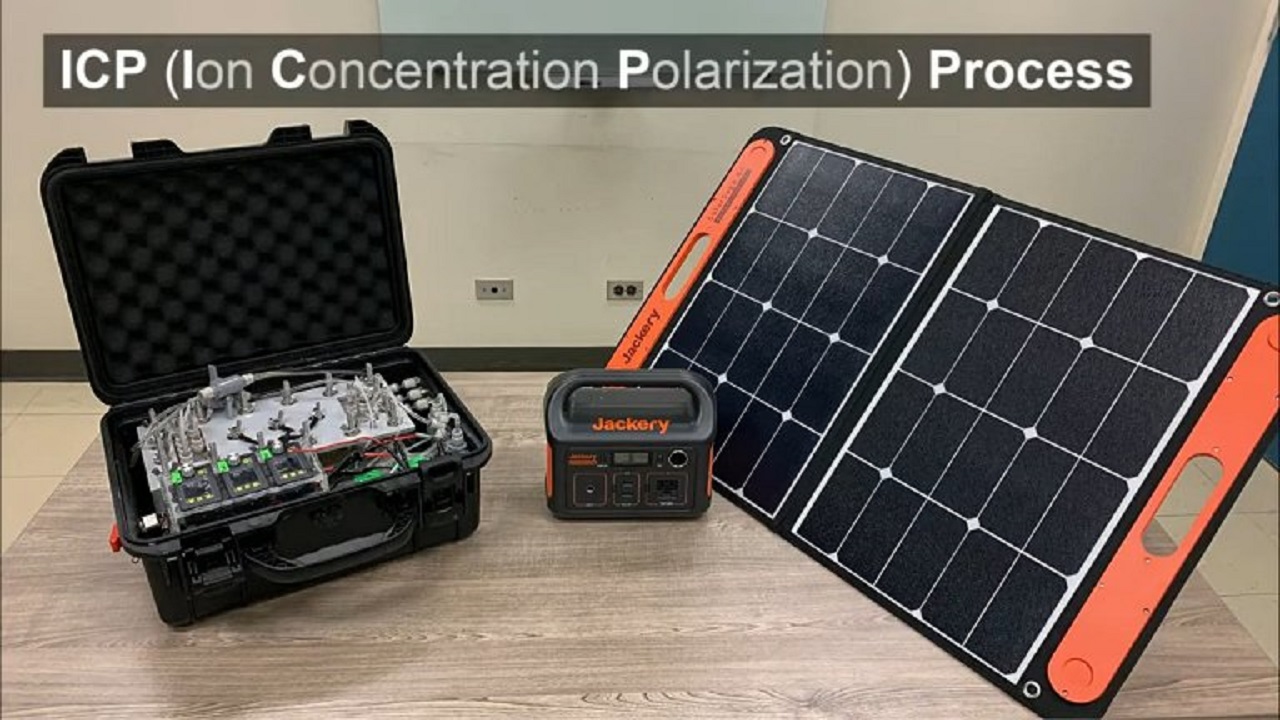
Scientists from MIT Developed a Portable Desalinator That Uses Solar Energy to Generate Drinking Water. The Product Is Not Yet for Sale, but Promises to Generate 1 Liter of Water Per Hour.
Researchers from MIT have developed a portable desalinator that weighs less than 10 kilograms and fits in a briefcase, capable of removing particles and salts from seawater and delivering drinking water directly into a cup. The product requires less electricity to operate than a cellphone charger and can be powered by a battery or a small portable solar panel. The desalinator generates drinking water that exceeds the quality standards set by the World Health Organization (WHO).
Solar-Powered Portable Desalinator Promises to Revolutionize the Desalination Market


Unlike other portable desalination units that require water purification filters, this device uses only solar energy to remove particles from the water.
Due to the elimination of the need for filters, long-term maintenance requirements are considerably reduced. This may allow the unit to be installed in remote areas and with fewer resources, such as communities on small islands, aboard ships, or to assist refugees fleeing natural disasters.
-
Brazilian scientists are simultaneously advancing two research projects on clean hydrogen and driving solutions that could transform the energy matrix, enhance industrial competitiveness, and accelerate large-scale emission reduction targets.

-
Advancement in renewable energy: A R$ 150 million project launched by Petrobras and Finep aims to create state-of-the-art electrolyzers for green hydrogen, strengthening national research and preparing Brazil to compete in a billion-dollar energy market.
-
Solar energy can increase property value by up to 10% and become a selling point.
-
Illiterate or semi-literate grandmothers were trained to repair solar systems, open rural workshops, and light up homes that still depended on kerosene.



According to MIT professor Jongyoon Han, this is truly the culmination of a journey that his group has been on for over 10 years. The professor explains that the team worked for years on the physics behind individual desalination processes, but putting all these advancements into a “box,” building a system, and demonstrating it in the ocean has been a very significant and rewarding experience for everyone.
Understand How the Portable Desalinator Works
-

ICP System Using Electricity to Purify Water (Image: Reproduction/MIT) -
This Device Does Not Require Filter Replacement, Reducing Long-Term Maintenance (Image: Reproduction/MIT)
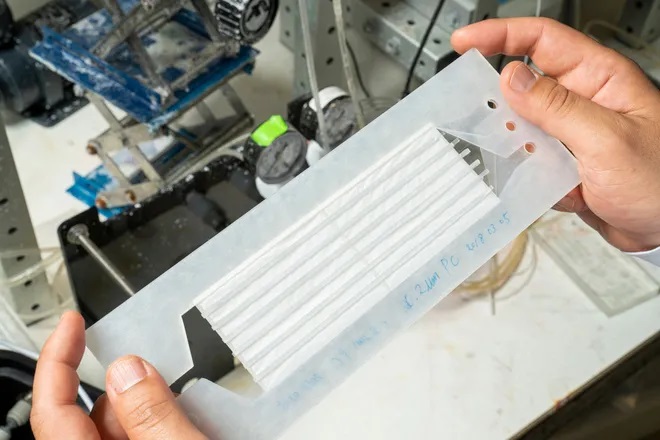
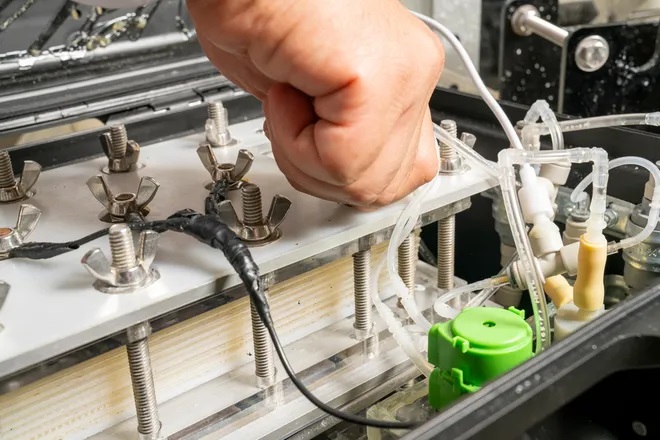
The portable desalination units available on the market use high-pressure pumps to push water through filters that are very difficult to miniaturize without compromising the device’s energy efficiency. It is important to note that these devices often clog, requiring replacement or maintenance.
In contrast, MIT’s new solar-powered portable desalinator is based on a technique known as ion concentration polarization. The equipment, instead of using filters, applies an electric field to membranes placed above and below a channel through which the water flows. The membranes expel negatively or positively charged particles, including salt molecules, viruses, and bacteria, as they pass through.
The charged particles are sent to another water stream, which is eventually discarded. The process carried out by the solar-powered portable desalinator removes suspended and dissolved solids, making it possible for clean water to flow through the channel. Since it uses only a low-pressure pump to allow the water to flow, the technology uses less energy than other techniques.
Scientists Develop New Desalination Process
Although efficient, the polarization process does not always remove all salts, so the researchers developed another process called electrodialysis to remove any remaining salt ions.
The team of scientists miniaturized everything to improve energy efficiency, allowing solar panels to fit in a briefcase. Thus, it is only necessary to extend a water hose to the salty sea and another to the cup, which will fill with clean and drinkable water in about 30 minutes with the cheaper version of the desalinator.
The more expensive and slightly larger version is capable of producing up to one liter of water per hour. However, although it is already functioning, the team has only tested the portable desalinator with clean water. Now, the researchers plan a series of tests in real conditions using waters found near communities that require desalination.






-

1 person reacted to this.